



Questions to Ask a Dog Trainer Before Hiring About Their Methods
You should be involved in your dog’s training, not left wondering what happens in a session. The best questions to ask a dog trainer before hiring cover their methods, experience with your dog’s needs, and how they’ll teach you to practise skills together. A good conversation should leave you clear...

You should be involved in your dog’s training, not left wondering what happens in a session. The best questions to ask a dog trainer before hiring cover their methods, experience with your dog’s needs, and how they’ll teach you to practise skills together. A good conversation should leave you clear about the plan and your role.
It’s understandable to want help when a behavior affects daily life and still want your dog treated with care. Ask the trainer to explain their approach in plain language, including the tools they use and how they respond when your dog struggles.
This guide covers key questions about training methods, qualifications, relevant experience, and your involvement, so you can make a thoughtful choice for your dog and household.
Key Takeaways
• Ask a trainer to explain the methods and tools they use, and be cautious of physical corrections or dominance-based techniques.
• Because dog training isn’t state-licensed in the United States, look beyond titles: explore relevant education and hands-on experience with your dog’s specific needs.
• Ask how the trainer will involve you in sessions so you can learn and practise the skills in everyday situations.
• Look for an approach that adapts to your dog’s responses and teaches practical alternatives to unwanted behavior.
1. Warning signs of aversive or dominance-based methods
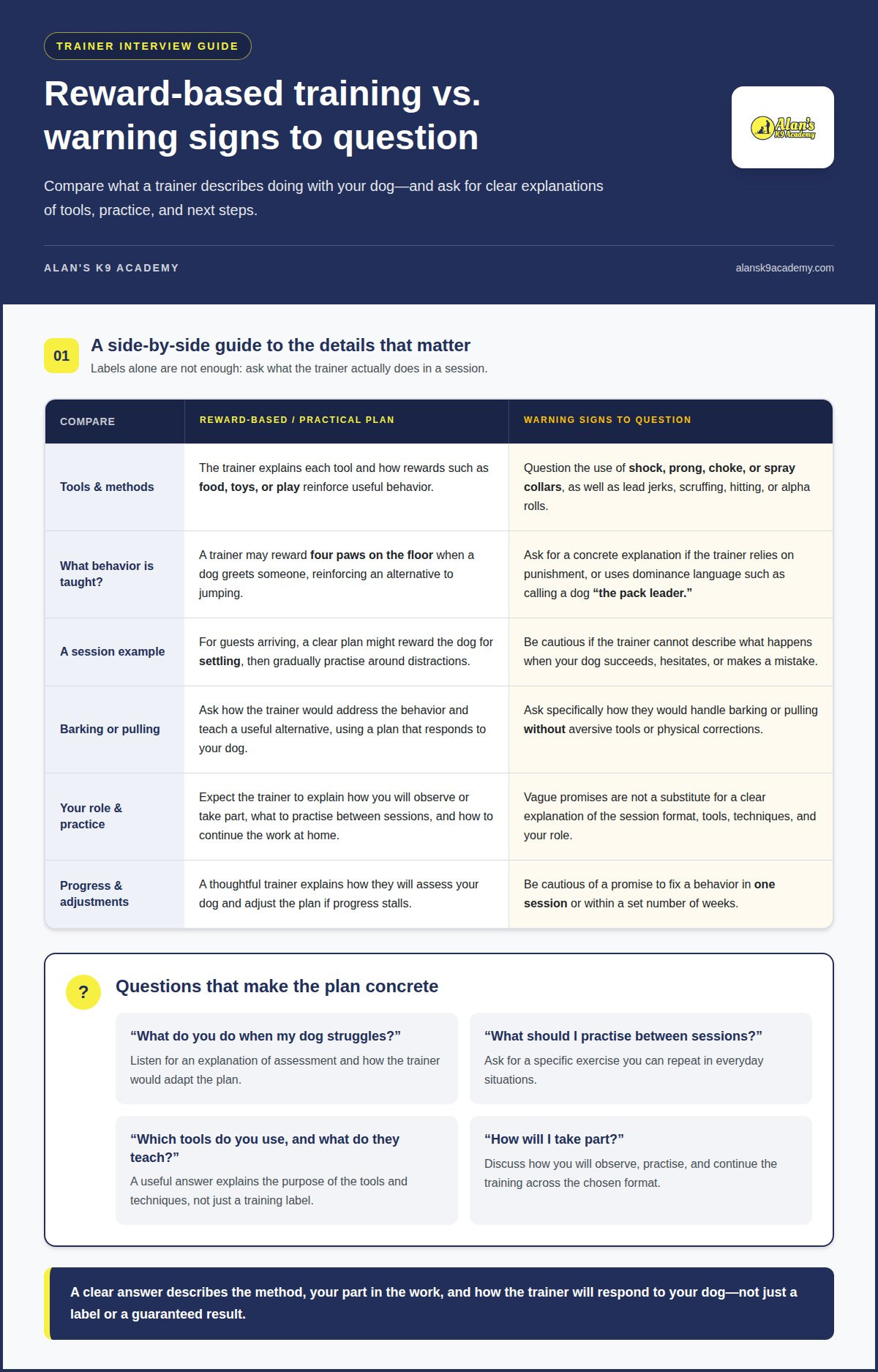
Start by asking the trainer to describe a typical session, step by step. A clear answer might explain how they reward a dog for settling when guests arrive, then gradually practise around distractions. Listen for specific methods, not just labels such as “balanced” or “firm.” You should understand what the trainer does when your dog succeeds, hesitates, or makes a mistake.
Ask which tools they use and what each tool is meant to teach. Shock, prong, choke, and spray collars, along with lead jerks, scruffing, hitting, or alpha rolls, are warning signs of aversive or punishment-based methods. Dominance language, such as calling a dog “the pack leader,” can also signal an approach worth questioning. Ask for a concrete example of how they would handle barking or pulling without those techniques.
Reward-based training uses outcomes a dog values, such as food, toys, or play, to reinforce useful behavior. For example, a trainer might reward four paws on the floor when a dog greets someone, rather than punish jumping. Ask how rewards fit the plan, what happens if your dog ignores a cue, and how the trainer prevents unwanted behavior from being reinforced.
For group classes, private lessons, or a board-and-train program, ask what tools and techniques are used, how you’ll observe or take part, and how the trainer will show you to continue the work. A practical answer should explain the format and your role, not rely on vague promises. Look for a plan that makes communication with you part of training.
Training takes ongoing practice, and the effort depends on the behavior being taught, your dog’s response, and consistency at home. Ask what practice the trainer expects between sessions. For example, they might demonstrate a brief greeting exercise for you to repeat in everyday situations.
A trainer should explain how they’ll assess your dog and adjust the plan if progress stalls. Be cautious of promises to fix a behavior in a set number of weeks or one session. A thoughtful explanation of the next step is more useful than a guaranteed result.
2. Is dog training regulated?
As of May 2026, the United States has no statewide licensing requirements for dog trainers. Trainers also aren’t required by law to hold a particular professional qualification. New Jersey introduced bills A4206 and A4207 in February 2026 to establish state licensure. Without a statewide license requirement, assess a trainer’s relevant experience, education, and ability to explain their plan.
Ask how they’ve helped dogs with your specific concern, such as leash reactivity, separation-related distress, or unreliable recall. A useful answer describes the situation, the skills taught, and how the trainer adapted the approach. They should discuss relevant factors, including your dog’s age, physical abilities, medical needs, and dietary needs if food rewards are planned. Ask for an anonymized example of a challenging case and what the trainer learned.
For a behavior concern, ask about the first steps and how progress will be assessed. A leash-reactive dog’s plan might include preventing difficult encounters, meeting the dog’s needs, and practising skills in different situations. Ask what the trainer would change if your dog struggles. A promise to resolve a behavior problem in one session or guarantee a fixed outcome isn’t a reliable measure of skill.
A written training agreement should explain the service, session format, responsibilities, payment terms, and how progress is reviewed. It should also state cancellation and refund policies, including how to give notice and what happens to unused sessions. Read the terms before agreeing, and ask for plain-language clarification of anything unclear.
Choose a trainer who can explain both their limits and next steps. If you’re looking for individualized support around your dog’s behavior, personalized training guidance can help connect the plan to everyday life.
3. Dog trainer education and hands-on experience
Ask what education prepared the trainer to teach dogs and coach owners. A useful answer names relevant courses, credentials, or supervised practice, then explains how that learning shapes sessions. A title alone doesn’t show whether someone can address your dog’s needs. Ask for an example of a skill they learned and how they apply it, such as breaking a recall cue into manageable steps.
For your dog’s breed, age, and behavior concerns, ask for relevant examples from the trainer’s experience. They should describe working with similar dogs, including puppies or older dogs, and explain how they adapted their approach. Breed experience can inform a trainer’s questions, but it shouldn’t replace assessing your individual dog.
Describe your dog’s situation, then ask how the trainer would account for age, physical abilities, medical needs, and learning history. For example, a dog with limited mobility may need a different way to practise a position than a highly active puppy. If food rewards are part of the plan, ask how dietary needs will be considered.
Ask how the trainer has handled a challenging case involving aggression, fear, or reactivity. They should outline the methods used, the steps taken, and the outcome without revealing a client’s identity. Listen for a clear explanation of assessment and adjustment, not just a success story. The details show whether they can apply their experience to your dog’s situation.
Find out how the trainer tracks learning across sessions. Ask what they observe during the first session, how they decide a skill is ready for more distractions, and what they change if your dog finds an exercise difficult. A trainer should also recognize when a case exceeds their experience and refer it to a more specialized professional.
These are practical questions to ask a dog trainer before hiring: what experience applies to your dog, how will the plan reflect individual needs, and how will you know what to practise between sessions? Specific answers help you judge whether the trainer’s education and experience fit the behavior or skill you want to address.
4. Force-free and balanced training approaches
Training labels can sound reassuring without revealing what happens in a session. Ask the trainer to explain an exercise from cue to reward, including what happens when your dog struggles. During recall practice, for example, do they make the task easier, change the reward, or apply a correction? The answer shows how their philosophy guides real decisions.
Force-free approaches emphasize teaching and reinforcing desired behavior rather than using fear or pain to suppress behavior. A trainer might reward a dog for calmly looking at a vacuum from a comfortable distance, then build learning gradually. Ask how they prevent unwanted behavior from being rehearsed and what alternative skill they teach instead.
“Balanced” can mean different things to different trainers, so ask which techniques it includes. Does the plan rely on rewards, or can it involve corrections and aversive tools? Ask what collars or other equipment they use, why they choose each one, and how they respond if your dog shows stress. Clear answers matter more than the label.
Notice whether the trainer treats a mistake as information. If a dog turns away during a handling exercise, a useful next step may be to pause, create more space, and reward a smaller approach. The plan should change to support learning, not force the dog to stay frightened. Ask how the trainer decides when to stop or make an exercise easier.
Anyone can call a method humane, so ask for a practical example. How would they teach a dog to settle while a family member enters, or build comfort with nail care gradually? Their explanation should identify the behavior they’ll teach, how they’ll reinforce it, and how you’ll know your dog is ready for the next challenge.
For training at home, explore in-home dog training that can address skills in the places your dog needs to practise them.
Alan's K9 Academy
Alan's K9 Academy can help you turn these questions into a training plan suited to your dog and your goals. Its personalized approach uses balanced, humane methods, with options including In-Home Dog Training, Behavior Modification, Therapy & Service Dog Training, and Group Classes.
Consider reaching out when you’re ready to discuss a behavior concern, build everyday skills, or explore training for therapy or service work. You can talk through what your dog is doing, what you’d like to change, and how you want to participate in training. That conversation helps you understand the path forward and decide which type of support fits your needs.
Contact Alan's K9 Academy to discuss your dog’s training needs.
Take the Next Step With Confidence
The questions to ask a dog trainer before hiring can help you start a clear conversation, but the next step is turning your concerns into a plan that fits daily life. Consider what you’d most like to change, where the challenge tends to happen, and what kind of guidance would help you practise consistently. Sharing those details gives a trainer a useful starting point for discussing your dog’s needs and your role in training.
Alan's K9 Academy provides support through In-Home Dog Training, Behavior Modification, and Therapy & Service Dog Training. Whether you’re working through a challenging behavior or building skills for a specific goal, a conversation can help you explore a suitable direction without pressure.
Contact Alan's K9 Academy today to talk about your dog and the support you’re looking for. A thoughtful first step can make training feel more manageable for both of you.
Frequently Asked Questions
Can I be involved in the sessions?
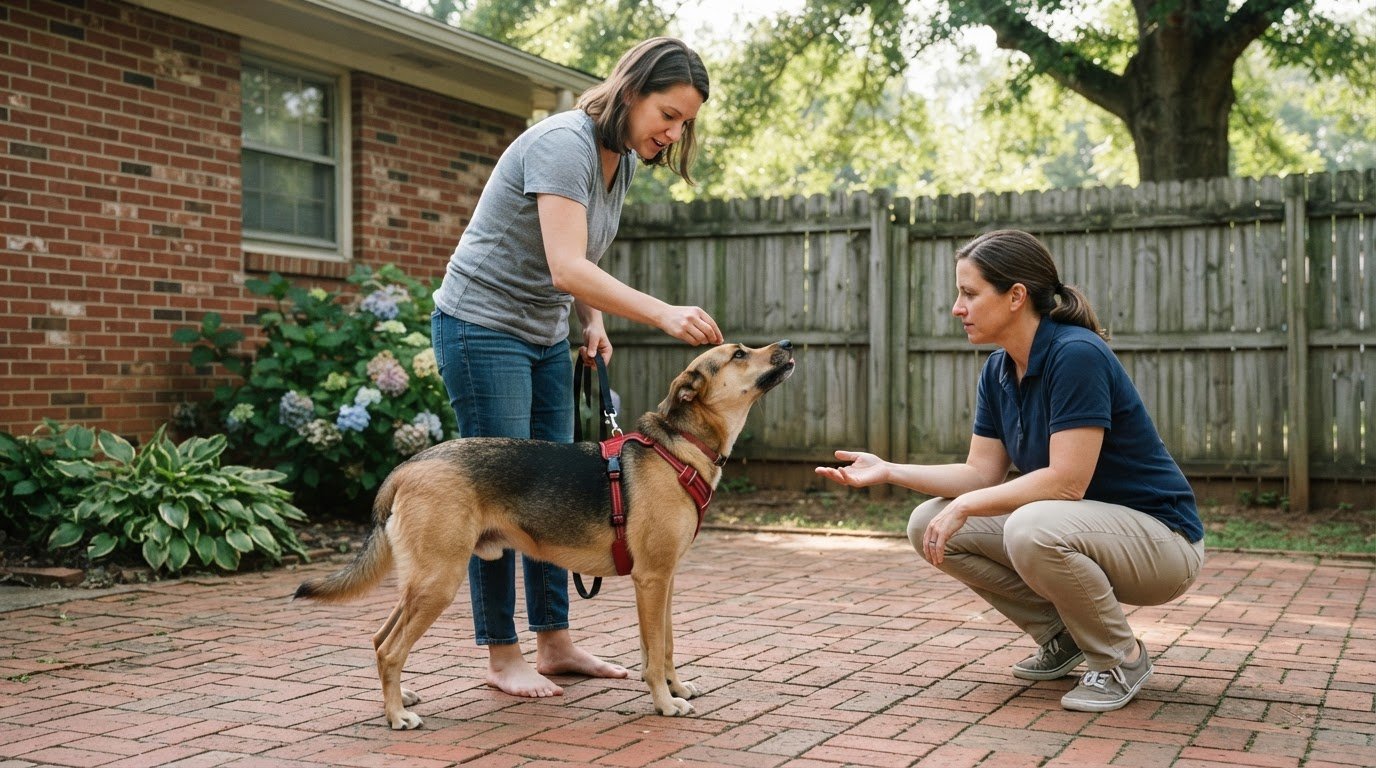
Ask to take an active role so you can use the same cues and rewards between sessions. For example, after the trainer demonstrates a loose-leash turn, practise it yourself while they coach your timing. You can also discuss difficult moments at home, such as greeting visitors, so the trainer can adapt the exercise to your routine.
Have you worked with problems like mine?
Ask for an example involving a similar behavior, then find out what was different about that dog’s circumstances. A dog barking at visitors may need a different plan from one reacting to dogs on walks. In Cartersville, Canton, Woodstock, Marietta, Rome, Acworth, Kennesaw, Sandy Springs, Roswell, Alpharetta, Powder Springs, Dallas, Hiram, Jasper, Cumming, Holly Springs, Ball Ground, or Milton, share where the behavior occurs and what you’ve observed.
How do I know if a dog trainer is good?
A good trainer can explain an exercise’s purpose and help you recognize progress in daily life. Ask them to demonstrate a skill, then explain how to practise it in another setting, such as moving from a quiet room to your front yard. Notice whether their guidance is understandable, specific to your dog, and open to your questions.
Should I be present for my dog's training?
Being present helps you respond consistently when the trainer isn’t there. You might practise giving a cue, rewarding your dog at the right moment, or noticing when your dog needs a break. If an exercise requires a different setup, ask how you’ll learn the handling steps and continue practising safely in everyday routines.
What are red flags in a dog trainer?
Be wary if a trainer won’t explain what they’re doing, discourages reasonable observation, or uses the same plan for every dog. Pressure to act immediately, shaming you for asking questions, or dismissing changes in your dog’s comfort are also reasons to pause. A professional should discuss your concerns and explain how they’ll adjust an exercise when your dog struggles.
What certifications and credentials should a dog trainer have?
As of May 2026, the United States has no statewide licensing requirements for dog trainers, and law doesn’t require a particular professional qualification. Ask what relevant education or credentials the trainer has, what practical experience supports them, and how they keep their skills current. Then connect those qualifications to your goal, such as puppy foundations, behavior support, or preparation for therapy or service work.