



Preventing Dog Bites in Children: How to Stay Safer
Any dog can bite, even a dog that’s usually friendly. Fear, pain, stress, unexpected touching, or feeling protective can trigger a bite, so preventing dog bites in children means teaching kids to give dogs space and making active adult supervision part of everyday life. A child shouldn’t approach an...

Any dog can bite, even a dog that’s usually friendly. Fear, pain, stress, unexpected touching, or feeling protective can trigger a bite, so preventing dog bites in children means teaching kids to give dogs space and making active adult supervision part of everyday life. A child shouldn’t approach an unfamiliar dog, disturb a dog that’s eating or sleeping, or assume a familiar dog is always ready to play.
These risks can feel worrying, but clear habits can make interactions safer. Teach children how to respond around unfamiliar dogs, recognize when a dog needs space, and practice bite-prevention skills with educational videos. You’ll also find practical guidance on what to do after a bite and when a child needs medical care, so you can respond calmly and confidently.
Key Takeaways
• Teach children to pause, ask the dog’s owner, and give unfamiliar dogs space rather than approaching on their own.
• Use bite-prevention videos to help children recognize signs that a dog may feel afraid, anxious, or uncomfortable.
• Supervise every interaction and give dogs room to eat, sleep, and rest without being disturbed.
• If a bite happens, apply pressure to bleeding and seek medical guidance, especially for deep wounds or bleeding that won’t stop.
1. Approaching unfamiliar dogs
The safest choice for children is not to approach an unfamiliar dog. If a child sees an off-leash dog outside, they should go indoors and tell an adult. Keep well away from dogs behind fences, tied up, barking, or growling. A fence or leash does not mean a dog is available to pet.
If an unfamiliar dog approaches, tell the child to stop moving, stay calm, and avoid running or shouting. Give the dog room to pass. Once it loses interest, move away calmly. For example, a child walking on a sidewalk can pause and let the dog pass instead of reaching toward it. An adult should step in if the dog keeps coming closer.
A child should greet a dog only when its owner is present and gives permission. Teach children to approach slowly, let the dog choose whether to come closer, and avoid crowding it. If the dog seems uncomfortable, end the greeting without petting. When the owner permits contact:
• Offer a closed hand for the dog to sniff.
• Pet the dog’s shoulder or chest, not the top of its head.
• Keep the child’s face away from the dog’s face.
These precautions apply to familiar dogs, too. A child should approach a dog they know only with its owner present. Owners can keep their dog close and end the greeting if it turns away or tries to leave. Don’t let children follow or corner a dog that moves away.
If a dog knocks a child down or attacks, teach the child to curl into a ball, cover their head with their arms, and lie still until the dog leaves. An adult should then move the child to safety. Calm actions and giving a dog space can reduce the risk of injury, but children should never be expected to handle an aggressive dog alone. An adult should manage the dog and get help when needed.
2. Educational videos about bite prevention
Short educational videos can help children practice reading dog body language before they meet a dog. Choose lessons that show a child pausing, giving a dog space, and asking an adult for help. Watch together, then ask your child to point out signs that a dog may be uncomfortable. Videos should teach respect, not encourage children to test a dog’s patience.
Recognizing signals matters because a dog may show fear before biting. A scared or anxious dog may crouch, lower its head, tuck its tail, flatten its ears, or look away. A stiff, straight-legged stance, bared teeth, growling, lunging, or barking can signal aggression. Teach children to stop approaching and move away slowly with an adult when they notice these behaviors.
The risk deserves attention: about 4.5 million people in the United States are bitten by dogs each year. At least half of Americans who seek medical attention for dog bites each year are children, and most children bitten are under 14 years old. Use those figures to explain why bite prevention matters without frightening children.
Pet owners also play a role in safer encounters. Supervise dogs outdoors, including in fenced yards, and use a leash in public. Socialize dogs at their own pace, and use humane, reward-based training. If you leave the room, separate the dog and child with a door or baby gate. Don’t force puppies to stay near people or situations that clearly frighten them.
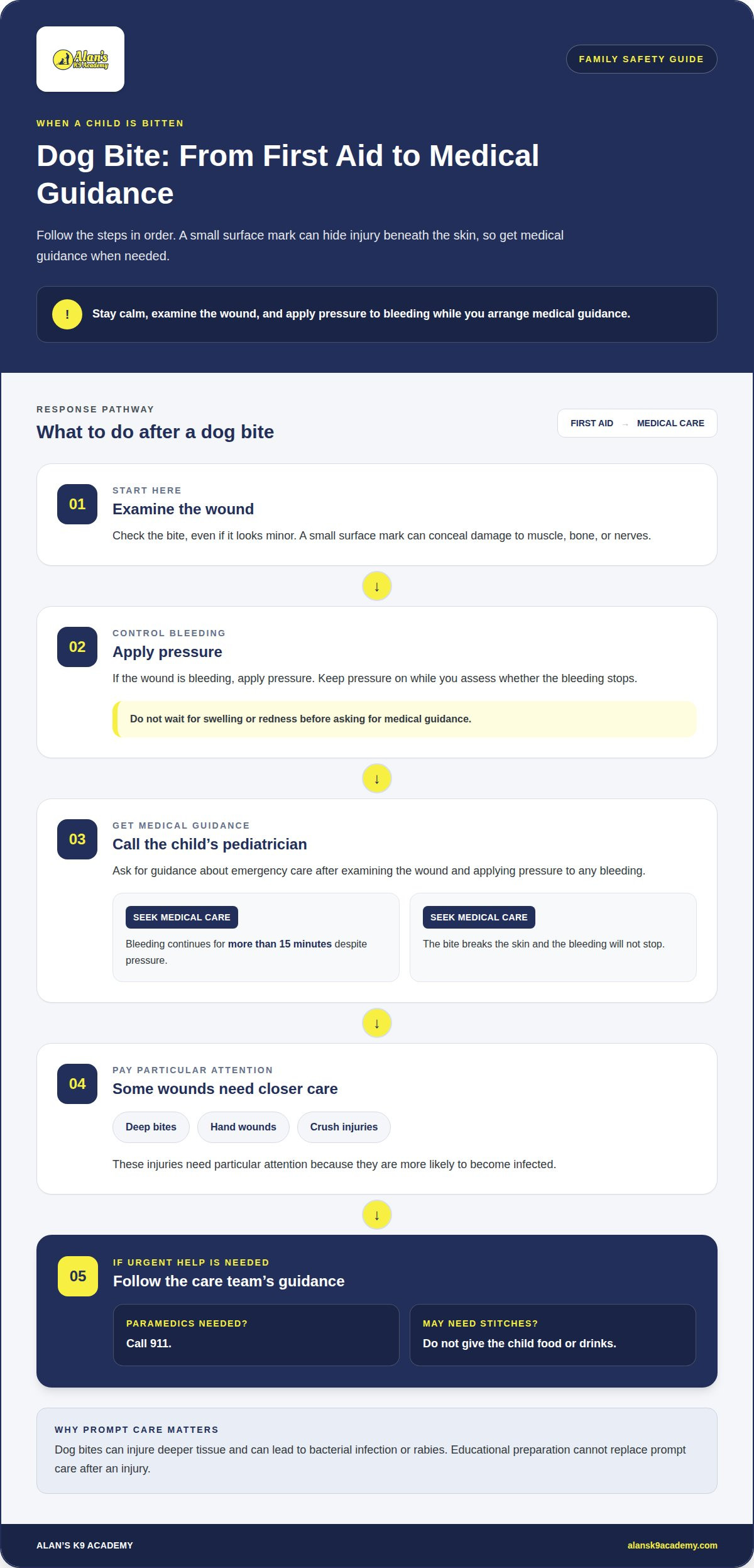
If a dog bite happens, examine the wound, apply pressure to bleeding, and call the child’s pediatrician for guidance about emergency care. Bites can injure deeper tissue and can lead to bacterial infection or rabies. If paramedics are needed, call 911. If a child may need stitches, don’t give them food or drinks. Videos can prepare families, but they can’t replace prompt care after an injury.
3. Why do dogs bite?
Any dog can bite, even a friendly family pet. Pain, illness, injury, unfamiliar people or dogs, sudden touch, crowds, and loud noises can trigger defensive behavior. A dog may also bite to protect its territory or nip too hard during play. For example, hugging a sore dog may cause pain and fear, even when a child means no harm.
Children should treat every dog gently and give it room to rest. They shouldn’t touch dogs that are eating, sleeping, or caring for puppies. They should also avoid distracting a service dog while it’s working. Adults must supervise children and dogs, and never leave a baby or young child alone with a dog. Around unfamiliar dogs, children should avoid approaching and let an adult manage any interaction.
No breed label can reliably identify a dog that will bite. Any dog may bite in a stressful situation, and the AVMA says breed-specific legislation isn’t a reliable or effective prevention solution. The situation matters: children should leave loose dogs, dogs behind fences, and tied-up dogs alone. They should also stay away from dogs that bark or growl.
For families considering adoption, a dog’s known background can inform a safer decision. The ASPCA recommends adopting from a well-managed shelter whose staff can share information about the dog’s personality, history, and behavior. Families shouldn’t choose a dog with a known aggression history when children live in the home. The AVMA advises considering waiting until children are older than 4 years before adopting a new dog.
Owners can reduce stressful encounters with steady, humane care. Socialize dogs at their own pace with different people, animals, and environments; don’t force puppies to remain near something frightening. Arrange regular veterinary care, including rabies vaccination, and use training classes to support safe behavior. If a dog first shows aggression, seek qualified professional help, even if nobody has been bitten. Give the dog space while adults manage the situation.
4. When to contact a pediatrician or seek emergency care
After a dog bite, examine the wound and apply pressure if it’s bleeding. Call the child’s pediatrician for guidance about emergency care. A small surface mark can hide damage to muscle, bone, or nerves. Seek medical care if bleeding continues for more than 15 minutes despite pressure, or if a bite breaks skin and won’t stop bleeding. Deep bites, hand wounds, and crush injuries need particular attention because they’re more likely to become infected.
Don’t wait for swelling or redness before asking for medical guidance. Rabies and bacterial infections can develop after a dog bite and need prompt treatment. About 15-20% of dog bites become infected. A doctor may recommend antibiotics to help prevent infection. If the child may need stitches, don’t give them food or drinks. Call 911 if paramedics are needed after the attack.
Whether a child needs rabies shots depends on the animal’s vaccination information and whether it can be observed. A child may be able to avoid rabies vaccination if the owner reliably confirms the dog’s vaccination and the animal can be observed for the next 10 days. The pediatrician weighs the wound and exposure details when advising on care.
Leash, licensing, and bite-reporting rules vary by state and city, so there isn’t one local rule for every American family. Dog owners should follow the requirements that apply where they live. Licensing where required and regular veterinary care, including rabies vaccinations, support safer communities around dogs. If a dog growls or shows aggression, keep children away and seek qualified behavioral help.
Alan's K9 Academy
Alan's K9 Academy helps families build safer, more manageable routines around dogs through practical training and behavior support. If a dog reacts with fear, growling, or aggression, Behavior Modification can address those behavior concerns. In-Home Dog Training can help families work on skills in the setting where daily interactions happen, while Group Classes support learning around other people and dogs.
These options can complement the child-safety steps in this guide, but they don’t replace medical care after a bite. If you’re concerned about your dog’s behavior or want help strengthening household routines, contact Alan's K9 Academy to discuss a suitable next step.
Build safer habits together
Preventing dog bites in children takes everyday practice, not just one conversation. Keep reinforcing calm, respectful interactions as your child grows and household routines change. Adults can model how to give a dog space, notice discomfort, and pause before reaching out. Small, consistent lessons help children make safer choices in real situations.
If you’d like support with your dog’s behavior or family training goals, Alan's K9 Academy offers In-Home Dog Training and Behavior Modification. Therapy & Service Dog Training is also available for families working toward those specialized goals. The right training focus depends on the skills and behavior you want to address.
Contact Alan's K9 Academy to discuss a helpful next step for your family. With patient practice and thoughtful support, safer routines can become part of everyday life.
Frequently Asked Questions
Why do dogs bite?
Dogs may bite when pain, fear, surprise, or pressure makes them feel unsafe. For example, a child leaning over a resting dog may seem threatening, even if the child means to show affection. Dogs may also react to loud play or sudden movement. A bite doesn’t always mean a dog is generally aggressive; the situation and the dog’s comfort matter.
What Can Dog Owners Do?
Owners can reduce risks by managing a dog’s surroundings rather than relying on friendliness alone. Use a leash in public, supervise dogs outside, and provide a quiet resting area that children know to leave undisturbed. If an adult needs to leave the room, put a door or baby gate between the child and dog. Keep veterinary care, including rabies vaccinations, current.
What are the most effective ways to prevent dog bites in children?
Combine adult supervision, clear household boundaries, and repeated practice. Make it a family rule that children never approach a dog without an adult’s permission, even during playdates. Before a visitor arrives, give the dog a comfortable, separate space and explain that children shouldn’t enter it. This layered plan is more reliable than expecting a child to remember one instruction in the middle of an exciting moment.
How can parents teach children to recognize signs a dog is uncomfortable or aggressive?
Practice reading body language together with a calm dog or an educational video. Ask your child to pause the video and describe what the dog’s body is doing instead of guessing how it feels. Crouching, a tucked tail, flattened ears, or looking away can signal discomfort. Growling, lunging, or bared teeth call for immediate distance and adult help.
What is the safest way for a child to approach or pet a dog?
A child should approach a dog only when its owner is present and has given permission. Have the child pause and let the dog choose whether to come closer; don’t let them chase, corner, or reach over the dog. If the dog stays away, turns aside, or seems uneasy, end the greeting. If petting is welcome, keep it brief and let the owner guide the interaction.
How should families supervise children around their own dogs?
An adult should stay close enough to step in, not supervise from another room or while distracted. Pay particular attention during busy moments, such as when visitors arrive or children play near the dog’s resting place. Use a gate or closed door whenever direct supervision stops. Give the dog a child-free place to eat and rest, and teach children to leave that area alone.