



Large Breed Dog Training in Milton, GA: Choose Your Training
A strongly attached large dog needs a gradual path to confidence, not a sudden separation from the person they trust. A large breed dog trainer in Milton, GA can help you build calm independence and reliable skills while keeping you involved. The aim is a dog who can settle, respond, and feel secure...

A strongly attached large dog needs a gradual path to confidence, not a sudden separation from the person they trust. A large breed dog trainer in Milton, GA can help you build calm independence and reliable skills while keeping you involved. The aim is a dog who can settle, respond, and feel secure in everyday situations.
It’s understandable to worry that your dog’s size makes clinginess harder to manage. Patient, consistent training can build practical habits without weakening the bond you value. This guide explains training options for Milton dog owners, how positive reinforcement can support calm behavior, and what to consider when choosing a trainer. You’ll also learn how in-home training, group classes, and behavior-focused support can help meet your dog’s needs at home and in daily life.
Key Takeaways
• Choose between in-home lessons and group classes by considering where your dog needs practice and how they respond around other dogs.
• For clinginess, build calm independence through small, consistent steps in familiar settings while teaching skills you can reinforce between sessions.
• Look beyond credentials alone: assess a trainer’s experience, approach to behavior, and ability to tailor instruction to your dog and household.
• Positive reinforcement can make desired behaviors clearer and rewarding; learn how to use it consistently in everyday situations.
In-home dog training, board and train, and group classes
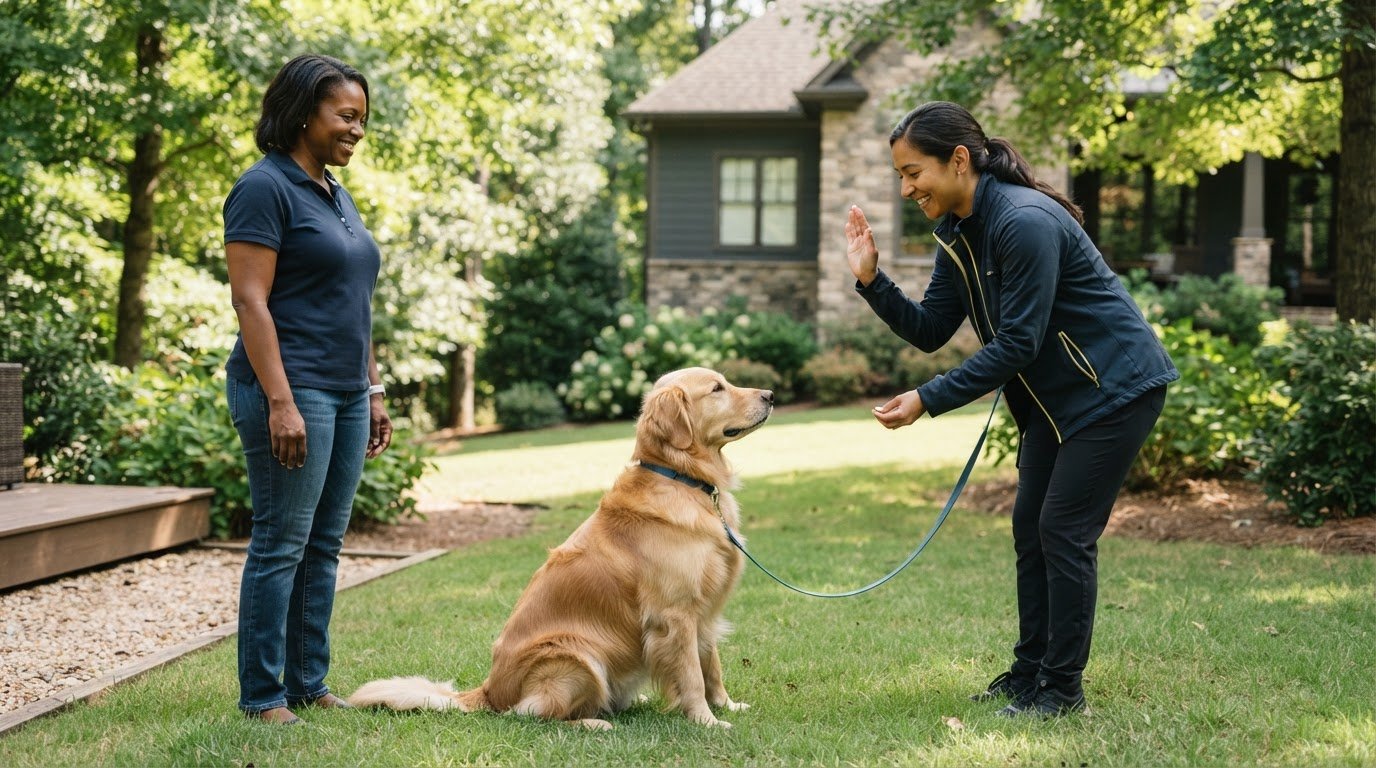
For a large dog that stays close to you, begin where the behavior happens. In-home sessions let you practice obedience at the doorway, on household walks, or while your dog settles beside the sofa. Group classes provide practice around other dogs and people, with opportunities to work on space and responding to cues. Each setting helps develop different real-world skills.
Reviews for trainers serving large dogs in Milton are most useful when they describe specific progress, not praise alone. Look for examples involving leash pulling, visitor greetings, or settling when an owner steps away. A review that explains the trainer’s guidance and the family’s practice offers a clearer picture of the process.
Large breed obedience training can combine private coaching with group practice, depending on your dog’s needs and behavior. One useful progression is to teach a cue in a quiet room, practice near a distraction, then use it on a familiar walk. For puppies, a reported example involved a golden retriever beginning training at nine weeks and completing six sessions. It illustrates how early lessons can focus on foundations such as responding to their name, leash skills, and settling.
In-home dog training for large breeds in Milton is useful for goals tied to household routines. You can work on greetings, door manners, or calm time apart where those habits matter. For clinginess, practice brief separations and reward relaxed settling before gradually increasing the challenge.
Reactive or aggressive behavior calls for a structured plan. Identify triggers, such as approaching dogs, then practice at a distance where your dog can still respond to cues. Reinforce an alternative, such as turning toward you, rather than forcing close contact.
Boarding, private suites, and board-and-train programs are different from lessons. Calm routines can include familiar cues, predictable rest, and gradual transitions; cage-free private suites describe lodging, not a training method. In Milton, look for training options serving the North Atlanta Metro area. Choose in-home sessions or group classes based on where your dog needs practice.
Private and in-home lessons
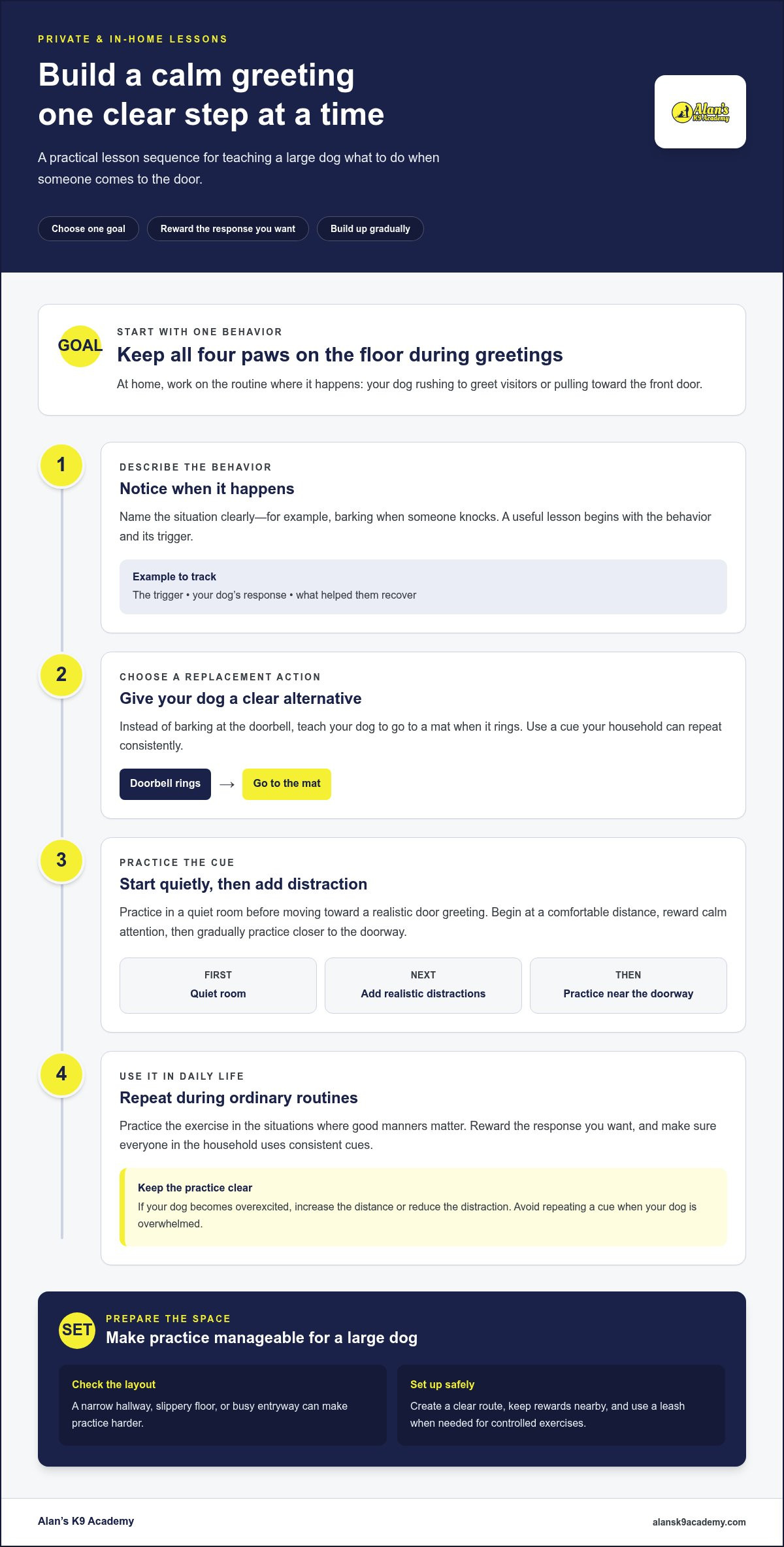
Private lessons give owners focused practice for behaviors that may be difficult to manage in a group. At home, a trainer can observe your actual routine: your dog rushing to greet visitors, pulling toward the front door, or struggling to settle while you work. That context helps identify useful cues and practice them where good manners matter.
Start with one goal, such as keeping all four paws on the floor during greetings. Ask your dog to pause at a comfortable distance, reward calm attention, then gradually practice closer to the doorway. If your dog becomes overexcited, increase the distance or reduce the distraction. Small adjustments keep practice clear instead of repeating a cue when your dog is overwhelmed.
A practical lesson can follow this sequence:
• Describe the behavior and when it happens, such as barking when someone knocks.
• Choose a replacement action, such as going to a mat when the doorbell rings.
• Practice the cue in a quiet room before adding realistic distractions.
• Repeat the exercise during ordinary routines, rewarding the response you want.
A large dog’s training plan should account for handling and household layout. A narrow hallway, slippery floor, or busy entryway can make practice harder. Set up a clear route, keep rewards nearby, and use a leash when needed for safe, controlled exercises. Consistent cues from everyone in the household also help your dog understand what to expect.
Private coaching can address behavior such as persistent jumping, leash frustration, or difficulty settling when separated from an owner. Track the trigger, the dog’s response, and what helped them recover. This gives each lesson a useful starting point. If challenging behaviors need structured support, behavior modification guidance can help shape a practical plan for your home and daily routines.
Trainer qualifications and AKC certifications
A certificate can reflect focused study, but your dog’s needs also call for practical judgment. If your large dog pulls toward other dogs, ask how the trainer assesses distance, stress signals, and safe handling. Look for an explanation of the training process, not reliance on a title alone.
The American Kennel Club, or AKC, is one name you may see when reviewing training credentials. Treat an AKC certification as one part of the picture: learn what skills it represents and how the trainer applies them. A credential alone does not show whether someone has experience with large dogs, owner coaching, or behavior concerns such as reactivity.
Experience also needs context. Tyla Metzentine-Kuhn says she has more than 25 years of experience in the sporting industry. That example shows why it helps to ask what kind of work a trainer’s background involved. Sporting experience may differ from teaching household manners or supporting a dog who struggles around visitors.
Use a short, practical review before choosing a trainer:
Ask about relevant cases
Has the trainer worked with dogs who jump, pull, or react on walks?
Discuss the method
Can they explain how they reward desired behavior and respond when a dog is overwhelmed?
Look for owner instruction
Will you learn how to repeat the exercise safely between sessions?
Request a sample goal
For example, what steps would build a calm pause before your dog greets a visitor?
For a strong dog, handling skill matters alongside credentials. Notice whether the trainer explains equipment use, adjusts exercises when your dog shows stress, and keeps you involved. These details can support your partnership and help you practice consistently. A thoughtful trainer connects qualifications to your dog’s everyday needs rather than presenting certification as a promise of results.
Positive reinforcement and science-based training
Positive reinforcement means adding something your dog values after a desired behavior. For example, reward a large dog for walking beside you on a loose leash. The reward makes that behavior more worthwhile to repeat. It might be a treat, play, or a chance to sniff, depending on what motivates your dog.
Timing matters. Mark the moment your dog turns toward you, then deliver the reward promptly. If the reward comes after jumping or pulling, it may reinforce that behavior instead. In puppy training, reward four paws on the floor before greeting, rather than waiting until excitement escalates.
A simple practice sequence keeps the lesson clear:
• Choose one behavior, such as settling on a mat while you prepare dinner.
• Start in a quiet room with few distractions.
• Reward the first small step, such as looking at or stepping onto the mat.
• Build duration gradually, then practice with ordinary household activity nearby.
If your dog clings to you, reinforce calm independence in manageable steps. Reward resting a short distance away, then practice while you move around the room. If your dog leaves the mat, make the exercise easier and reward a simpler success. This gives your dog a clear alternative to following your every move.
A structured training approach observes what happens before and after a behavior. Note the trigger, your dog’s response, and which reward helps them re-engage. For example, if a passing dog triggers barking, create more distance and reward your dog for looking back toward you. Repeat the setup consistently, keeping enough space for safe practice.
Choose training that teaches you how to apply rewards in real routines, not just during isolated drills. For hands-on practice at home, explore in-home dog training for customized coaching with your dog.
Alan's K9 Academy: In-Home Dog Training
Alan's K9 Academy offers in-home dog training for owners who want to practice skills in familiar surroundings. Lessons can focus on everyday routines, such as settling calmly when you move between rooms or greeting visitors without jumping. For persistent reactivity, aggression, or difficulty settling, Behavior Modification provides a focused path for addressing behavior.
Group Classes can add practice around other dogs and people, while Therapy & Service Dog Training supports foundation skills for those goals. The right fit depends on what your dog needs to learn and where you want those skills to work in daily life. If you’re ready to discuss a training path for your dog, contact Alan's K9 Academy or visit the website.
Build the Next Calm, Confident Habit
Your next step can be practical: choose one difficult moment and decide what you want your dog to do instead. That might mean settling while you answer the door, walking calmly past a distraction, or relaxing when you move away. A clear goal gives you and your dog a steady place to begin.
Choosing a large breed dog trainer in Milton, GA is about finding support that fits the behavior and your household routine. Alan’s K9 Academy offers In-Home Dog Training and Behavior Modification for owners working through everyday skills or more challenging behavior. Therapy & Service Dog Training is also available for those pursuing foundation skills for those roles.
Progress grows through patient practice and a shared plan. You don’t have to figure out the first step alone. Contact Alan's K9 Academy today to discuss training for your dog and start building more comfortable routines together.
Frequently Asked Questions
How do you handle a dog that is very attached to their owner?
Build independence through predictable routines that let your dog succeed without constant contact. For example, offer a food puzzle on a bed while you step into another room briefly, then return before your dog becomes distressed. Gradually vary your distance and activity, and reward relaxed behavior. If separation triggers intense distress or destructive behavior, discuss those patterns with a trainer for tailored behavior support.
Is training appropriate for older dogs or is it mainly for puppies?
Training can suit older dogs as well as puppies; lessons can focus on present needs, not just age. An older dog might practice calmer greetings, leash manners, or settling around household activity, while a puppy learns early routines. At Alan's K9 Academy, acceptance into a program and the recommended training plan are determined through an evaluation, which considers the dog’s behavior and training goals.
Where can I find large breed dog trainers in Milton, GA?
Alan's K9 Academy serves Milton and communities including Cartersville, Canton, Woodstock, Marietta, Rome, Acworth, Kennesaw, Sandy Springs, Roswell, Alpharetta, Powder Springs, Dallas, Hiram, Jasper, Cumming, Holly Springs, and Ball Ground. In-home lessons can address behavior in the household, while group classes provide structured practice with other dogs. Choose the setting that matches where your dog needs support.
What certifications and experience do dog trainers in Milton, GA have?
Credentials vary, so consider the trainer’s named qualification alongside relevant experience and the skills you need. Alan Carr is identified as a Master K9 Trainer with over 35 years of professional dog-training experience. If you’re comparing an AKC certification, look at what its assessment covers and whether that training background fits your goals, such as everyday obedience or behavior challenges.