



Humane E-Collar Training North Atlanta: Safety and Use
An e-collar can cause discomfort or distress if it’s used as punishment, set too intensely, or introduced without careful guidance. Humane e-collar training in North Atlanta should prioritize your dog’s comfort, use clear communication and reinforcement, and adapt to the individual dog rather than r...

An e-collar can cause discomfort or distress if it’s used as punishment, set too intensely, or introduced without careful guidance. Humane e-collar training in North Atlanta should prioritize your dog’s comfort, use clear communication and reinforcement, and adapt to the individual dog rather than rely on stimulation as punishment. An e-collar isn’t automatically humane or harmful; how it’s chosen and used matters.
It’s reasonable to feel cautious about a tool that could cause discomfort. Before deciding whether it belongs in your dog’s training, consider the risks and safeguards. This article explains what careful use can involve, what may affect your dog’s safety and comfort, where to seek professional support in Georgia, and why owner education and consistent follow-through matter. You’ll also learn when an individual assessment is especially important, so you can make a thoughtful choice centered on your dog’s wellbeing.
Key Takeaways
• Learn how punishment-based use can affect a dog’s comfort and what humane training prioritizes instead.
• See what to consider when seeking professional e-collar guidance in Georgia and choosing a suitable training setting.
• Understand how your participation and consistent follow-through help carry training skills into everyday life.
• Discover why a trainer considers your dog’s temperament, size, and goals before recommending an e-collar.
Avoiding punishment-based training and shock collars
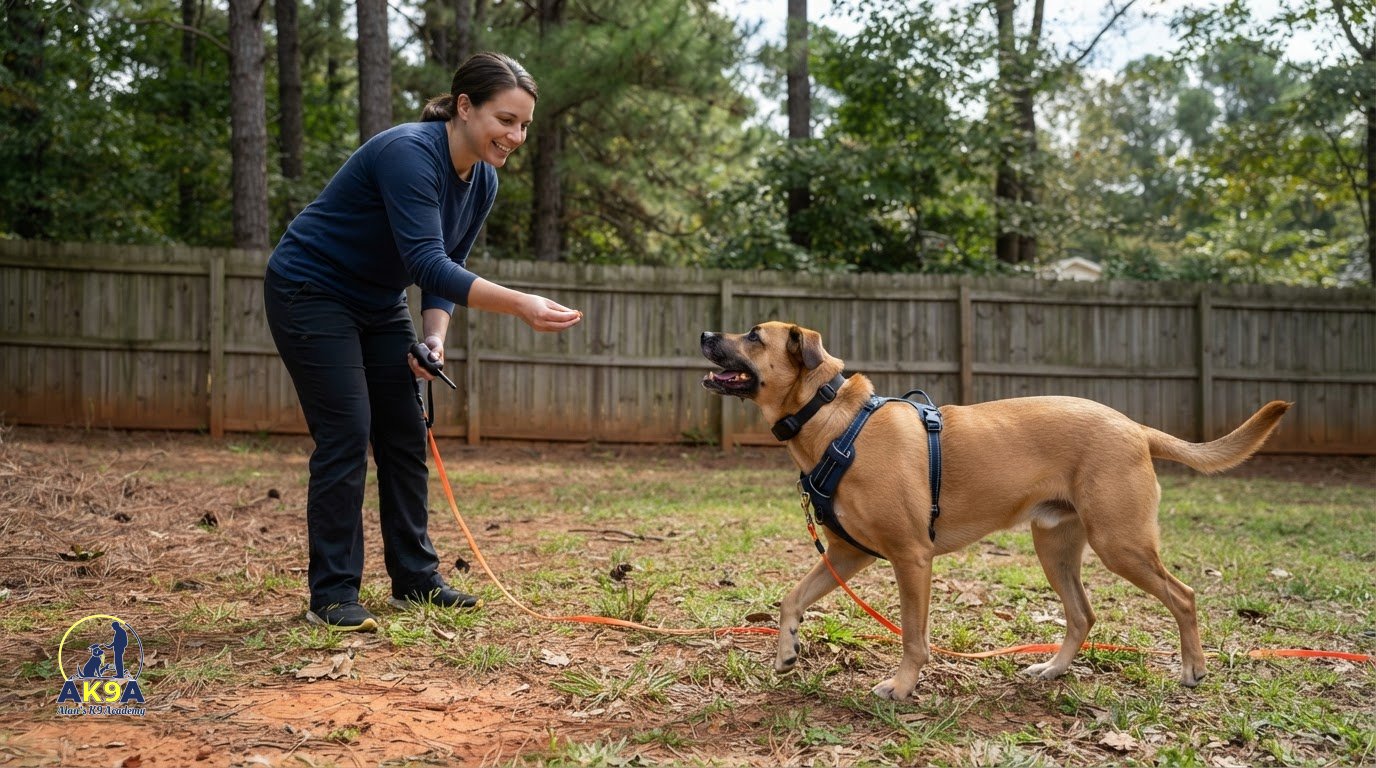
Humane e-collar training teaches a dog to respond to a cue, using the collar as a communication tool rather than punishment. The trainer first teaches the desired behavior and pairs cues with clear guidance and reinforcement. For example, a dog learns to return when called before an e-collar cue is introduced.
An e-collar is a receiver collar controlled by a handheld transmitter; humane use depends on the trainer’s method. North Atlanta trainers may use a transmitter, receiver collar, leash, and rewards such as food or play. Ask how each item supports a trained cue, and how the trainer adjusts or pauses if your dog shows discomfort.
A trainer’s qualifications can indicate relevant education and practical experience, but they don’t guarantee results. Ask what training they’ve completed, whether they hold relevant credentials, and how they keep their skills current. When reading reviews, look for specific descriptions of communication, owner instruction, and progress in real-world settings, rather than relying on star ratings alone.
A useful first question is, “What will my dog learn before the collar is introduced?” Also ask how the trainer distinguishes a cue from a correction, what signs of stress would prompt a pause, and how you’ll practice safely between sessions. A clear answer should outline the steps and give an example tied to your dog’s goals.
Punishment-based use applies discomfort to suppress behavior; humane instruction builds a predictable response instead. If a dog pulls toward a distraction, the trainer can teach an alternative response and explain how to reinforce it. The collar should never replace teaching, supervision, or the owner’s understanding of the cue.
Training in a familiar home can help a professional observe routines and everyday distractions. Details about private training in clients’ homes describe this setting. For fear, aggression, or bite risk, prioritize safe management and an individual professional assessment before considering equipment.
E-collar help and training locations in Georgia
Professional guidance can take place at home or in an appropriate real-world setting. Both the location and the trainer’s approach matter when you’re seeking humane support in North Atlanta.
State and local rules are separate from training technique. Consult current guidance from the relevant authorities for the specific training location; don’t assume the rules in one city apply everywhere.
E-Collar Training Locations in Georgia
A training location is the setting where a professional teaches and practices skills with a dog and owner. In the North Atlanta Metro area, Cartersville, and Bartow County, this may mean working at the client’s home or an appropriate real-world environment.
A home session lets a trainer observe everyday routines, such as how a dog responds to the doorbell or leash. A suitable outdoor setting can help address practical goals, such as responding to a recall cue around ordinary distractions. The setting should fit the dog’s behavior and the training objective, not just offer a convenient meeting point.
Choosing a Humane North Atlanta Trainer
A qualified trainer should explain their education, hands-on experience, and process clearly. Ask which credentials they hold, who issued them, and how their experience relates to your dog’s needs. Credentials are only part of the picture; the trainer should also explain how they teach cues, build skills, and involve owners.
Reviews can help you assess communication and owner support. Look for specific examples of what the trainer worked on, how they explained progress, and whether the owner learned practical skills. Broad praise is less informative than a review that describes an experience, such as learning to reinforce a recall cue consistently.
Before choosing a trainer, ask how they adapt sessions to your dog’s temperament and goals. Ask what signs of discomfort would prompt a pause and how they’ll teach you to use cues consistently. A humane plan should explain the purpose of each step and include owner instruction, rather than rely on equipment alone.
Owner consistency and daily practice during professional e-collar training
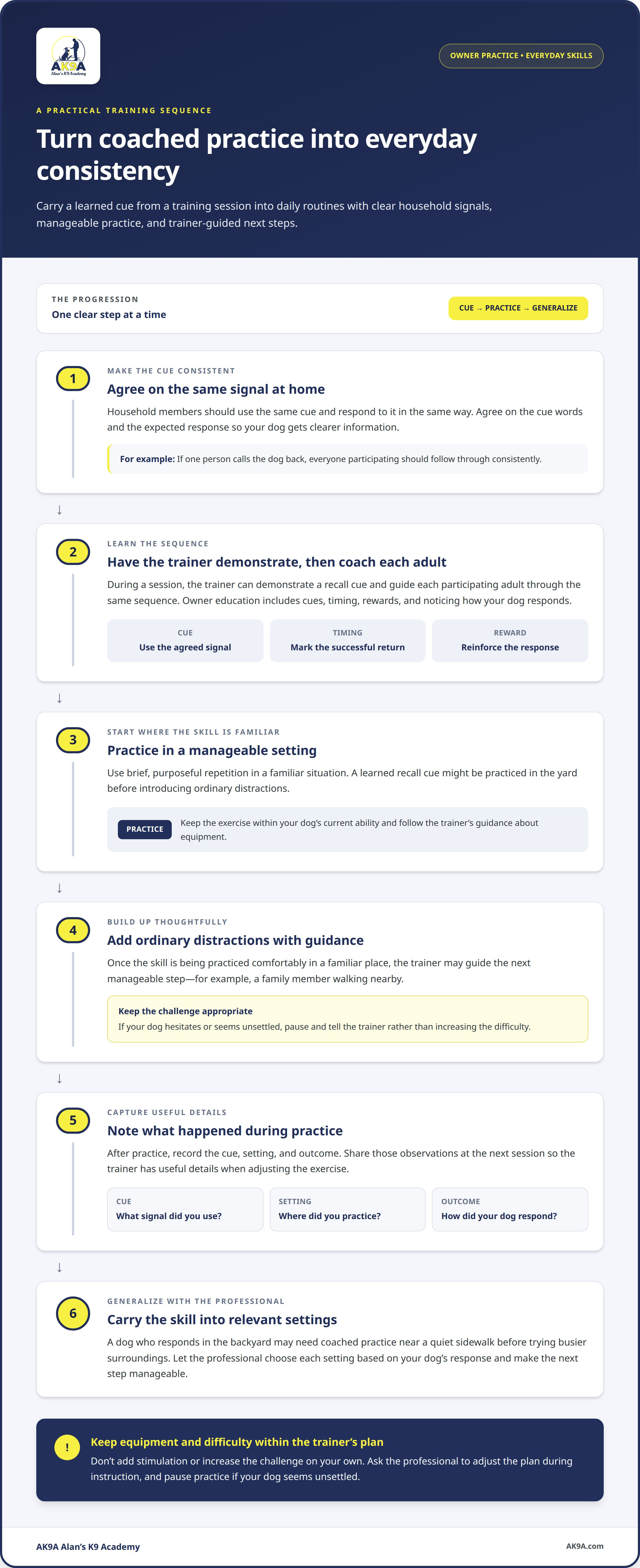
Consistency means every household member responds to the same cue in the same way. During a session, the trainer can demonstrate a recall cue, then coach each participating adult through the same sequence. If one person calls the dog back and another repeats the cue without following through, the dog gets mixed information. Agreeing on cue words and expected responses helps establish a clearer routine.
Daily practice means brief, purposeful repetition of a skill in familiar situations. A trainer may suggest practicing a learned recall in the yard before adding ordinary distractions, such as a family member walking nearby. Keep practice within your dog’s current ability, and follow the trainer’s guidance on whether to use equipment. Don’t add stimulation or increase difficulty on your own; ask the professional to adjust the plan during instruction.
Owner education means coaching on cues, timing, rewards, and reading your dog’s response. For example, the trainer can explain when to mark a successful return and how to reward it. After practice, record the cue, setting, and outcome, then share those observations at the next session. This gives the trainer useful details for adjusting the exercise.
Generalization means helping a dog perform a learned behavior in different relevant settings. A dog who responds in the backyard may need coached practice near a quiet sidewalk before trying busier surroundings. The professional should choose each setting based on the dog’s response and make the next step manageable. If your dog hesitates or seems unsettled, pause and tell the trainer rather than increasing the challenge.
Consistent follow-through connects professional sessions with everyday routines. Ask the trainer to clarify which cues each household member should use, what success looks like, and which practice situations fit the current plan. For instance, an owner can reinforce a calm response at the doorway when visitors arrive, following the trainer’s instructions. Clear communication between sessions keeps practice aligned with your dog’s goals.
When a professional trainer may recommend a dog wear an e-collar
Recommending an e-collar is a professional judgment about whether the tool fits a dog’s needs. A trainer should consider the dog’s size, temperament, training goals, and response to instruction before recommending one. It isn’t the default choice for every dog or behavior.
The collar must suit the individual dog. Smaller dogs may benefit from equipment with finer stimulation control rather than a system with fewer adjustment options. The trainer should explain how the equipment fits your dog and demonstrate its use during supervised instruction, so you aren’t left guessing about settings.
Temperament matters, too. A sensitive or worried dog may respond differently from a confident dog in the same setting. The trainer should observe your dog and consider whether adding a collar supports clear learning. If your dog shows signs of distress during instruction, the trainer should pause and reassess rather than increase pressure.
Training goals help determine whether the tool has a defined role. A professional might consider it while teaching a reliable response to a recall cue in appropriate real-world settings. The goal is a clear, learned behavior, not simply stopping barking or suppressing a reaction. The trainer should explain how the collar fits into the overall plan.
Equipment should be chosen to suit the dog, not the other way around. The professional can explain why a particular system offers suitable control for your dog’s size and sensitivity. Ask what behavior the trainer is teaching, what your dog already understands, and how progress will be observed. Those answers make the recommendation easier to assess.
When aggression or bite risk is involved, safe management and an individual professional assessment come first. An e-collar recommendation doesn’t replace careful planning around triggers, people, and other animals. The trainer should explain how they’ll keep everyone safe while assessing your dog and selecting appropriate training goals.
Consider an e-collar only as part of a tailored plan that includes hands-on instruction and owner education. Ask the professional to explain why your dog would wear it during each exercise and how they’ll assess whether it remains appropriate.
Get Help With Your Dog’s Training
AK9A Alan’s K9 Academy
AK9A Alan’s K9 Academy helps North Atlanta dog owners make informed training decisions through personalized, humane guidance. Private training in your home or an appropriate real-world setting lets a professional consider your dog’s behavior, goals, and daily environment together.
The approach is balanced and tailored to each dog and owner, with emphasis on practical skills and consistent follow-through. If you’re unsure whether an e-collar fits your dog, an evaluation can help clarify training needs and guide the next steps. For behavior concerns, including aggression or bite risk, safe management and an individual professional assessment are important starting points.
Take the Next Step With Confidence
The right training plan should make your next decision clearer, not add pressure to use equipment before you understand its role. If you’re considering humane e-collar training in North Atlanta, an evaluation focused on your dog’s behavior, goals, and comfort can help identify practical next steps.
AK9A Alan’s K9 Academy takes a balanced, personalized approach that considers both the dog and owner. For aggression or bite risk, safe management and an individual professional assessment are essential starting points.
Get Help With Your Dog’s Training
Thoughtful guidance and steady follow-through can help you build a more connected routine with your dog.
Frequently Asked Questions
Does the e-collar hurt my dog?
Prioritize your dog’s comfort and watch for signs of distress when considering an e-collar. A dog’s response may vary depending on the dog, equipment, and how it is used. Humane training should focus on teaching a clear response, not frightening the dog. If your dog seems uncomfortable during a session, tell the trainer so they can pause and reassess.
How does a professional trainer decide whether to use the tone or vibrate setting?
A trainer considers the dog’s response and the purpose of the cue before choosing a setting. Tone provides an audible signal, while vibration provides a tactile signal on systems with those features. Neither setting is automatically suitable for every dog. The trainer should explain what the signal means, observe your dog’s response, and adjust the plan if your dog appears unsettled.
How can a trainer help a dog respond consistently to the owner during e-collar training?
A trainer can coach you to give a familiar cue clearly, recognize your dog’s response, and reinforce the behavior at the right moment. For example, during a coached recall, the professional can help you avoid repeating the cue while your dog is distracted. Practicing the same communication in different suitable settings helps you apply the training consistently.
How does a professional trainer determine an appropriate e-collar setting for a dog?
A professional evaluates the dog’s size, temperament, training history, and goals before selecting an approach. The trainer observes the dog during instruction and considers whether the dog notices and understands the cue without showing distress. No single setting fits every dog or collar. Follow the trainer’s demonstration instead of experimenting with settings on your own.
What should an owner understand before using an e-collar as part of a training plan?
Understand the behavior being taught, what the signal means, and your role in reinforcing the response. An e-collar doesn’t teach a cue by itself; your dog needs clear instruction, and you need to learn consistent follow-through. Ask the trainer to explain how they’ll assess your dog’s comfort and what to do if your dog seems uneasy during practice.
Where can I get help with my e-collar in Georgia?
For humane e-collar training in North Atlanta, AK9A Alan’s K9 Academy serves Cartersville, Canton, Woodstock, Marietta, Rome, Acworth, Kennesaw, Sandy Springs, Roswell, Alpharetta, Powder Springs, Dallas, Hiram, Jasper, Cumming, Holly Springs, Ball Ground, Milton, and Adairsville. Training takes place in clients’ homes and appropriate real-world environments. Contact AK9A Alan’s K9 Academy through AK9A.com to discuss an evaluation for your dog.
Article by
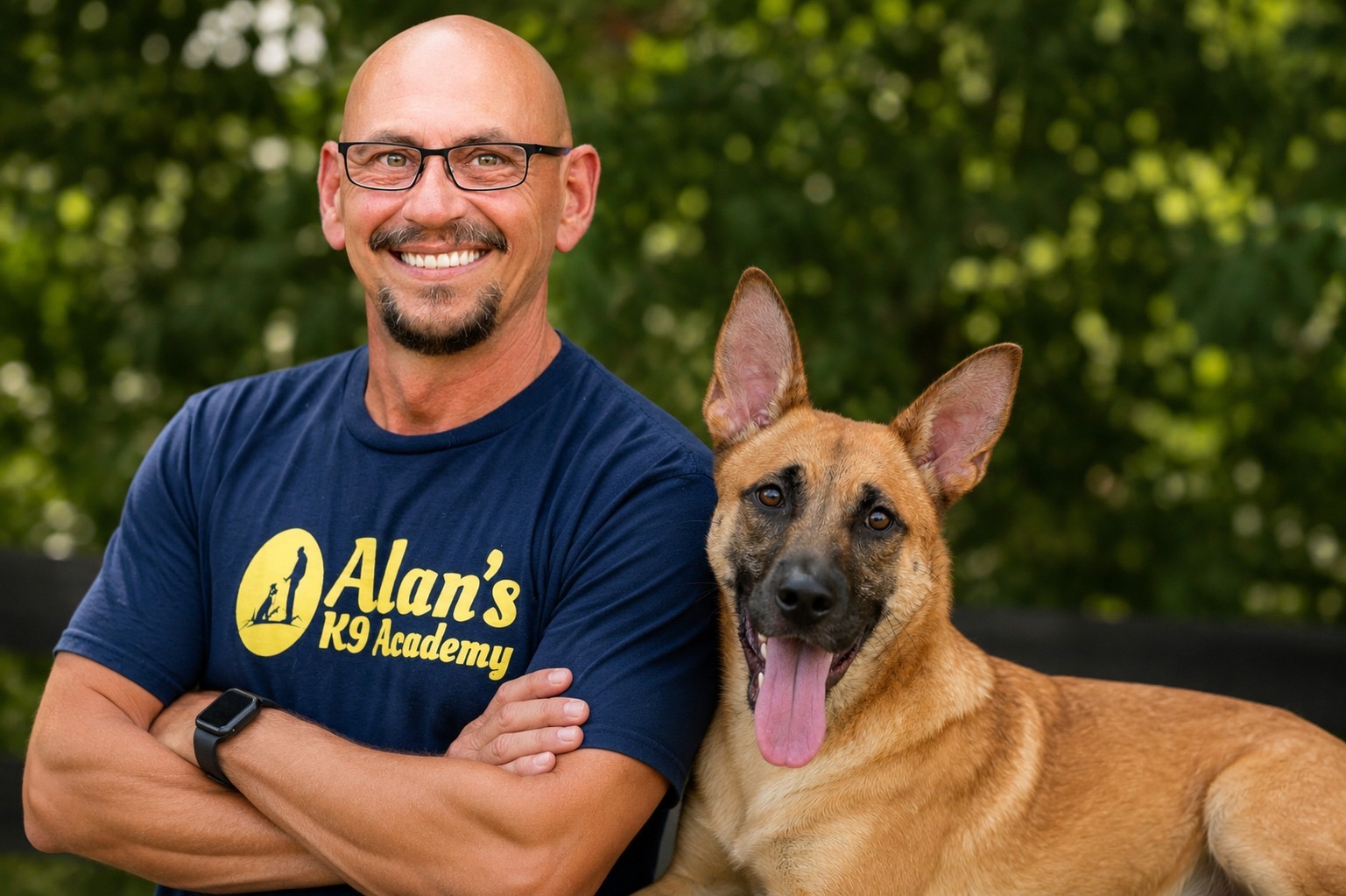
Alan Carr
Alan Carr is the founder of AK9A Alan’s K9 Academy, a military veteran, and a former police K9 handler and trainer with more than 35 years of professional dog-training experience. He specializes in personalized in-home training, puppy development, obedience, off-leash reliability, and behavior modification. His approach emphasizes clear communication, humane balanced training, and helping owners build lasting relationships with their dogs. AK9A serves North Metro Atlanta and Northwest Georgia. Learn more at AK9A.com.
Disclaimer
Every dog and household is different. This article provides general education and does not replace an individualized training assessment. For aggression, bite risks, or serious behavioral concerns, seek professional guidance before attempting training exercises.