



How Training Shapes Pack Leadership and Dog Behavior
To learn how to become the pack leader for your dog, focus on calm, consistent guidance, not intimidation or dominance. Set clear household expectations, reward the behavior you want, and practise everyday skills so your dog understands what you’re asking. Leadership comes from reliable routines and...

To learn how to become the pack leader for your dog, focus on calm, consistent guidance, not intimidation or dominance. Set clear household expectations, reward the behavior you want, and practise everyday skills so your dog understands what you’re asking. Leadership comes from reliable routines and fair follow-through.
It can be frustrating when your dog ignores cues, pulls on the leash, or reacts to people and other dogs. These behaviors don’t mean you need to be harsher; they’re a reason to look at how communication and training work at home. This article explains what pack leadership means in practice, why household consistency matters, and how five practical rules can create clearer expectations. You’ll also see how your approach can shape behavior, from everyday manners to more challenging patterns. The goal is a steadier relationship built on trust, structure, and skills you can use in real life.
Key Takeaways
• Make rewards clear and timely so your dog can connect the behavior you want with a positive outcome.
• Agree on shared household cues and boundaries, then practise them consistently in everyday routines.
• Use the trainer’s five rules to shape simple, fair expectations around play, food, and attention.
• Notice how calm guidance affects your dog’s responses, and adjust your approach to support better behavior.
1. What is a pack leader?
A pack leader, in practical training, is the person who gives clear, consistent guidance. If you’re learning how to become the pack leader for your dog, focus on predictable cues and fair follow-through, not intimidation. Dogs retain 99.8% of their DNA from wolves, but that figure doesn’t mean a household must copy wolf-pack behavior. For example, asking your dog to sit before opening the door teaches a useful routine without forcing a contest over status.
Rewarding your dog for following a cue makes your expectations easier to understand. Give the reward promptly after the behavior you want, such as offering a treat when your dog sits after hearing “sit.” Praise or play can work, too, if those motivate your dog. If your dog doesn’t respond, make the task easier or practise somewhere quieter, then reward the next successful response. The goal is to create a clear connection between the cue, the action, and its outcome.
Everyday spaces can become places to practise. Ask your dog to move out of your path using a familiar cue such as “back” or “move.” Reward your dog for stepping aside rather than pushing or startling them. This simple exercise builds the habit of responding to your direction in shared spaces.
Some households set a boundary that keeps dogs off beds and furniture. The important part is applying the rule consistently: if furniture is off-limits, guide your dog to a designated resting spot and reward them for settling there. Providing a clear alternative makes the boundary easier to follow.
For a puppy, introductions to other dogs should be calm and controlled. Begin with a brief meeting in a manageable setting, give both dogs room, and reward relaxed behavior. An eight-week-old puppy is a common starting point for puppy care, but introductions should suit the dogs involved. Watch their responses and pause if either dog seems uncomfortable.
2. Coordinating household training standards
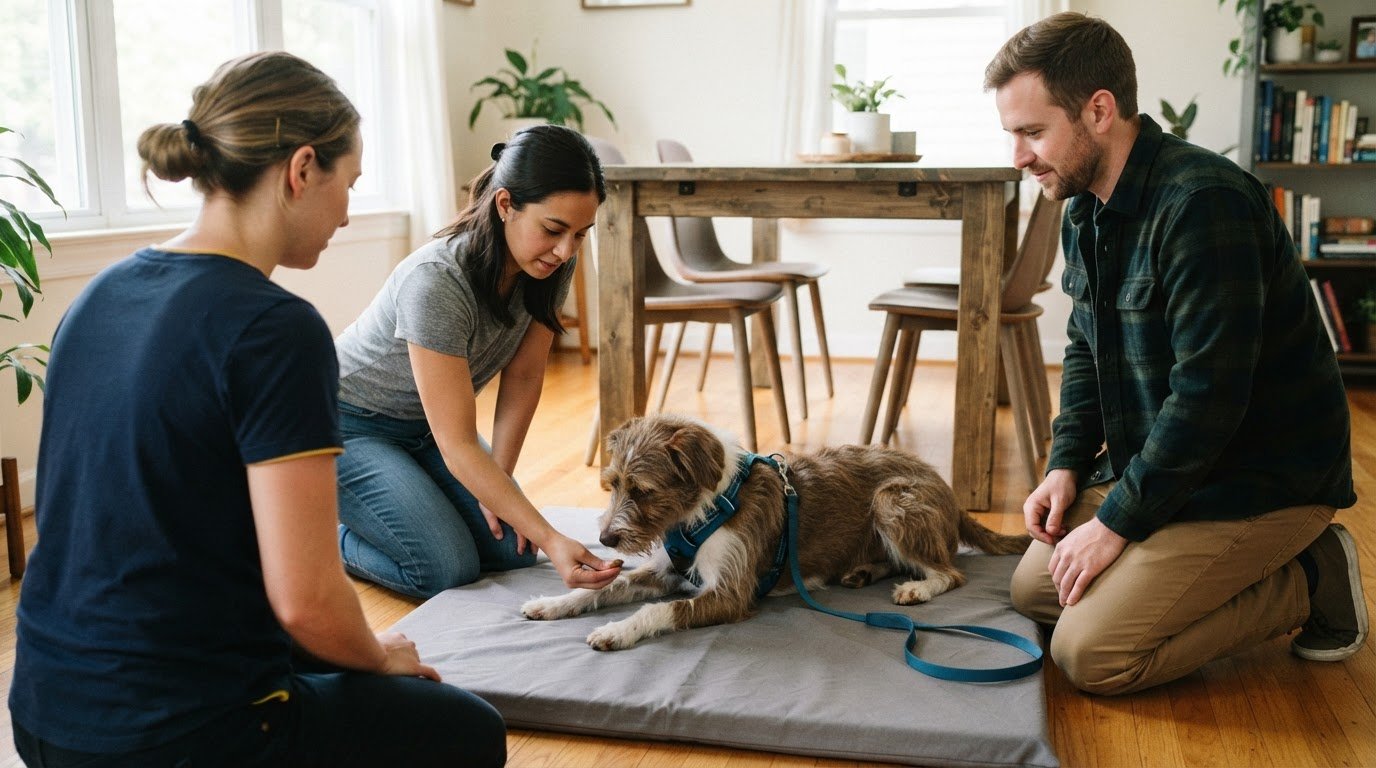
Reliable manners start when everyone at home uses the same cues and boundaries. Teach “sit,” “stay,” and “come” using one agreed word for each, then practise during everyday routines, such as waiting before meals or greeting visitors. Keep practice brief and consistent, and make sure each family member rewards the same response. These basic steps help build obedience and household manners that carry beyond training sessions.
If your dog pulls on the leash, stop walking when it tightens, then continue when your dog turns attention back to you. Ask for four paws on the floor before greeting someone, and reward a quiet pause when barking begins. If the behavior persists or raises safety concerns, a trainer can observe the triggers and help tailor a plan. In-home training can address patterns where they occur, while group classes let dogs practise around new distractions.
Puppy classes can teach cues such as sit and stay, along with leash walking and early socialization. Start heel training in a quiet space: reward your dog for walking beside you, then gradually practise on busier routes. A six-week obedience course may introduce important skills, but lasting manners also depend on practice in everyday life. Build short training moments into your routine, and keep teaching as your dog encounters new people, places, and situations.
Household consistency also means agreeing on what happens after a cue. If one person allows jumping for attention while another discourages it, your dog receives mixed feedback. Write down shared rules, including where your dog rests and how everyone responds to barking, then review them together as routines change. This supports your relationship and gives your dog clearer information.
Alpha rolls and intimidation can frighten a dog, undermine trust, or provoke defensive behavior. Calm, humane training focuses on teaching an alternative response instead of forcing submission. For hands-on guidance with routines at home, In-Home Dog Training can help put shared household standards into practice.
3. The trainer’s five golden rules
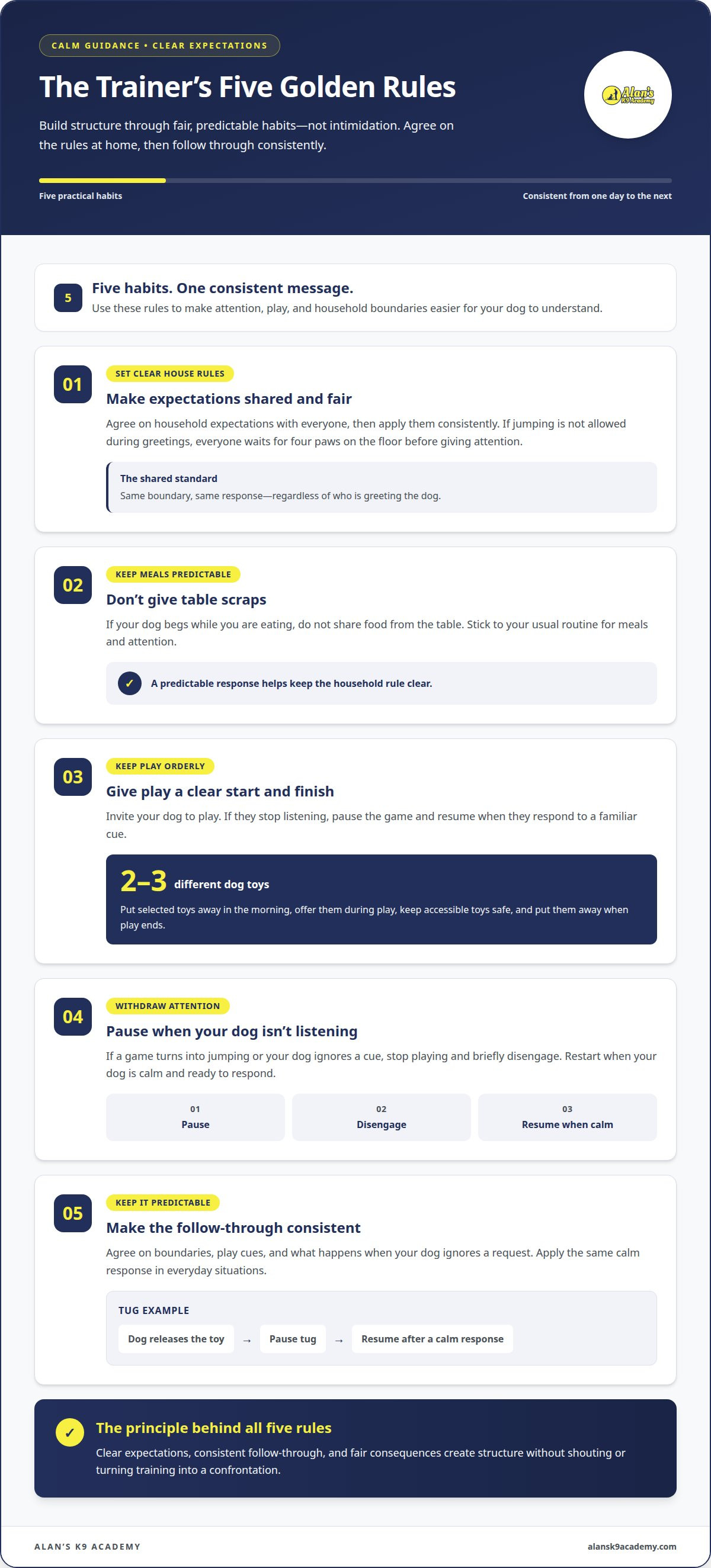
Clear house rules help dogs understand what earns attention and when an activity ends. Agree on expectations with everyone at home, then enforce them firmly but fairly. For example, if jumping isn’t allowed during greetings, everyone should wait for four paws on the floor before offering attention. A dog trainer can help your household set rules that fit your daily routines.
One practical rule is to avoid giving table scraps. If your dog begs while you’re eating, don’t share food from the table; follow your usual routine for meals and attention instead. Another rule is to keep play orderly. Invite your dog to play, pause if they stop listening, and resume when they respond to a familiar cue.
Another practical rule is to manage toys instead of leaving them all out. Put away two to three different dog toys in the morning, then offer selected toys during play. Rotating what’s available gives each play session a clear start and finish. Keep accessible toys safe for your dog, and put them away when play ends.
The fourth rule is to withdraw attention when your dog isn’t listening. If a game turns into jumping or your dog ignores a cue, stop playing and briefly disengage. Restart when your dog is calm and ready to respond. This makes your attention part of the feedback without shouting or turning the moment into a confrontation.
Finally, keep the rules predictable in everyday life. Agree on household boundaries, play cues, and what happens when your dog ignores a request. For instance, everyone can pause tug when the dog releases the toy, then resume after a calm response. These five habits create structure through clear expectations, consistent follow-through, and fair consequences.
4. Pack leadership and dog behavior
No, dominance is not a reliable, all-purpose explanation for dog behavior. A dog barking at the fence, pulling toward another dog, or guarding a resting place may be responding to different triggers. Treating each behavior as a bid for control can mean missing what’s actually happening.
Leadership is more useful as a description of your role: set clear expectations, guide your dog calmly, and respond consistently. If your dog barks at the front window, for example, interrupt the pattern without shouting, then guide them toward a quieter activity. Your dog learns from what follows the behavior, including whether barking brings attention or access to something they want.
Body language and context matter. A dog that freezes over a toy may need space and a careful plan, not a forced confrontation. A dog pulling toward a smell may need practice walking on a loose leash. Notice what happens before and after the behavior, then teach a safer response. Calmly guiding your dog by the leash or collar is different from frightening or dominating them.
Use predictable routines to build cooperation. Ask for a sit before setting down food, and teach your dog to wait for permission before eating. At a doorway, cue a sit and stay, pass through, then release your dog to follow when they remain settled. Practise the doorway exercise several times a day, keeping each repetition calm and clear.
A balanced leader is fair and subtle, not loud or forceful. That distinction matters because intimidation can increase stress and make a dog less comfortable responding to you. Focus on the behavior you want instead: reward a pause in barking, a relaxed approach, or attention during a walk. If fear, reactivity, or guarding keeps disrupting daily life, seek behavior modification support to work on the pattern and teach practical alternatives.
Alan's K9 Academy: In-Home Dog Training
Alan's K9 Academy offers personalized In-Home Dog Training for households that need practical guidance with everyday manners, leash skills, or consistent routines. Training at home lets you work on behaviors in the setting where they happen, while learning how to carry the same expectations into daily life.
For persistent reactivity, aggression, or other challenging patterns, Behavior Modification can help address the behavior and build more workable responses. Group Classes offer another setting to practise skills around distractions, while Therapy & Service Dog Training supports foundation training for those goals. The approach uses balanced, humane methods and is led by a Master K9 Trainer with over 35 years of professional dog instruction experience.
If you’re ready for hands-on support with your dog’s training, contact Alan's K9 Academy.
Build a clearer path forward with your dog
Learning how to become the pack leader for your dog is less about claiming a title and more about building reliable communication. Start by choosing one situation to improve, such as greetings, walks, or settling at home. Notice what happens before the behavior, how you respond, and what your dog does next. That gives you a practical starting point for focused training.
When you want hands-on guidance, Alan's K9 Academy offers In-Home Dog Training for household routines, Behavior Modification for challenging behavior patterns, and Therapy & Service Dog Training for those foundation goals. Consider which setting or skill matters most to your family, then discuss that priority with the academy.
Contact Alan's K9 Academy to talk about a training path that fits your goals. With clear communication and consistent practice, you can keep building a more confident partnership with your dog.
Frequently Asked Questions
What is a pack leader?
A pack leader is a person who helps a dog make safe, workable choices through clear communication. In a household, that can mean deciding when a walk begins, which areas are off-limits, and how guests greet your dog. Think of it as responsible guidance, not a contest for rank. The useful measure is whether your dog understands and responds to your direction.
Where does it start?
Start by observing a recurring situation, such as the doorbell or getting ready for a walk. Note what your dog does, what happens immediately before, and what response you want instead. Practise that response in a quieter version of the situation, then gradually add realistic distractions. This gives you a specific starting point and helps identify which part of the routine needs clearer teaching.
What does “pack leader” mean in modern dog training?
In modern training, “pack leader” is best treated as an informal way to describe a person’s guidance, not a claim that dogs must accept a human as an alpha wolf. Focus on teachable skills and your dog’s surroundings. For example, if your dog barks at delivery workers, manage the view and teach a response such as going to a mat, rather than framing the behavior as a challenge.
How can you build trust and leadership with a dog using positive reinforcement?
Use positive reinforcement by rewarding a behavior your dog can repeat. Choose a reward your dog values, such as a toy or praise, and give it immediately after the desired action. For example, mark a calm glance toward you when a bicycle passes, then reward your dog. Keep the challenge manageable so your dog can succeed, and gradually practise in more distracting places as the response becomes familiar.
How should you set consistent rules and routines for your dog?
Choose household rules everyone can follow, then connect them to predictable signals. For example, use the same release word when your dog may leave a resting place, and have each family member use it. Keep a simple log of confusing moments, such as missed cues when visitors arrive. Reviewing these examples together helps you spot mismatched expectations and adjust the routine.