



How to Stop Destructive Chewing in Dogs at Home
What if the chewed-up cushion is a clue, not just a bad habit? To learn how to stop destructive chewing in dogs, start by identifying what’s driving it and redirecting your dog to appropriate chew outlets. If the chewing is severe, begins suddenly in an adult dog, or comes with vomiting, house-soili...

What if the chewed-up cushion is a clue, not just a bad habit? To learn how to stop destructive chewing in dogs, start by identifying what’s driving it and redirecting your dog to appropriate chew outlets. If the chewing is severe, begins suddenly in an adult dog, or comes with vomiting, house-soiling, frantic behavior, or obsessive chewing of their own body, seek veterinary help.
It’s frustrating to find another damaged possession, especially when you’re already providing toys and trying to stay patient. To understand how to stop destructive chewing in dogs, first consider what may be driving it: boredom, stress, teething, or confusion about what’s appropriate to chew. The right response depends on the cause. This guide covers practical steps at home, how age and dental chews may affect chewing, and when a veterinarian or behavior professional can help you develop a safer, more tailored plan.
Key Takeaways
• Offer safe, appealing chew toys and redirect your dog to them instead of household items.
• Match exercise and mental enrichment to your dog’s age, health, and needs to help reduce boredom-related chewing.
• Use dental chews as one appropriate outlet, not a complete solution for chewing on belongings.
• Notice when and where adult-dog chewing happens; the pattern can help reveal whether boredom, anxiety, or another cause is involved.
When Does Destructive Chewing Require Professional Help?
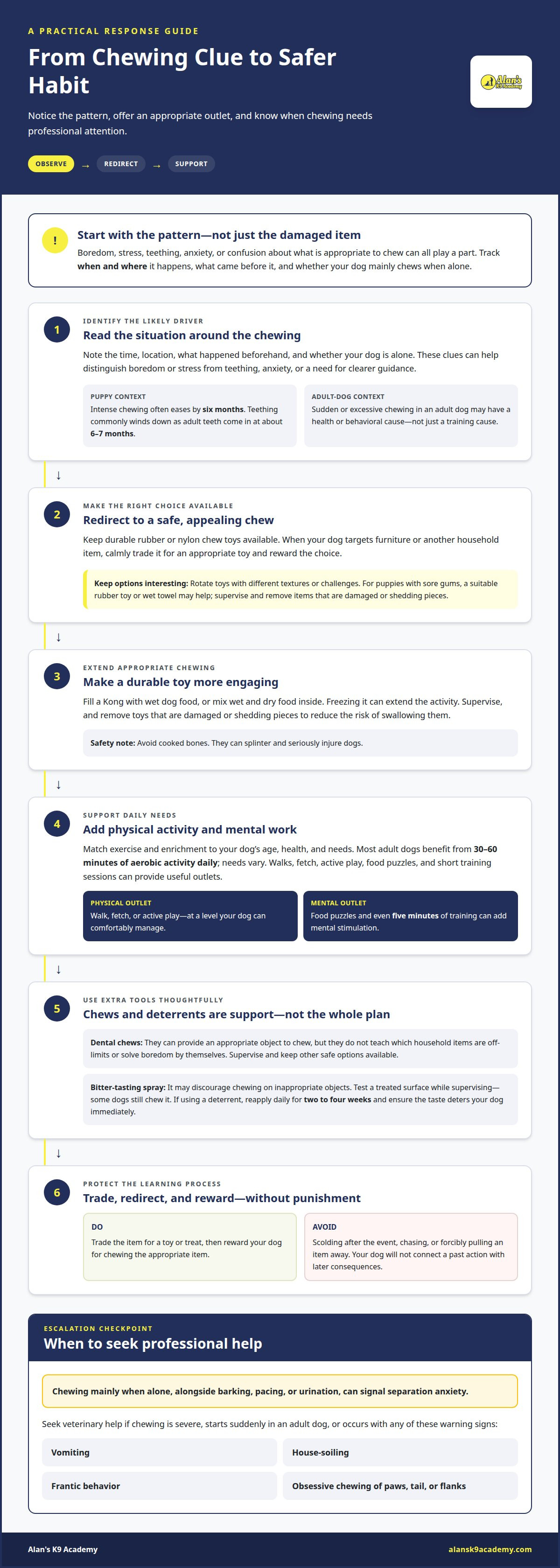
Dogs may chew because of boredom, stress, teething, anxiety, or because they haven’t learned what’s appropriate. Track when and where it happens, what came before it, and whether your dog mainly chews when alone. These patterns can help you identify the cause.
Offer safe alternatives.
Keep a variety of durable rubber or nylon chew toys available, and redirect your dog from furniture to a chew toy. Rotate options with different textures or challenges to keep them interesting. Avoid cooked bones, which can splinter and seriously injure dogs.
Make a durable chew toy more engaging.
Fill a Kong with wet dog food, or mix wet and dry food inside. Freeze it to extend the activity. Supervise your dog, and remove toys that are damaged or shedding pieces to reduce the risk of swallowing them.
Choose edible chews thoughtfully.
Dental chews can provide an appropriate dog chew, but they won’t address every reason for destructive behavior. Supervise your dog while chewing so you can respond if choking occurs. Keep other safe chew items available rather than relying on one option.
Use deterrent spray carefully.
Bitter-tasting sprays such as Bitter Apple may discourage chewing on inappropriate objects. Test a treated surface while supervising your dog, since some dogs still chew it. Reapply the deterrent daily for two to four weeks, and ensure its taste deters your dog immediately.
Watch for signs that need professional help.
Chewing mainly when alone, alongside barking, pacing, or urination, can signal separation anxiety. Teething may explain a puppy’s chewing, but sudden or excessive chewing in an adult can have health or behavioral causes. Seek veterinary help for severe chewing, vomiting, house-soiling, frantic behavior, or obsessive chewing of paws, tail, or flanks.
Correct the behavior without punishment.
Don’t scold your dog for chewing after the event; they won’t connect past actions with later consequences. Don’t chase or forcibly pull an item away. Trade it for a toy or treat, then reward your dog for chewing the appropriate item.
At what age do dogs stop destructive chewing?
Puppies’ intense chewing phase usually eases by six months, while exploratory teething often winds down as adult teeth come in at about 6-7 months. Age can explain a phase, but exercise, interaction, and daily outlets still shape chewing behavior.
Set expectations around your puppy’s age.
Active teething can make puppies seek objects to chew. Supervise them and redirect household-object chewing to an appropriate toy. As adult teeth arrive, keep teaching which items are okay to chew rather than expecting age alone to end the behavior.
Plan regular physical exercise.
Most adult dogs benefit from 30 to 60 minutes of aerobic activity daily. Needs vary with age, health, and breed characteristics, so choose activities your dog can comfortably manage. A walk, a game of fetch, or active play can provide a physical outlet.
Break activity into predictable opportunities.
Dogs generally need physical exercise at least two times a day and at least 20 minutes a day. Include walks or play in a routine that also allows time for training, social activity, and bathroom breaks. Predictability can make it easier for your dog to settle between activities.
Give your dog mental work.
Food puzzles offer a problem-solving activity, while short training sessions give your dog a useful focus. Even five minutes of training can add mental stimulation. Use small treats to reward appropriate choices, such as settling with a toy instead of chewing a table leg.
Make walks and play engaging.
Let your dog sniff during walks; for dogs who enjoy exploring, sniffing can be more enriching than walking two miles without stopping. Add interactive play and daily attention, especially if boredom seems to trigger chewing. Keep chew toys available as an appropriate outlet.
Build a routine that fits your dog.
Combine exercise, play, training, and rest, then adjust as your dog matures. If a consistent routine still leaves chewing difficult to manage, get hands-on training guidance to help turn daily practice into clearer habits.
Can dental chews prevent dogs from chewing on things?
Use dental chews as one outlet, not a cure.
A dental chew gives your dog an appropriate object to chew and may help curb excessive chewing. It won’t teach your dog which household items are off-limits or address boredom by itself. Keep other safe chew options available, and supervise while your dog chews.
Match chew options to teething needs.
Puppies often chew intensely during active teething between 3 and 6 months. Offer a suitable rubber toy or a wet towel to soothe sore gums. Freeze a rubber toy if appropriate, then supervise your puppy so they don’t swallow pieces.
Redirect each attempt calmly.
If your puppy or adult dog targets a shoe or table leg, offer an appropriate chew instead. Praise your dog for choosing it. Consistent redirection teaches a clearer alternative than simply removing every object they enjoy chewing.
Puppy-proof the household.
Put tempting objects out of reach and block access to rooms where chewing hazards remain. When you can’t supervise, use a safe enclosed area with water, a bed, and chew toys. Check toys for wear, and remove pieces that could be swallowed.
Keep dangerous items inaccessible.
Sanitary items can expand as they move through a dog’s digestive system, creating an obstruction risk. Cooked bones, including chicken wings and leftover T-bones, can splinter and seriously injure dogs. Store these items where curious mouths can’t reach them.
Keep the routine varied.
Rotate appropriate chew toys to maintain interest, and use food puzzles when boredom may be contributing. Dental chews can complement these outlets, but persistent chewing of household objects calls for looking beyond the chew itself. The trigger may be teething, boredom, or another behavior pattern.
Common causes of destructive chewing in adult dogs
Compare chewing with your dog’s routine.
Boredom, stress, fear, separation anxiety, or too few suitable outlets can drive chewing in adult dogs. A helpful first step in learning how to stop destructive chewing in dogs is tracking when and where it occurs, what happened beforehand, and how people respond. Note details such as a quiet day without play or a change in the household schedule.
Look for an alone-time pattern.
Chewing that happens mainly when your dog is alone may point to separation anxiety, especially with barking, pacing, or urination. A recording can show when the behavior starts and whether it follows your departure or another event. This context helps distinguish distress from chewing that occurs throughout the day.
Take sudden changes seriously.
If an adult dog starts chewing destructively without a clear routine change, consider possible health or behavioral causes. Pica, digestive tract irritation, excessive hunger, and gum disease are among the issues associated with excessive chewing. A veterinarian can assess health concerns and help determine whether behavior support is also appropriate.
Notice what your dog targets.
Chewing a door or crate door may signal an attempt to escape confinement. Rhythmic or compulsive chewing, or obsessive licking of paws, tail, or flanks, also calls for professional attention. The object, location, and pattern can help reveal whether chewing is purposeful, linked to distress, or possibly connected to a health concern.
Choose a response that fits the trigger.
For boredom, add interaction and mental stimulation, such as a food puzzle. For inappropriate chewing, redirect your dog to a suitable toy and praise that choice. Bitter deterrents may discourage chewing on a particular object, but they won’t resolve anxiety or teach an alternative behavior.
Get support when the pattern persists.
If you’re unsure how to stop destructive chewing in dogs or the behavior continues despite changes, professional guidance can help identify triggers and build a practical plan. A veterinarian can evaluate possible medical concerns, while a behavior professional can address anxiety and learned behavior. Explore behavior modification support for structured guidance.
Alan's K9 Academy
Alan's K9 Academy can help when destructive chewing continues despite safer chew options and consistent redirection. In-Home Dog Training and Behavior Modification can address chewing patterns in the setting where they occur, including concerns linked to anxiety, household routines, or unclear boundaries. Group Classes offer another training setting for building practical skills, while Therapy & Service Dog Training supports those specific training goals.
Professional guidance can help identify triggers, choose a suitable response, and teach your dog clearer alternatives. If the chewing is sudden or severe, or comes with signs of illness, contact a veterinarian for a medical assessment. Training can support behavior, but it does not replace veterinary care.
Contact Alan's K9 Academy to discuss support for your dog's chewing behavior.
Build Better Chewing Habits One Day at a Time
The next step in learning how to stop destructive chewing in dogs is to turn what you’ve noticed into a consistent plan. Choose a clear response everyone in your household can use, and make the appropriate choice easy to repeat. Small, steady practice helps your dog understand what you expect in real-life situations.
Focus on the skill you want your dog to learn, not only on preventing damage. If the behavior is difficult to manage alone, personalized training can help you move forward with a plan shaped around your dog and home. You don’t need to have every answer before asking for help.
Discuss your dog’s training needs with Alan's K9 Academy, and take the next step toward calmer routines and more confident choices. With patience and a clear path forward, you and your dog can keep building better habits together.
Frequently Asked Questions
When should I see a vet about my dog’s chewing?
See a veterinarian if chewing is severe, starts suddenly in an adult dog, or occurs with vomiting, house-soiling, frantic behavior, or obsessive chewing of the paws, tail, or flanks. These signs call for more than a training adjustment. Note when the behavior began and what else changed, then share those observations with the veterinarian so they can assess possible health concerns.
Why do dogs chew?
Dogs chew to explore, exercise their jaws, relieve boredom or stress, soothe teething discomfort, or because they haven’t learned which items are appropriate. The trigger can depend on context: a puppy may mouth objects while exploring, while an adult dog may target belongings during a stressful routine. Record when the behavior happens to see which explanation best fits your dog.
Could Pain or a Medical Issue Be Behind the Chewing?
Yes, excessive chewing can be associated with health concerns such as gum disease, digestive tract irritation, or excessive hunger. Chewing alone can’t reveal the cause, and a new pattern in an adult dog deserves attention. A veterinarian can assess whether a health issue may be contributing and whether behavior support should also be part of the plan.
How can I stop the chewing on household objects?
Keep tempting belongings out of reach, and don’t offer old shoes, socks, or children’s toys as playthings. Dogs may not distinguish them from similar new items. If your dog picks something up, trade it for a toy or treat instead of chasing or pulling it away. Reward the release, then guide your dog toward an appropriate chew.
How can you tell if your dog’s chewing is because of a health issue?
You can’t reliably identify the cause from chewing alone. A sudden change, excessive chewing, or chewing alongside other concerning behavior may warrant a veterinary assessment. Keep a brief record of the objects targeted, when it happens, changes to the routine, and any accompanying signs, such as vomiting or house-soiling. This context can help the veterinarian assess possible health causes and distinguish them from learned behavior.
How else can my dog’s chewing activity be reduced?
Refresh your dog’s enrichment by rotating toys and offering different textures, scents, or challenges. A food puzzle can engage a dog who has lost interest in familiar toys, while regular interaction can help address boredom. If chewing continues despite changes to the routine, reconsider what may be driving it; the original trigger may no longer be the one sustaining the behavior.