



How to Socialize an Adult Dog Safely Without Flooding
More exposure isn’t always better. Learning how to socialize an adult dog safely means introducing new people, animals, and places at a pace the dog can handle, rather than pushing through fear or forcing interaction. Adult dogs can form new associations, though building comfort may take patience an...

More exposure isn’t always better. Learning how to socialize an adult dog safely means introducing new people, animals, and places at a pace the dog can handle, rather than pushing through fear or forcing interaction. Adult dogs can form new associations, though building comfort may take patience and careful observation.
If your dog freezes, barks, lunges, or tries to get away, it can be hard to know whether to continue or create more distance. That uncertainty is understandable. This guide explains what socialization means, how a professional can tailor introductions to your dog, and why controlled exposure is safer than overwhelming a dog with intense experiences. You’ll learn what signs suggest your dog needs more space, how progress can look in everyday settings, and when fear or aggression calls for an individual professional assessment.
Key Takeaways
• Socialization builds comfort with people, animals, and places; it doesn’t require your dog to greet everyone.
• Use controlled, gradual introductions that let your dog keep a comfortable distance instead of overwhelming them with exposure.
• Watch your dog’s body language and adjust the setting and pace to support calm, positive experiences.
• Seek an individual professional assessment if fear, aggression, or bite risk makes introductions difficult to manage safely.
Introducing adult dogs
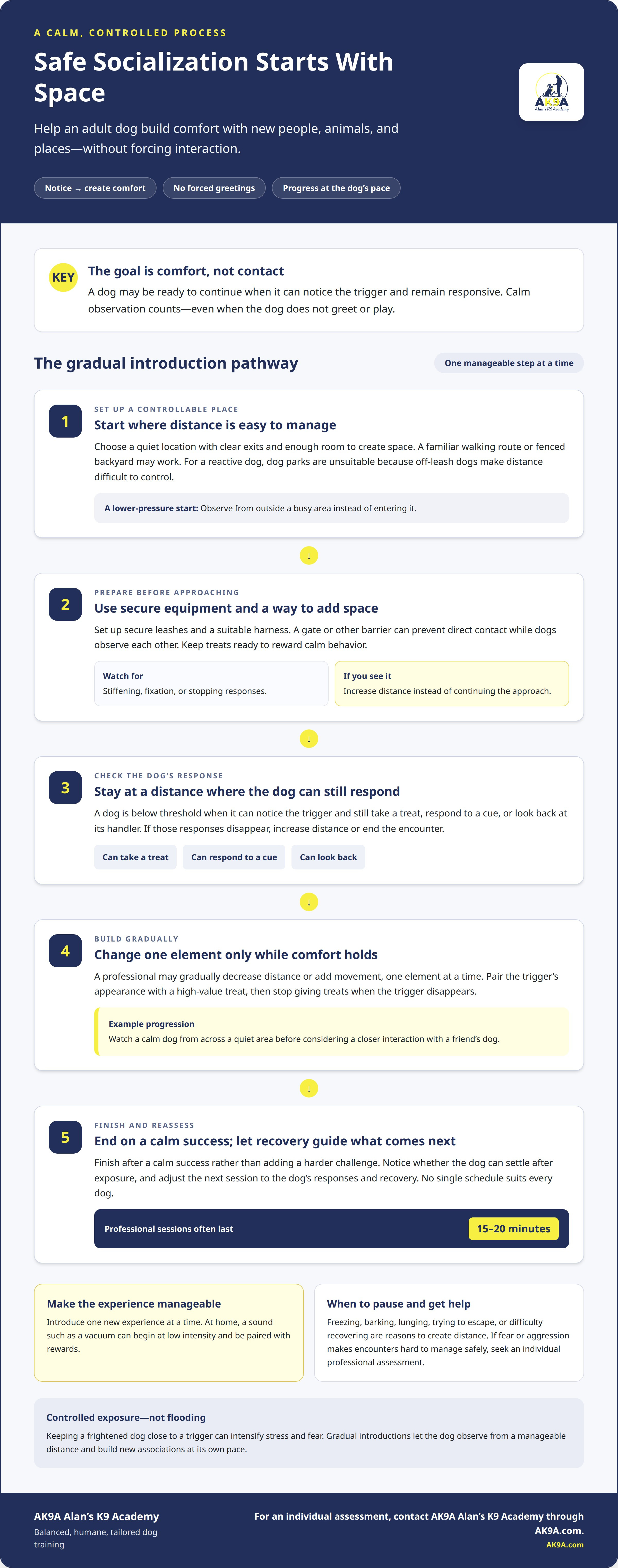
A professional can show you how to socialize an adult dog safely by observing body language, triggers, and recovery. A dog may be ready to meet another dog when it can notice the animal and remain responsive, rather than freezing, lunging, or trying to escape.
•
Choosing Safe Socialization Places
Choose a quiet, controllable location with clear exits and enough room to maintain distance. A familiar walking route or fenced backyard can support a planned introduction. Dog parks are unsuitable for reactive dogs because off-leash dogs make distance difficult to control. A professional may begin outside a busy area, where your dog can observe without entering.
•
Preparing Leashes, Treats, and Barriers
Set up secure leashes and a suitable harness before the dogs approach. A gate or another barrier can prevent direct contact while they observe each other. The professional keeps treats ready to reward calm behavior and monitors both dogs. If either dog stiffens, fixates, or stops responding, the professional increases distance rather than continuing the approach.
•
Introducing Dogs to New Places and Experiences
Introduce one manageable experience at a time, then check whether the dog remains comfortable. A professional may keep an outing to 15 to 20 minutes and revisit a familiar place before adding new sights, people, or sounds. At home, household sounds such as a vacuum can begin at low intensity, paired with rewards. The same careful planning supports therapy and service dog training.
•
Stopping Introductions and Seeking Professional Help
Knowing how to socialize an adult dog safely also means ending an introduction if fear escalates. Separate the dogs if one repeatedly lunges, tries to escape, or cannot recover. When reactivity makes distance hard to manage, a professional can assess triggers and tailor the next steps. A gradual plan keeps encounters calm and controlled instead of forcing contact.
Flooding versus controlled exposure
Professional socialization uses manageable exposure, not forced proximity to a frightening trigger. Sessions often last 15 to 20 minutes; their frequency and overall duration depend on the dog’s responses and recovery.
•
Beginning Professional Exposure at the Dog’s Pace
Start in a familiar setting, with the trigger far enough away for your dog to remain responsive. A dog is below threshold when it notices another animal but can still take a treat, respond to a cue, or look back at its handler. If those responses disappear, the professional increases distance or ends the encounter rather than pressing forward.
•
Increasing Exposure Gradually With Professional Guidance
Build one element at a time, such as decreasing distance or adding movement, only while the dog stays relaxed. The professional pairs the trigger’s appearance with a high-value treat, then stops giving treats when the trigger disappears. Calmly observing a dog from across a quiet area can come before closer interactions with a friend’s dog.
• Keep each step manageable so your dog can succeed. For example, a dog uncomfortable around puppies might first watch one calm adult dog from farther away. Socializing an adult dog this way can help create a different association. Flooding, or keeping a frightened dog close to the trigger, can intensify stress and fear. A dog that seems late to socialize can still have new, positive experiences.
• Finish after a calm success instead of adding a harder challenge just because the session is going well. The professional tracks whether your dog can settle after each exposure and adjusts the next session accordingly. Consistent practice matters, but no single schedule suits every dog. Recovery, comfort, and the ability to stay responsive guide the plan.
Benefits of socializing an adult dog
Adult dogs can form new associations beyond 17 weeks of age. With controlled exposure, socialization can build comfort and help reduce fear-based behavior, anxiety, and aggression-related responses.
• Use training to make everyday situations more manageable. A dog that can notice a visitor without barking or pass another dog on a loose leash has more options than one that reacts immediately. The goal isn’t forced friendliness, but helping your dog stay responsive and recover after ordinary encounters.
• Build confidence through carefully chosen experiences. For example, a dog uneasy around traffic might first watch cars from a quiet distance, then gradually experience a busier sidewalk. Treats can help create positive associations, while the professional adjusts exposure to prevent overwhelm. Each calm observation offers useful information about what your dog can handle.
• Improve communication between you and your dog. During a walk, noticing a fixed stare, turning away, or relaxed attention helps you respond sooner. You might create space before behavior escalates, reward a check-in, or choose a calmer route. These practical skills make shared routines more predictable without requiring your dog to greet every person or animal.
• Recognize progress realistically. Your dog may stay calm near a familiar neighbor but need more distance around unfamiliar dogs or in a new setting. Track changes such as quicker recovery, taking treats, or responding to a cue. These signs help shape the next training goal and prevent one difficult encounter from defining your dog’s abilities.
• Start even if you worry it’s too late. The 17-week mark doesn’t end a dog’s ability to form new associations. A professional can use gradual, controlled exposure to build skills around specific triggers, then help the owner practice consistently. Progress may look like calmer walks or easier visitor arrivals, not instant play with every dog.
Professional support for fear or aggression
Fear or stress may show as a tucked tail, stiffness, avoidance, barking, or lunging. These signs call for more distance and a careful assessment, not forced interaction.
• Arrange an individual professional assessment when your dog reacts strongly to people, animals, or specific places. The professional gathers details about triggers, past situations, and your dog’s behavior during walks before planning introductions. This helps identify a manageable starting point and avoid an unsafe setup.
• Use safe management while the plan develops. Choose quieter routes, keep distance from approaching dogs, and prevent greetings that could lead to contact. Children should not handle a dog showing aggression. If a visitor is expected, use a secure separation plan instead of testing your dog’s response at the door.
• Ask the professional to identify early signs of rising stress, such as turning away, becoming still, or refusing a familiar treat. These signals may appear before barking or lunging. A trained observer can help interpret the situation and decide when to pause, create distance, or leave.
• Choose gradual practice in controlled environments, using positive reinforcement suited to your dog. The professional may reward calm observation with praise or treats, then adjust distance according to your dog’s response. Avoid punishment or confrontational exercises that could intensify fear or make an already difficult encounter less safe.
• Make owner education part of the work. Practice clear handling skills and consistent responses in realistic situations, such as passing another dog or welcoming a visitor. Progress may mean recovering sooner or walking calmly at a greater distance, rather than greeting unfamiliar people or dogs.
AK9A Alan’s K9 Academy
AK9A Alan’s K9 Academy helps owners address adult-dog socialization through personalized, one-on-one training in the home and appropriate real-world environments. If fear, reactivity, or difficult introductions are affecting daily routines, an evaluation can help identify priorities and shape practical next steps.
Training is tailored to the dog and owner, with a balanced, humane approach that emphasizes education and consistent follow-through. For dogs whose responses make social situations challenging, behavior modification training can focus on triggers and safer everyday handling. The goal is to build useful skills and support more manageable experiences, not to force interactions or promise the same outcome for every dog.
Choose a Thoughtful Next Step
Your next step in learning how to socialize an adult dog safely isn’t arranging more encounters. Identify which everyday situation matters most to your dog’s comfort and your household routine. That priority gives professional training a practical starting point, whether you’re aiming for calmer walks, easier visits, or more confidence in familiar places.
AK9A Alan’s K9 Academy offers In-Home Dog Training, Behavior Modification, and Therapy & Service Dog Training. Personalized instruction can help you understand your dog’s responses, develop useful handling skills, and apply them consistently in real-life settings. An evaluation can help determine which support best fits your goals and your dog’s needs.
With a thoughtful plan and steady practice, you can help your dog make meaningful progress toward more comfortable experiences.
Frequently Asked Questions
What is socialization?
Socialization helps a dog become comfortable and adaptable around everyday people, animals, places, and experiences. It doesn’t mean expecting every dog to greet strangers or play with other dogs. For example, an adult dog may be well socialized if it can rest calmly while a visitor sits nearby, without direct interaction.
How does a professional introduce an adult dog to another dog safely, step by step?
A professional first learns about each dog’s behavior, then plans a controlled meeting with enough space to separate them. Both dogs remain leashed and are handled by adults. They may begin walking in the same direction at a comfortable distance, with calm behavior rewarded. The professional watches for changes in posture or responsiveness and ends the encounter if either dog becomes distressed. Direct contact isn’t required.
How can a professional help socialize an adult dog with people, children, and strangers?
A professional can plan introductions around your dog’s comfort, starting with an adult visitor who ignores the dog on arrival. If your dog stays relaxed, the visitor can offer a treat before attempting interaction. Never ask children to manage a fearful or aggressive dog. For example, a professional may use a barrier and distance while adults supervise and keep the child safely separate.
How does a professional use distance and gradual exposure to socialize a fearful adult dog?
A professional identifies how close a trigger can be before your dog struggles to remain responsive, then starts farther away. For example, a fearful dog might observe a person across a quiet outdoor space rather than meet them. The trainer adjusts distance based on your dog’s behavior and recovery, keeping exposure manageable and avoiding forced contact or attempts to lure the dog closer.
When should you consult a certified dog trainer or veterinary behaviorist?
Consult an experienced professional when fear or reactivity repeatedly disrupts daily routines, or when you’re unsure how to manage introductions safely. A bite, attempted bite, or escalating response calls for prompt individual assessment and careful separation from triggers. A veterinarian or veterinary behaviorist can assess concerns that may need veterinary input. Don’t stage greetings to test your dog’s reaction.
How do vaccinations and local leash laws affect dog socialization?
Before arranging contact with unfamiliar dogs, discuss your dog’s vaccination status with your veterinarian, especially if you’re considering a shared public space. Leash requirements depend on the rules where you’re walking, so keep your dog securely leashed in public unless local rules allow otherwise. A quiet leashed walk can provide useful practice without requiring close greetings.
Article by
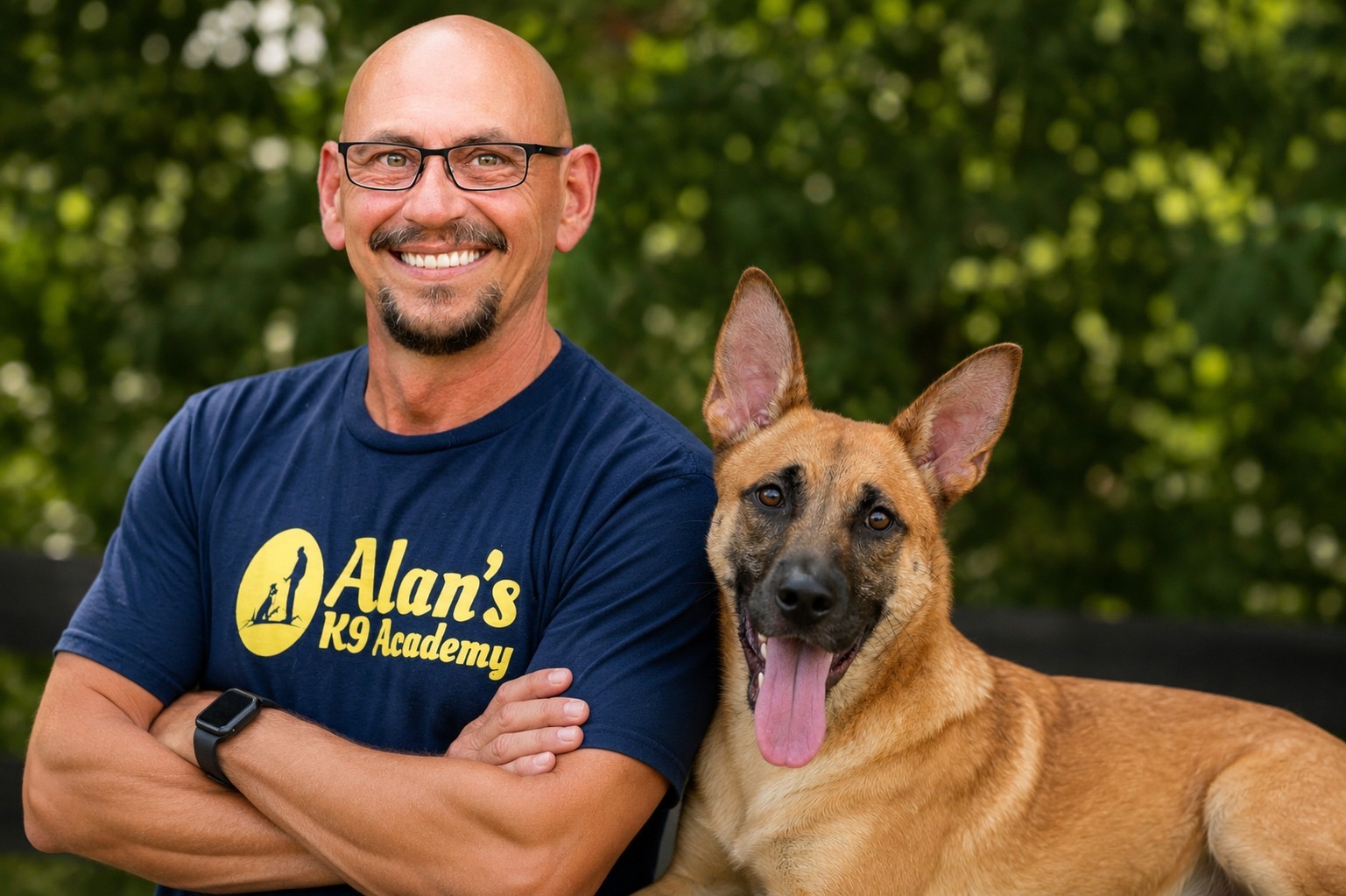
Alan Carr
Alan Carr is the founder of AK9A Alan’s K9 Academy, a military veteran, and a former police K9 handler and trainer with more than 35 years of professional dog-training experience. He specializes in personalized in-home training, puppy development, obedience, off-leash reliability, and behavior modification. His approach emphasizes clear communication, humane balanced training, and helping owners build lasting relationships with their dogs. AK9A serves North Metro Atlanta and Northwest Georgia. Learn more at AK9A.com.
Disclaimer
Every dog and household is different. This article provides general education and does not replace an individualized training assessment. For aggression, bite risks, or serious behavioral concerns, seek professional guidance before attempting training exercises.