



How to manage food bowl guarding and reduce risk
A growl over a food bowl isn’t a challenge to win; it’s a warning to take seriously. If you’re dealing with dog resource guarding at the food bowl in Jasper, keep people and other pets safely away during meals, and don’t punish your dog or take the bowl away. Pain or other health concerns may contri...
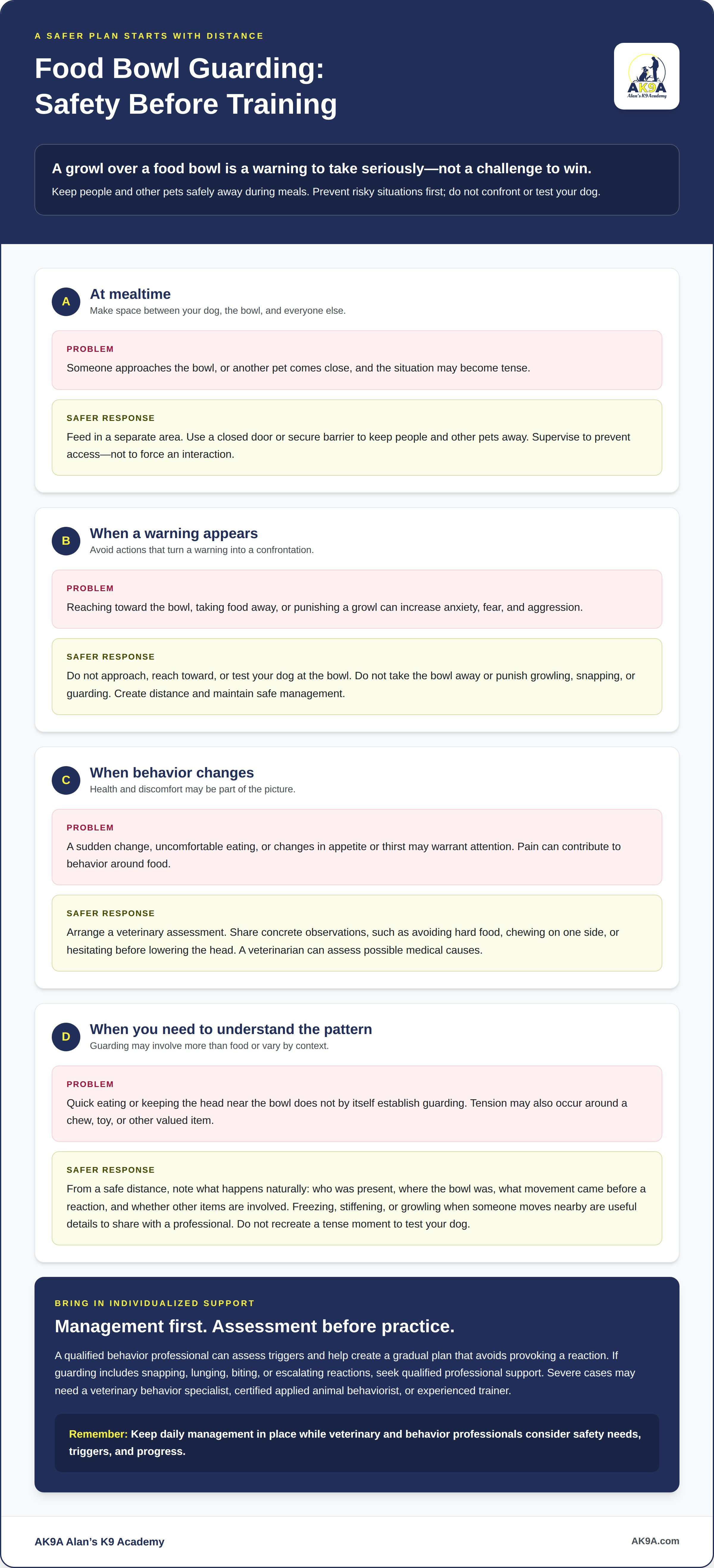
A growl over a food bowl isn’t a challenge to win; it’s a warning to take seriously. If you’re dealing with dog resource guarding at the food bowl in Jasper, keep people and other pets safely away during meals, and don’t punish your dog or take the bowl away. Pain or other health concerns may contribute, so a veterinary check can help rule out possible medical causes.
It’s understandable to feel worried, especially when a puppy starts guarding food, toys, or other valued items. Guarding can have several influences, including a dog’s instincts and experiences, and each situation calls for careful management rather than confrontation. This guide explains possible causes, how to manage risk when aggression may occur, and how puppy behavior and natural instincts fit into a safe plan. You’ll also learn when individualized professional support can help make mealtimes safer and more manageable.
Key Takeaways
• Notice how pain, discomfort, or changes in appetite and thirst may affect a dog’s behavior around food.
• Recognize that a dog’s guarding behavior can change across environments, so assess what happens at home rather than assuming past behavior will carry over.
• Learn how structured, reward-based activities can give dogs appropriate ways to express natural instincts.
• Watch for guarding of toys, bones, and other valued items in puppies, and adapt management to the dog and household.
Managing situations where aggression may occur
Prioritize distance and prevention when food guarding could lead to aggression. A professional can assess Jasper’s behavior, reduce risky situations, and coordinate training with veterinary guidance.
•
Build impulse control and use management with professional guidance
Ask a professional to assess your dog’s triggers and establish safer mealtimes before practicing skills. A separate feeding area, closed door, or secure barrier can keep people and other pets away. A professional may use structured routines to build impulse control, but don’t approach, reach toward, or test your dog at the bowl. Supervise to prevent access to potential targets, not to force an interaction.
•
Coordinate professional behavior support with veterinary assessment and management
Arrange a veterinary check for health issues that could contribute to guarding, then share relevant observations with the behavior professional. Maintain daily management while the team considers your dog’s triggers, safety needs, and progress.
•
Have a professional safely address Jasper’s food bowl guarding
Have a professional assess Jasper’s guarding in context and create a gradual plan that avoids provoking a reaction. This answers how to address the behavior safely: start with management, then build skills without taking food away or forcing someone closer. An individualized plan should fit Jasper’s behavior and household, much like structured, goal-specific training, while addressing food guarding directly.
•
Understand the risks of punishment
Don’t punish Jasper for growling, snap warnings, or guarding; punishment or taking his bowl away may increase anxiety, fear, and aggression. Hire a qualified behavior professional when guarding includes snapping, lunging, biting, or escalating reactions. Severe cases may need a veterinary behavior specialist, certified applied animal behaviorist, or experienced trainer. A professional can assess risk and guide safe management, even when complete resolution isn’t the goal.
Possible influences on food guarding
Consider how your dog behaves across meals and settings. Your observations can help identify a guarding pattern or changes that may need veterinary attention.
•
Distinguish food guarding from normal eating
Observe your dog from a safe distance during ordinary meals, without approaching to test them. Eating quickly or keeping their head near the bowl doesn’t by itself establish guarding. More informative signs include freezing, stiffening, or growling when someone moves nearby. If you’re concerned about food bowl guarding in Jasper, note what happens naturally rather than recreating a tense moment.
Record the context in simple terms: who was present, where the bowl was, and what movement came before a reaction. Note whether the behavior occurs only around meals or also around a chew or toy. These details help a professional understand whether the response relates to a particular resource or situation. A calm meal when your dog eats alone is useful context, but it doesn’t show how they’ll respond in other settings.
•
Consider pain or medical problems
Arrange a veterinary assessment if your dog’s behavior changes suddenly or eating seems uncomfortable. A broken tooth or arthritis can make chewing or lowering the head painful, and discomfort may contribute to growling. Some health conditions can increase appetite or thirst, which may also affect a dog’s response around food or water. These are possibilities for a veterinarian to assess, not diagnoses to make at home.
Describe concrete changes, such as avoiding hard food, chewing on one side, or hesitating before lowering their head. Mention whether the behavior began after a move from a shelter, since guarding in a shelter doesn’t always continue at home. A professional assessing guarding around your dog’s bowl in Jasper can consider these details alongside a veterinary assessment to understand the situation without provoking a reaction.
Working with a dog’s natural instincts
Food and prized objects can trigger protective behavior. A dog’s growl is communication, so don’t punish it or deliberately provoke guarding.
• Ask a qualified professional to identify what your dog values and which situations raise tension. Food may be one trigger, while a favorite toy or bone may lead to a similar response. Share examples from ordinary routines, such as guarding a chew when another pet passes. Don’t approach or take an item to test your dog’s reaction. A careful assessment helps shape safe, individualized training.
• Discuss structured outlets that give your dog appropriate ways to use natural drives. For example, a hypothetical dog might growl when guarding a favorite ball. Any training plan should be developed by a qualified professional in a controlled setting. This is not a home exercise or a reason to encourage growling around people. It shows why professional context matters.
• Ask the professional to consider trading protocols when your dog needs to release an item. Trades may help build positive associations with giving things up. The plan should account for your dog’s body language, the object’s value, and a safe distance. Don’t reach into their mouth or grab a guarded toy. The goal is safer cooperation, not a forced contest over an object.
• Maintain management while your dog develops new skills. For example, store high-value toys separately and allow access only in settings the professional has assessed as safe. Record which objects, people, or movements precede tension. These details help distinguish a predictable trigger from a broader pattern. If your dog stiffens, growls, or snaps, create distance rather than continuing the interaction.
A puppy’s resource guarding of food, toys, and other items
Puppies may guard meals, toys, bones, or other valued items. Early, careful assessment helps establish safe routines without forcing a puppy to surrender something.
• Ask a qualified professional to assess what your puppy guards and how the behavior appears. A puppy who freezes over a chew may need a different plan from one who growls at the food bowl. The professional can observe the household context, identify triggers, and explain safe routines. Don’t reach for the item or ask children to test the puppy’s response.
• For mild food guarding, arrange for your puppy to eat in a separate room, away from people and other pets. Keep the space calm and prevent interruptions. If guarding involves snapping, lunging, or a bite, create distance and seek an individual professional assessment instead of trying exercises from a general guide. A safe routine protects everyone while the behavior is assessed.
• Include toys, bones, and water bowls in the assessment, not just meals. For example, a puppy might guard several types of items and need a separate water bowl and careful management during play with other dogs. This illustrates why a professional should consider the full setting, including interactions with other dogs, rather than focusing on the food dish alone.
• Work with a professional on age-appropriate skills and consistent household routines. Training can include impulse-control skills, but the pace should be tailored to the individual puppy rather than treated as a fixed timetable. The professional should show adults how to maintain safe routines and recognize warning signals without asking anyone to provoke guarding.
AK9A Alan’s K9 Academy
AK9A Alan’s K9 Academy can help when food guarding creates safety concerns or disrupts household routines. Through personalized, one-on-one training in your home and appropriate real-world settings, the plan can address Jasper’s behavior in the environments where it occurs. An individual assessment helps shape practical management and training around your dog, household, and specific concerns.
With a balanced, humane approach, the focus is on owner education, useful skills, and consistent follow-through. Behavior modification can support a thoughtful response to guarding while prioritizing safe management. For an evaluation tailored to your situation, contact AK9A Alan’s K9 Academy.
Make the next mealtime part of a safer routine
Progress starts with a plan that fits your dog and the people sharing your home. If your dog guards a food bowl in Jasper, an evaluation can turn your observations into practical priorities for daily life. Consider who manages feeding, how household routines affect your dog, and which skills everyone can reinforce consistently. Small, coordinated changes can make the plan clearer for both people and dog.
AK9A Alan’s K9 Academy provides personalized support for behavior concerns, with owner education and practical follow-through at the center. An evaluation is a useful next step if guarding is creating ongoing worry, involves aggressive behavior, or feels difficult to manage safely. Training can focus on an individual dog’s needs without relying on confrontation or a one-size-fits-all approach.
With a thoughtful plan and consistent support, you can build a calmer, safer relationship with your dog.
Frequently Asked Questions
What causes food guarding?
There isn’t one cause that explains every dog’s food guarding. Start by describing the exact routine: where the meal happens, who prepares it, and what usually occurs before and after eating. That context can help a professional identify patterns and decide what to assess. Don’t assume that one event or experience explains your dog’s behavior without considering the full picture.
Why might a dog guard its food bowl?
A dog may react to the bowl’s location or the activity around mealtime, rather than showing the same response in every setting. For example, an assessment can compare Jasper’s behavior in a quiet feeding space with his behavior when household traffic passes nearby, without deliberately provoking him. These differences help shape a practical plan around the actual routine instead of relying on assumptions.
What immediate steps should a professional recommend if Jasper growls or snaps over his food bowl?
After an incident, tell the professional what happened, including where your dog was, who was present, and what occurred immediately beforehand. Don’t stage another meal to reproduce the reaction. If anyone was injured, seek appropriate medical attention. Clear, factual details help a professional assess the incident and plan next steps without guessing at your dog’s intentions or the seriousness of future behavior.
How can a professional advise me about taking a food bowl away from a dog who is guarding it?
A professional can help decide whether to move the bowl and how adults can do so without reaching toward your dog. For routine cleanup, collect the bowl only after your dog has left the area and there’s a secure barrier between them and the feeding space. If your dog stays near the bowl, leave it in place and seek individualized guidance rather than forcing its removal.
How can a professional help keep children and other pets safe around a dog guarding food?
A professional can help adults create a household feeding routine everyone can follow, with clear signals that mealtime has started and ended. For instance, one adult can manage the feeding area while another keeps the rest of the household calm. Explain the plan to visitors before meals, too. Children should never be assigned feeding duties or asked to enforce boundaries with a dog showing guarding behavior.
Article by
Alan Carr
Alan Carr is the founder of AK9A Alan’s K9 Academy, a military veteran, and a former police K9 handler and trainer with more than 35 years of professional dog-training experience. He specializes in personalized in-home training, puppy development, obedience, off-leash reliability, and behavior modification. His approach emphasizes clear communication, humane balanced training, and helping owners build lasting relationships with their dogs. AK9A serves North Metro Atlanta and Northwest Georgia. Learn more at AK9A.com.
Disclaimer
Every dog and household is different. This article provides general education and does not replace an individualized training assessment. For aggression, bite risks, or serious behavioral concerns, seek professional guidance before attempting training exercises.