



German Shepherd Training for Obedience and Behavior in Holly Springs
Breed and size alone shouldn’t dictate a German Shepherd’s training plan. A German Shepherd trainer in Holly Springs can tailor training to your dog’s age, temperament, everyday behavior, and your household’s needs. Start by identifying your goals and the challenges you want to address.If obedience...

Breed and size alone shouldn’t dictate a German Shepherd’s training plan. A German Shepherd trainer in Holly Springs can tailor training to your dog’s age, temperament, everyday behavior, and your household’s needs. Start by identifying your goals and the challenges you want to address.
If obedience is inconsistent or a behavior makes daily life stressful, you’re not alone. German Shepherds benefit from clear expectations, patient guidance, and practice tailored to the individual dog.
This article explains how customized obedience and behavior support can help, what to consider when choosing a training approach, and how daily practice reinforces new skills. You’ll find practical guidance for German Shepherds in Holly Springs, Georgia, and North Carolina, with an emphasis on building reliable habits in real-life settings.
Key Takeaways
• Set clear obedience goals around the situations your German Shepherd encounters in everyday life.
• Recognize how triggers and context can shape fear, anxiety, aggression, or reactive behavior.
• Use customized practice that fits your dog’s needs and helps carry skills into daily routines.
• Explore how training considerations may differ between Holly Springs, Georgia, and Holly Springs, North Carolina.
Dog obedience and behavior training in Holly Springs, Georgia
A German Shepherd trainer in Holly Springs can help develop practical obedience and address behaviors that complicate daily routines. Set goals based on your dog’s age, responses, and familiar surroundings.
Obedience Training
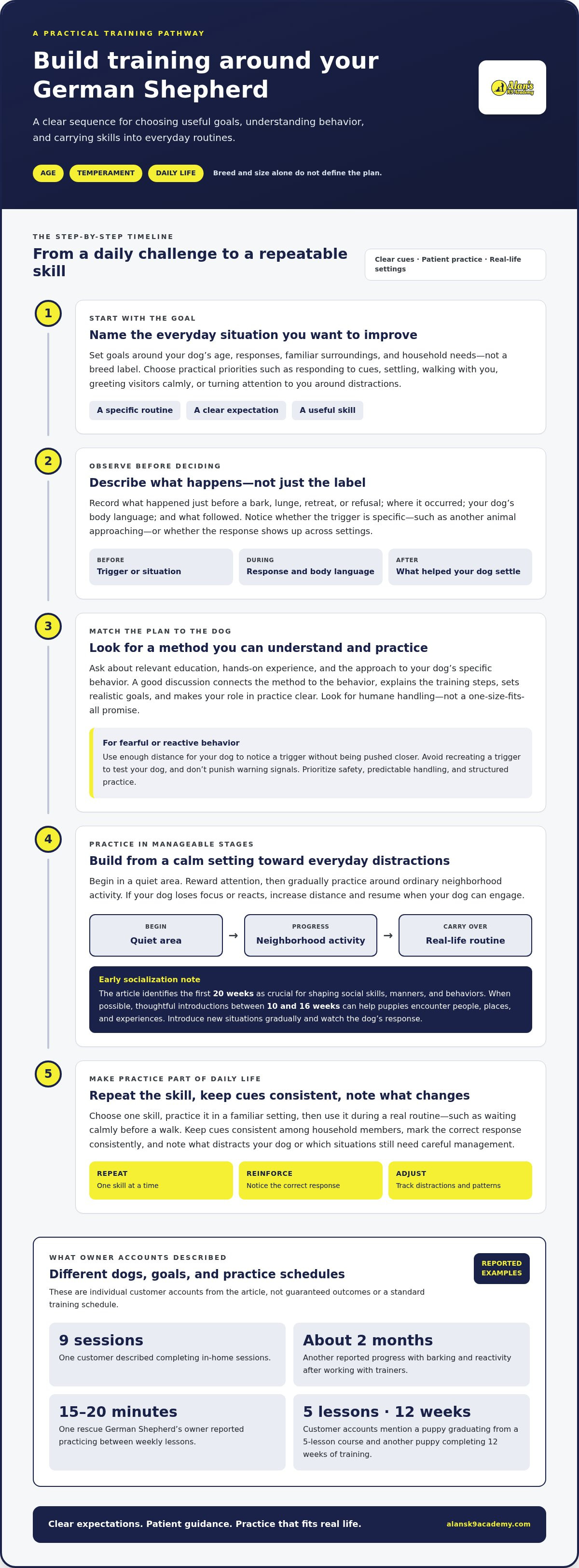
Obedience Training can focus on responding to cues, settling, and walking with you. Choose goals tied to real situations, such as greeting visitors calmly or turning attention to you around distractions. A useful plan makes expectations clear for both dog and handler. Practice skills in different everyday settings so they apply beyond a training session.
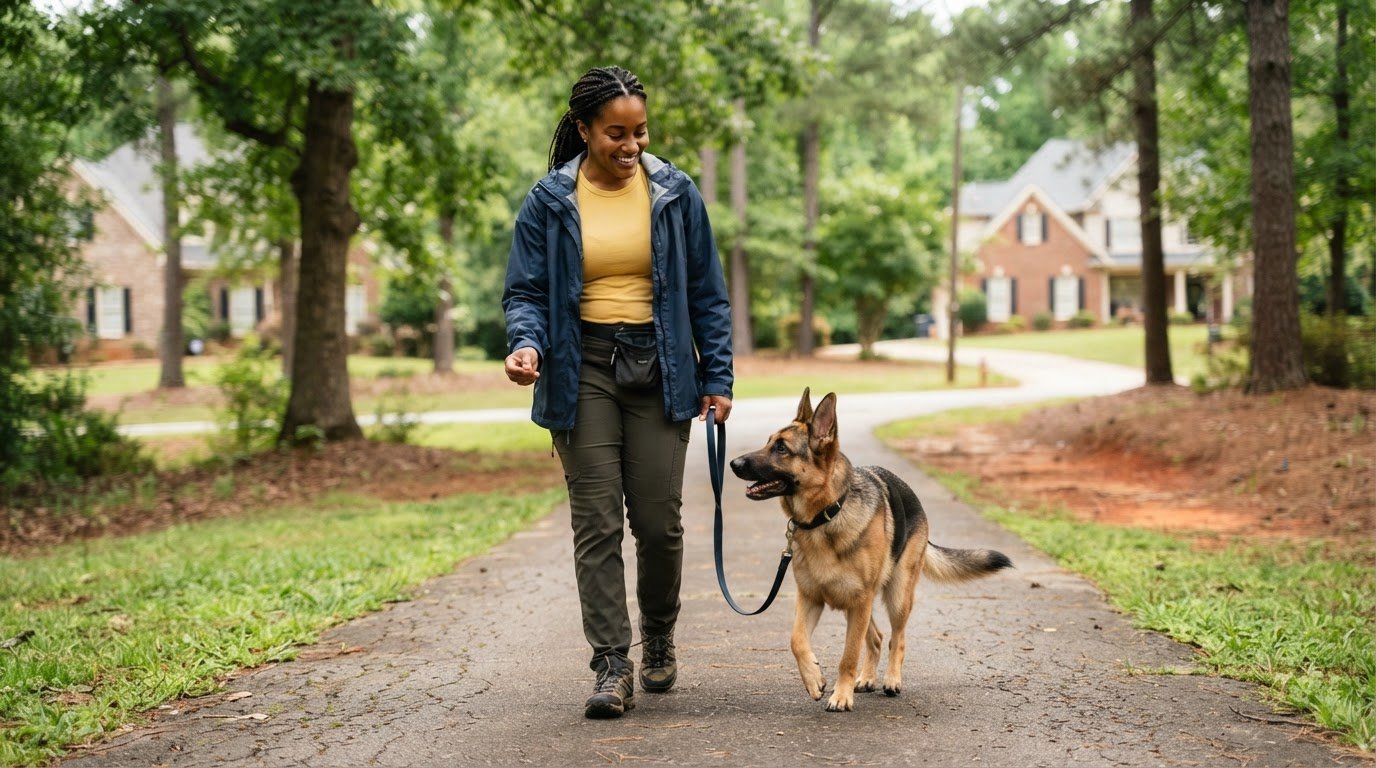
For a walk, start in a quiet area, reward your dog for paying attention, then gradually practice around ordinary neighborhood activity. Keep cues consistent among household members. If your dog becomes reactive or loses focus, increase distance from the distraction and resume when your dog can engage.
Behavior Consulting
When discussing behavior, describe it precisely. Note what happens before a bark, lunge, or refusal, where it occurs, and what follows. These details can help identify a specific trigger or a broader obedience gap. Behavior Modification can then prioritize useful skills and realistic practice instead of treating every behavior as the same problem.
Bring examples from home, walks, or classes. For instance, explain whether your dog reacts when another animal approaches, or only in a crowded setting. Clear observations give a trainer a stronger basis for selecting exercises and tracking whether your dog responds differently over time.
Trainer Credentials and Methods
Ask about a trainer’s relevant education, hands-on experience, and approach to German Shepherd behavior problems. A sound discussion should connect the method to your dog’s specific behavior, explain the training steps, and include your role in practice. Look for clear goals and humane handling, not a one-size-fits-all promise.
Training and socialization notes matter early: the first 20 weeks of a dog’s life are identified as crucial for shaping social skills, manners, and behaviors. When possible, socialization between 10 and 16 weeks of age can help puppies encounter people, places, and experiences thoughtfully. Introduce new situations gradually and watch how your dog responds.
Aggression, anxiety, fear, and reactivity
A fearful or reactive German Shepherd needs a plan based on triggers, not labels. Your dog may bark at passing dogs, retreat from unfamiliar visitors, or guard a resting place. Observe what happened just before the response, your dog’s body language, and what helped them settle afterward.
Training for Fearful and Reactive Dogs
Give your dog enough space to notice a trigger without being pushed closer. If your dog reacts when another animal appears on a walk, increase the distance and reward attention to you. Keep practice calm and repeatable. Record the setting, trigger, and response to help shape training around useful skills.
For a rescue dog, unfamiliar sounds or handling may also cause fear. Introduce new experiences gradually, allowing your dog to observe and move away. A trainer can help you choose manageable practice situations and build obedience skills without forcing contact or overwhelming your dog.
Aggression and Reactivity
Aggressive displays can include growling, snapping, or lunging, but context matters. Note whether the behavior occurs around food, doorways, other dogs, or unfamiliar people. Don’t recreate a trigger to “test” your dog. Instead, use distance and barriers to reduce exposure while tracking patterns and practicing safer alternatives, such as turning away with you.
Clear observations help show whether a trigger is specific or the behavior occurs across settings. A dog who barks at dogs behind a fence, for example, may respond differently on a quiet walk. Don’t punish warning signals. Focus on safety, predictable handling, and structured behavior work. A calm response in one situation is a starting point, not proof that every trigger is resolved.
When reactions disrupt walks or home routines, personalized in-home dog training can address behavior in familiar settings. With consistent practice, owners can build more predictable responses and notice which situations still need careful management.
Customized dog training and daily practice
A useful training program fits your German Shepherd’s age, behavior, and household routines. Customer experiences also show why consistent practice and clear goals matter.
Choosing a Qualified Trainer
Choose a trainer who can explain their techniques, set practical goals, and show how owners should reinforce each skill. Ask how progress will be assessed and how the plan changes when your companion struggles. A customer described completing 9 in-home sessions, while another reported progress with barking and reactivity after working with trainers for about 2 months. Those accounts illustrate different goals, not guaranteed outcomes.
German Shepherd Training Specialties
Which Holly Springs dog trainers specialize in German Shepherds? Look for trainers who can tailor obedience and behavior work to the dog’s needs, rather than relying on breed labels alone. Customer accounts describe support for German Shepherds at different life stages, including a puppy helped through 12 weeks of training with Andrea and a pair aged 11 and 1 1/2 years.
Reviews can help you understand the training experience, but read them for useful specifics. One owner said a puppy graduated from a 5-lesson course; another shared that a puppy began rebelling at 7 months before the family sought help. Look for descriptions of the behavior addressed, the techniques practiced, and the owner’s role between sessions.
Daily repetition helps manners and attention become part of ordinary routines. One rescue German Shepherd’s owner reported practicing for 15-20 minutes between weekly lessons. Try a simple structure: choose one skill, practice it in a familiar setting, then use it during a real routine, such as waiting calmly before a walk. Mark the correct response consistently, and note what distracts your dog.
For dogs of different ages, adapt the task rather than expecting identical progress. A household with an 11-year-old dog and a 1 1/2-year-old companion can practice the same cue with different distractions or duration. Keep brief notes after each session, including the skill, setting, and response, so the training plan stays specific.
Dog training in Holly Springs, North Carolina
While some clients search for services in North Carolina, our local training focuses specifically on Holly Springs, Georgia, and nearby North Metro Atlanta communities. Choose practical skills your German Shepherd needs in your household, then build practice around familiar routines.
German Shepherd puppy training classes near Holly Springs, Georgia can offer guided practice with cues and manners around other dogs and people. Group classes provide a structured setting; select exercises that let your puppy stay engaged and learn at a comfortable pace.
Make each practice session specific. For calmer greetings, teach your puppy to pause before approaching a visitor. For better walks, reward attention beside you in a quiet area before practicing around ordinary neighborhood activity. Patience and variety help your puppy learn that a cue applies in different situations.
Try a simple routine: choose one focus, such as responding to your puppy’s name. Practice at home, then repeat in another familiar setting. Use the same cue and reward the response you want. If your puppy stops engaging, reduce distractions and return to an easier step. This keeps teaching clear for both dog and handler.
Connect practice to daily life in Georgia. Ask for a pause before opening the door, or reward settling while family members prepare a meal. These moments reinforce consistency without adding complicated routines.
Look for instruction that gives you clear practice steps between classes and helps you adjust when your dog struggles. For guidance tailored to your household, explore German Shepherd training support from Alan's K9 Academy and identify a practical next step.
Alan's K9 Academy: In-Home Dog Training
Alan's K9 Academy offers in-home dog training for families who want guidance built around their German Shepherd’s behavior and home routines. If barking, reactivity, or inconsistent obedience is disrupting daily life, Behavior Modification can focus training on those challenges. Therapy & Service Dog Training and Group Classes support other training goals.
Practicing in familiar surroundings helps connect training to situations your dog encounters at home. In-Home Dog Training lets you work on household routines and learn how to reinforce skills between sessions, using consistent cues when greeting visitors or settling before a walk.
Contact Alan's K9 Academy to discuss training support for your dog.
Build a Steadier Routine With Your German Shepherd
Your next step can be simple: choose one daily situation you’d like to improve, such as calmer greetings or more focused walks. A clear goal helps you explain what’s happening and identify the kind of support that fits your dog. If you’re looking for a German Shepherd trainer in Holly Springs, consider how hands-on guidance can help you practice consistent skills in real-life settings.
Alan's K9 Academy offers In-Home Dog Training and Behavior Modification for obedience and behavior concerns, along with Therapy & Service Dog Training for those goals. The right starting point depends on what you want your dog to learn and where you need support.
Take the next step at a pace that feels manageable. Contact Alan's K9 Academy to discuss training for your German Shepherd. With a practical plan and steady practice, you can work toward a more confident, connected routine together.
Frequently Asked Questions
Are there any breed or size restrictions for training?
Alan's K9 Academy works with dogs of varied breeds, ages, and temperaments, but acceptance into a program and the recommended training plan are determined through an evaluation. For a German Shepherd, share details such as their size, daily routine, and learning history. That context helps identify appropriate goals and whether in-home guidance or a group setting better suits your household.
Is it too late to train an adult dog?
Yes, an adult dog can learn new cues and routines. Start with a practical goal, such as waiting at the door or settling while you prepare a meal, and practice consistently. Share your dog’s existing habits and responses so training can build on what they already know. Age is one factor in choosing a useful pace and approach.
What if my dog has specific behavioral issues?
Behavior Modification addresses concerns such as aggression, anxiety, and reactivity. Describe the behavior clearly, including where it happens and what tends to come before it. For example, explain whether your dog barks when a visitor enters or when another dog passes the yard. These details help shape focused training priorities.
German Shepherd dog trainers in Holly Springs, GA
Alan's K9 Academy serves Holly Springs and North Metro Atlanta communities, including Cartersville, Canton, Woodstock, Marietta, Rome, Acworth, Kennesaw, Sandy Springs, Roswell, Alpharetta, Powder Springs, Dallas, Hiram, Jasper, Cumming, Ball Ground, and Milton. For a German Shepherd trainer in Holly Springs, first identify your priority, such as leash manners, household routines, or behavior support. Clear goals help guide the training format.
Reviews and ratings for Holly Springs German Shepherd trainers
When reading reviews, look for specific descriptions of the training experience rather than relying on a star score alone. Notice what behavior was addressed, how the owner participated, and whether the review describes progress in everyday situations. A detailed account of calmer greetings provides more context than a general compliment. Reviews can inform expectations, but each dog’s needs are individual.
Private versus group German Shepherd training in Holly Springs
In-Home Dog Training provides personalized coaching for household routines, while Group Classes offer structured practice with other dogs and owners. Consider your goal: door manners at home may suit individual coaching, while practicing focus around distractions may make a group setting relevant. Acceptance into a program and the recommended training plan are determined through an evaluation.