



Cobb County Dog Behavior Modification and Treatment Options
Seek help when your dog’s behavior changes suddenly, disrupts daily life, creates a safety risk, or leaves you unsure what to do. Cobb County behavior modification for dogs can address reactivity, aggression, fearfulness, destructive behavior, and excessive barking with tailored training and behavio...

Seek help when your dog’s behavior changes suddenly, disrupts daily life, creates a safety risk, or leaves you unsure what to do. Cobb County behavior modification for dogs can address reactivity, aggression, fearfulness, destructive behavior, and excessive barking with tailored training and behavior strategies. A veterinary evaluation is also important if a behavior change may be related to pain or illness.
It can be stressful when walks, visitors, or time alone become difficult. Punishment may add to a dog’s fear or anxiety, so you don’t have to dismiss these challenges as bad behavior or wait for them to worsen. Thoughtful assessment, practical management, and reward-based training can help you work toward calmer, safer routines.
This guide explains when to seek professional help, what an evaluation may consider, and how environmental changes, training techniques, and medical support when appropriate can contribute to an individualized plan. You’ll also learn how behavior modification can address common challenges and what to expect from hands-on training.
Key Takeaways
• Seek veterinary evaluation when behavior changes suddenly, creates safety concerns, or disrupts daily life.
• Behavior plans can combine management, environmental changes, reward-based training, and medical support when appropriate.
• Medication isn’t necessary for every dog; the underlying cause and severity help guide treatment decisions.
• Learn how tailored behavior modification can address reactivity, aggression, fearfulness, and destructive behavior.
Behavior management and treatment options
Cobb County shelters and county government aren’t identified here as behavior-training providers or referral services. For training, seek qualified professional support; if behavior changes suddenly or may involve pain or illness, arrange veterinary evaluation.
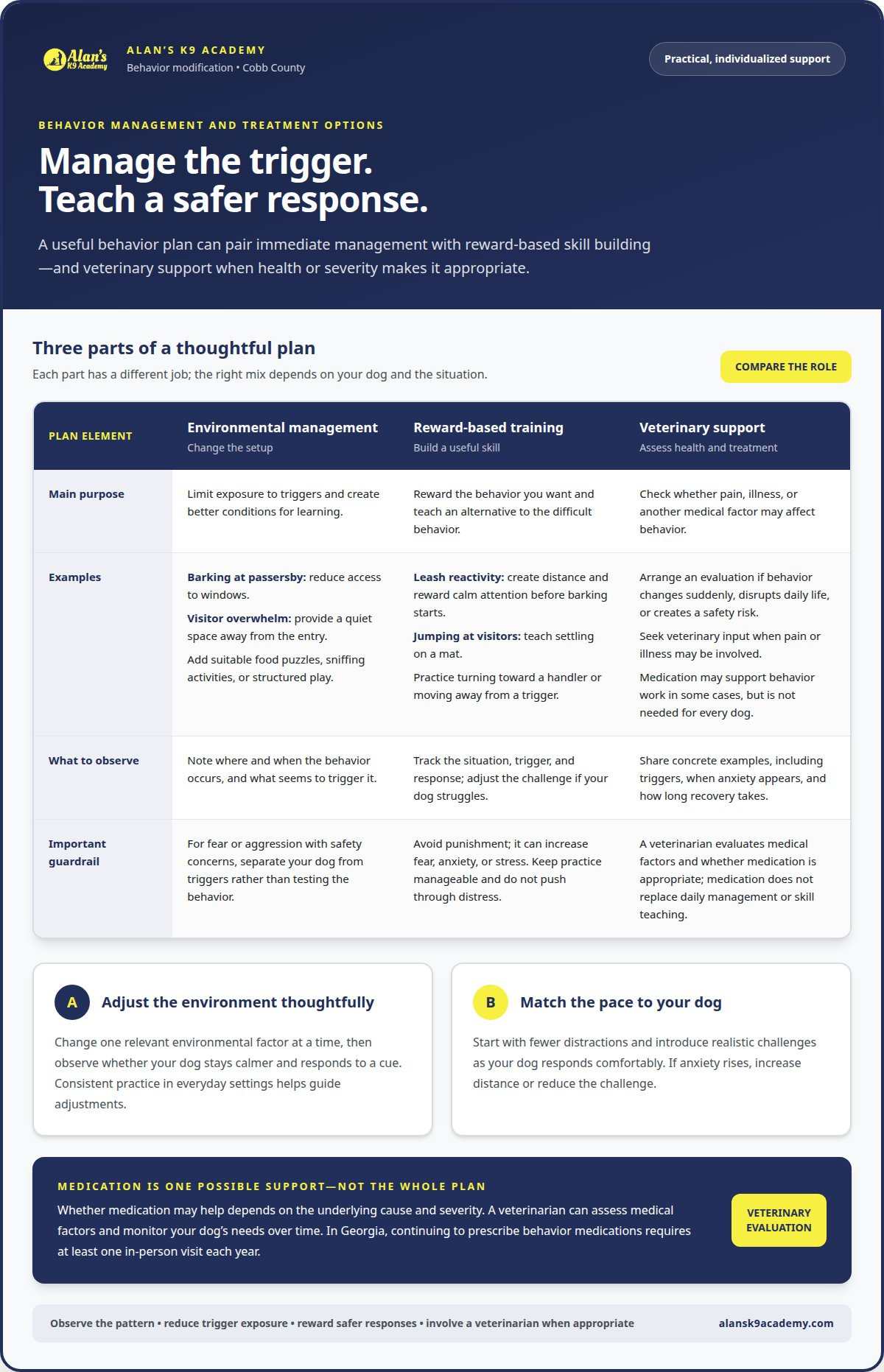
A useful behavior plan combines immediate management with skills that support safer, calmer routines. The right steps depend on the behavior, its triggers, and what happens before and after it.
Environmental Management and Enrichment
Start by noting where and when the behavior occurs. A dog barking at passersby may benefit from less access to windows, while a dog overwhelmed by visitors may need a quiet space away from the entry. Add enrichment suited to your dog, such as food puzzles, sniffing activities, or structured play. These changes limit exposure to triggers and create better conditions for learning.
Managing Unwanted Behaviors
Management prevents unwanted behavior from becoming a repeated habit while new skills develop. For leash reactivity, create more distance from approaching dogs and reward calm attention before barking starts. For destructive behavior, limit access to tempting household items and provide suitable activities. Avoid punishment, which can increase fear, anxiety, or stress. Instead, use positive reinforcement to reward the behavior you want.
Keep a simple record of the situation, trigger, and response. Note whether barking happens at the door, during alone time, or on walks. These examples help reveal patterns and guide adjustments. Training can then focus on specific skills, such as settling on a mat, turning toward a handler, or moving away from a trigger.
Progress depends on consistent practice in your dog’s everyday settings. Change one relevant environmental factor at a time, then observe whether your dog stays calmer and responds to a cue. If aggression or fear creates a safety concern, prioritize separation from triggers and professional assessment rather than testing the behavior yourself. Consult a veterinarian if a sudden change may have a medical cause.
Behavior modification techniques and medication
Local behavior providers may use management, environmental changes, and positive reinforcement, but methods vary. A training session might reward calm responses around a trigger instead of forcing close contact. Ask how techniques address anxiety and whether the plan avoids punishment, which can increase fear, anxiety, and stress in animals. Providers don’t all use identical methods, so “force-free” shouldn’t be assumed for every program.
Effective techniques teach a practical alternative to the behavior causing difficulty. For example, a dog that jumps toward visitors can learn to settle on a mat, while a dog that reacts on leash can practice turning toward its handler. Rewarding the desired response supports learning and gives your dog a clear way to succeed. A trainer can adjust the challenge if your dog struggles to respond.
Training should match your dog’s triggers, home routine, and current skills. Practice can begin with fewer distractions, then introduce realistic challenges as your dog responds comfortably. If anxiety rises, increase distance or reduce the challenge to keep learning manageable. The goal is to build reliable responses step by step, not push your dog through distress. For families seeking Cobb County behavior modification for dogs, this individualized pace helps shape a suitable training approach.
Medication isn’t needed for every dog with behavior concerns. Whether it may help depends on the underlying cause and severity; a veterinarian evaluates medical factors and treatment options. Medication may support behavior work in some cases, but it doesn’t replace daily management or teaching new skills.
In Georgia, continuing to prescribe behavior medications requires at least one in-person visit each year. A veterinarian can assess whether medication is appropriate and monitor your dog’s needs over time. Share concrete examples, such as when anxiety appears, what triggers it, and how long recovery takes. These details can inform the evaluation and any treatment plan for Cobb County behavior modification for dogs.
For a dog whose fear or reactivity makes everyday routines difficult, combine veterinary guidance with consistent behavior practice. Explore hands-on behavior guidance as a next step toward a plan shaped around your dog’s challenges and daily life.
Consultation evaluations and individualized treatment plans
A behavior consultation connects a dog’s actions with the situations, routines, and health factors around them. The evaluation helps identify appropriate support instead of treating every behavior as a simple obedience problem.
To choose a dog behavior consultant or veterinary behaviorist in Cobb County, look for an approach that considers medical, environmental, and training factors. Complex concerns may benefit from a veterinary behaviorist or qualified trainer, with referral when the dog’s needs call for it.
To find help, start with a veterinary evaluation if the behavior changed suddenly, disrupts daily life, or creates a safety risk. Then arrange a behavior consultation and describe specific examples, such as what happens before barking or how your dog responds to visitors.
A veterinary behavior consultation may examine medical conditions, lifestyle, routines, enrichment, training history, household stress, and interactions with family members or other pets. Pain, illness, hormonal changes, and cognitive decline can affect behavior, so health belongs in the evaluation. For example, a dog that avoids handling may need medical assessment before a training plan addresses the response.
Useful details include where the behavior occurs, what seems to trigger it, and how your dog responds afterward. Describe whether your dog growls near food, hides during storms, or becomes distressed when left alone. These examples help the professional identify patterns and decide which factors to address first.
An individualized plan can combine environmental adjustments, behavior management, training, enrichment, and positive reinforcement. Each step should connect to an observable goal, such as calmly settling when a visitor enters. The plan can also explain how to adjust difficulty, reward the desired response, and keep practice manageable when anxiety rises.
Review the plan as your dog’s responses change. If your dog can settle in a quiet room but not near the front door, practice can progress gradually in that setting. If behavior worsens or new signs appear, share the changes with the veterinarian or behavior professional so the evaluation and treatment plan can be updated.
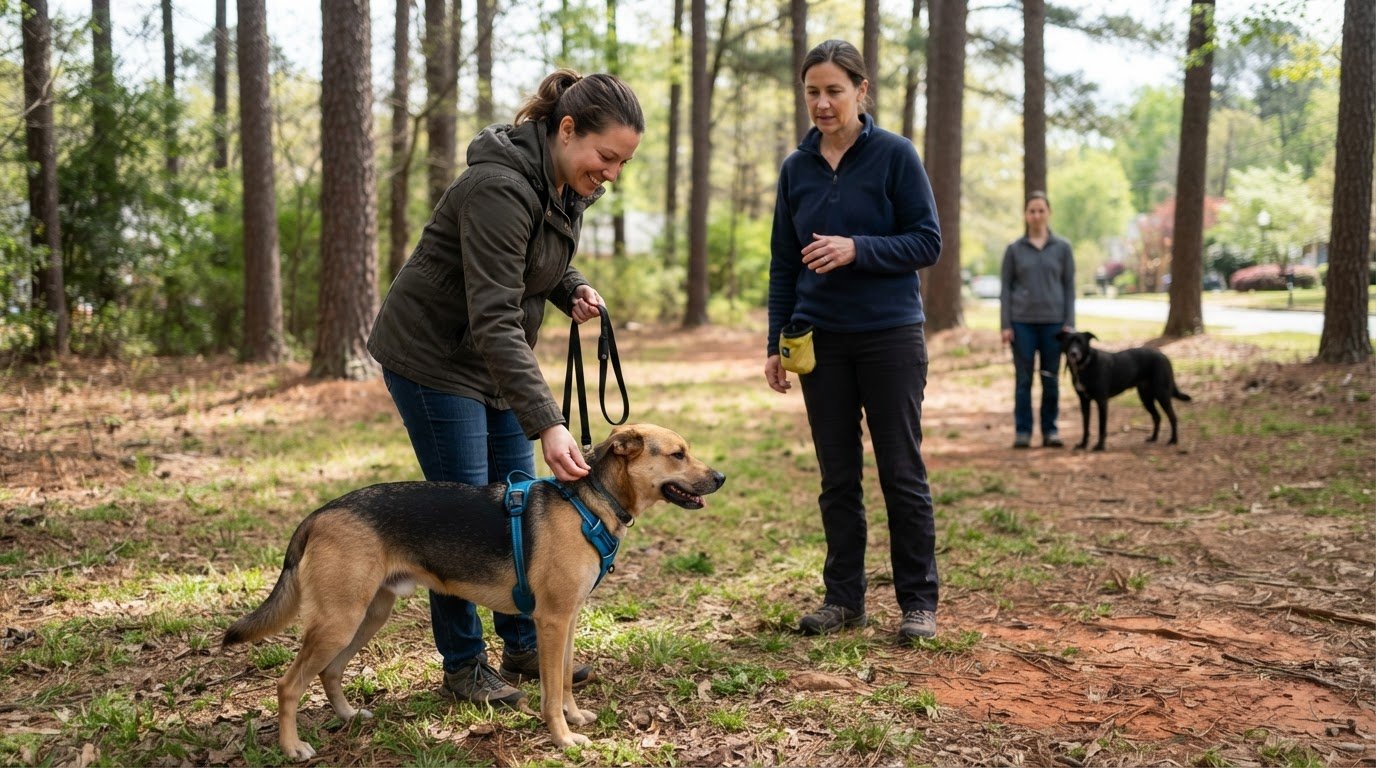
Dog behavior modification for reactivity, aggression, fearfulness, and destructive behavior
Reactivity, aggression, fear, and destruction can have different triggers, even when they disrupt the same routine. Effective support starts by identifying what happens before, during, and after each behavior.
Behavior Concerns Addressed
For leash reactivity, note whether your dog reacts to dogs, people, or passing vehicles, and how close the trigger is. Fearful behavior may look like hiding, freezing, or avoiding a particular person. Aggression can include growling or snapping around food, handling, or unfamiliar dogs. Destructive behavior also needs context: chewing during alone time differs from damage during play.
Those details help shape a plan around safer routines and practical skills. For example, a dog distressed by an approaching visitor can practice settling away from the entry. A dog that guards a resting place needs careful management around that space. In Marietta or elsewhere in Cobb County, the key is matching each step to your dog’s actual trigger, not treating every concern alike.
Rules for Biting and Aggressive Dogs
Cobb County requires dogs to remain under their owner’s control when off their own property. If your dog has bitten, shows aggression, or is declared dangerous, prioritize secure handling and prevent contact with people or animals that could trigger a reaction. Don’t test your dog’s response in public or put others at risk.
Record what happened before a bite or aggressive display, including the setting, people or animals present, and your dog’s behavior. This account can clarify patterns during an evaluation. A behavior plan can then address safer handling and controlled practice, while the county’s control rule remains essential during outings.
When reactivity, aggression, fearfulness, or destructive behavior strains your relationship with your dog, targeted support can make the next steps clearer. Explore tailored behavior support for practical guidance suited to your dog’s concerns.
Alan's K9 Academy: Behavior Modification
Alan's K9 Academy offers Behavior Modification for dogs whose reactivity, fearfulness, aggression, or destructive behavior makes everyday routines challenging. The approach uses personalized training and balanced, humane methods to address behavior concerns and build practical skills.
In-Home Dog Training can help when challenges arise in familiar settings, such as barking at the door or difficulty settling at home. Group Classes provide structured obedience practice, while Therapy & Service Dog Training offers customized foundation training for those roles. If a sudden behavior change may involve pain or illness, start with a veterinary evaluation.
Consider professional support when unwanted behavior persists, feels difficult to manage safely, or affects your relationship with your dog. Alan's K9 Academy can help you explore a training approach shaped around your dog’s needs. Contact Alan's K9 Academy to discuss behavior modification for your dog.
Take the Next Step Toward Calmer Days
Progress begins with a clear picture of what your dog finds difficult and what you want daily life to look like. Choose one practical goal, such as calmer walks, easier visits, or more relaxed time at home. That goal can focus the conversation and keep next steps tailored to your dog’s needs.
For families considering Cobb County behavior modification for dogs, professional guidance can turn a difficult pattern into a workable plan. Alan's K9 Academy offers Behavior Modification, In-Home Dog Training, and Therapy & Service Dog Training to support different training goals. The right starting point depends on the challenge you want to address and the skills you hope to build together.
Share what you’re seeing and what you’d like to change. Contact Alan's K9 Academy to discuss a helpful next step for your dog. With a thoughtful plan and steady practice, you can move toward a more confident partnership.
Frequently Asked Questions
When should I seek help for my pet's behavior?
Seek help when behavior threatens safety, disrupts routines, or changes suddenly. For example, arrange an evaluation if your dog begins snapping during familiar handling or suddenly refuses walks. Keep children and visitors separated from situations that trigger risky behavior while you arrange support. If the change appears abrupt or your dog seems uncomfortable, contact a veterinarian promptly to discuss possible health factors.
Can behavior problems be corrected?
Behavior concerns can improve, though the goal is often safer, more manageable responses rather than eliminating every reaction. For example, a dog that barks at delivery workers can learn a different routine when someone approaches the door. Progress depends on understanding the trigger, practicing an appropriate alternative, and adapting the plan to your dog’s responses. Track meaningful changes, such as calmer greetings or quicker recovery.
Can medical conditions cause behavior changes?
Yes. Pain, illness, hormonal changes, cognitive decline, and other medical conditions can affect a dog’s behavior. A dog that suddenly avoids stairs, growls when touched, or withdraws from family interactions may be responding to discomfort or another health change. Tell your veterinarian when the behavior began and which activities seem difficult. A medical evaluation can help determine whether health needs attention alongside training.
Is it too late to train an adult dog?
No. An adult dog can learn new skills, and training can address current challenges rather than focusing only on puppy basics. For example, an older dog that pulls along familiar routes can practice loose-leash walking in a quieter setting first. A plan should account for established habits, comfort, and experience, then build new responses through clear cues and consistent practice.
Should I punish unwanted behavior?
Punishment can increase fear, anxiety, and stress, so it isn’t a sound way to teach your dog what to do instead. If your dog chews a shoe, calmly remove access to it and offer a suitable activity. Then reward the behavior you want, such as settling with an appropriate chew. This gives your dog clearer information than scolding after the behavior has happened.
What dog behavior modification services are available in Cobb County, Georgia?
Alan's K9 Academy offers Behavior Modification, In-Home Dog Training, Group Classes, and Therapy & Service Dog Training. Service areas include Cobb County communities such as Marietta, Kennesaw, Acworth, Roswell, Sandy Springs, and Woodstock, as well as Cartersville, Canton, Rome, Alpharetta, Powder Springs, Dallas, Hiram, Jasper, Cumming, Holly Springs, Ball Ground, and Milton. Training needs and goals help determine a suitable path.