



Anxious Dog Behavior Modification in Canton
Behavior challenges are common, and anxious dog behavior modification in Canton focuses on understanding what’s behind your dog’s reactions and building more manageable responses. It can address signs such as fear, barking, lunging, or difficulty settling through individualized training, practical b...

Behavior challenges are common, and anxious dog behavior modification in Canton focuses on understanding what’s behind your dog’s reactions and building more manageable responses. It can address signs such as fear, barking, lunging, or difficulty settling through individualized training, practical behavior-management strategies, and consistent practice.
If your dog’s reactions make walks, visits from guests, or everyday routines stressful, you’re not alone. Anxiety can affect dogs and the people who care for them, but it doesn’t mean your dog is simply being stubborn or that you’ve run out of options.
This guide explains what behavior modification involves, how a tailored plan can support your dog, and why consistent practice at home matters. You’ll also learn when professional training may help and how to take a practical next step in Canton, with a focus on understanding your dog’s needs and building calmer, more confident interactions.
Key Takeaways
• Barking, lunging, or growling can signal that a dog is struggling; noticing the situations that trigger these reactions helps guide the next steps.
• Positive experiences can help build confidence, and the 10-16-week period is identified as an important socialization window.
• A tailored behavior plan can pair practical obedience skills with strategies for recognizing stress and supporting calmer responses.
• Learn how to distinguish training needs from concerns that may benefit from veterinary input, especially when health or complex behavior issues are involved.
Dog training services in Canton and Cherokee County
In Canton and Cherokee County, dog training can address specific behaviors, everyday obedience, and situations that unsettle a dog. A useful plan connects each skill to a real-life challenge, such as passing another dog on a neighborhood walk.
Support for Barking, Growling, and Lunging
Barking, growling, or lunging across the street can signal that a dog is struggling around a person or another animal. Behavior modification identifies situations linked to these reactions, then builds manageable responses through tailored training. If troubling behavior may involve an underlying health issue, have a veterinarian assess your dog. Punishment can add pressure without teaching a clear alternative. Instead, encourage and praise the behavior you want to see.
Comparing Training Providers
Compare a training plan with the challenge you’re facing, such as leash reactions, aggression, or difficulty settling around visitors. Ask whether the approach addresses your dog’s emotional response as well as the behavior, and whether you’ll practice consistent skills at home. Complicated problems such as aggression may require veterinary input alongside obedience training. A veterinary behaviorist may be relevant when medical and behavioral needs overlap.
Puppies and adult dogs can both benefit from individualized instruction, but the training focus should match their needs. The first 20 weeks are crucial for shaping social skills, manners, and behaviors, while 10-16 weeks is identified as the best time to socialize a dog. For a puppy, practice calm exposure to everyday sights and sounds. For an adult dog, begin with the situations that currently cause the most difficulty.
Leash skills, recall, and off-leash reliability each need clear, gradual steps. Begin leash practice where your dog can focus, rewarding attention beside you before adding distractions. Build recall by rewarding your dog for returning when called in a controlled setting, then gradually add distance or activity. Off-leash skills depend on reliable responses. If your dog barks or lunges around animals, work on behavior alongside obedience.
What Is Behavior Modification?
Behavior modification helps change how a dog responds to situations that cause worry or tension. An evaluation considers the trigger, your dog’s body language, and what helps your companion feel comfortable enough to learn. For families considering anxious dog behavior modification in Canton, the goal is to build practical skills while respecting the dog’s limits.
Gradual Comfort Building
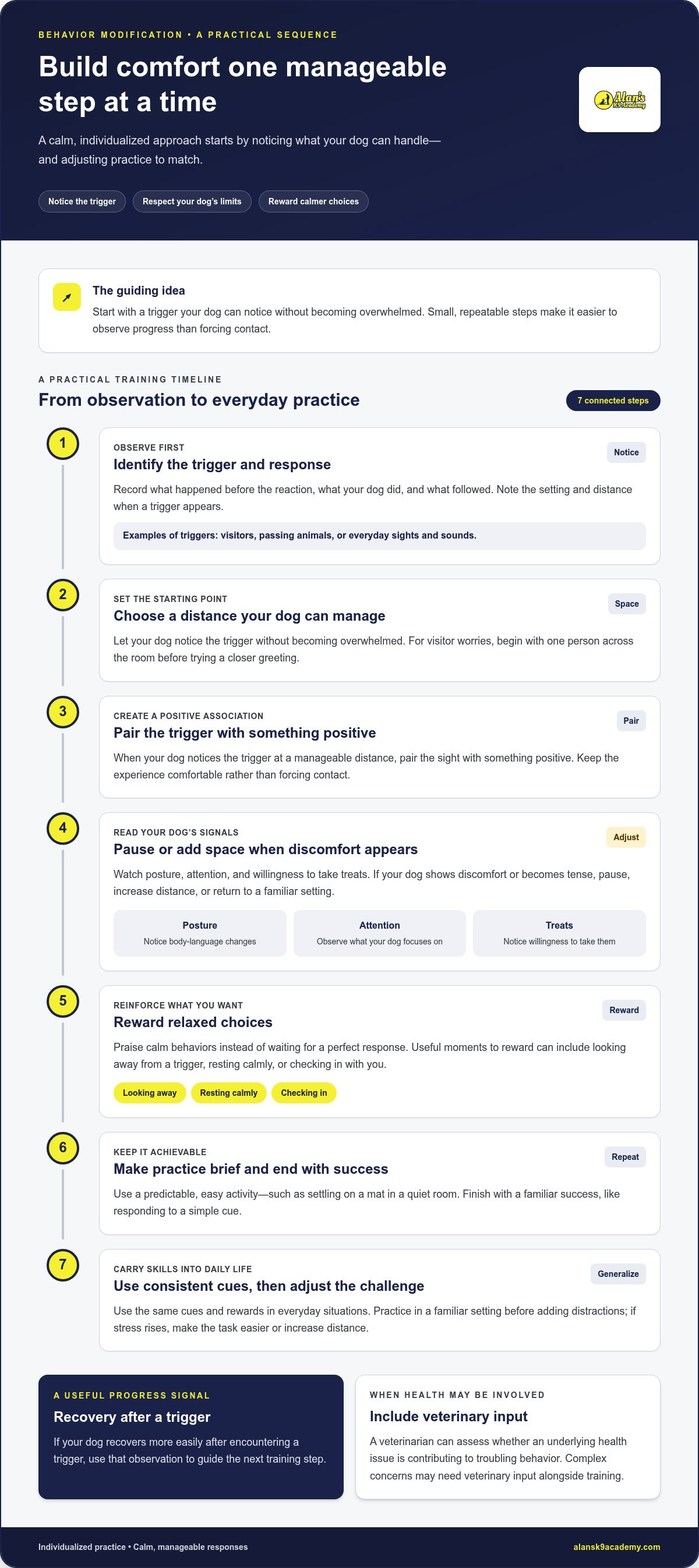
Start with a trigger at a distance where your dog can notice it without becoming overwhelmed. If your dog worries about visitors, for example, begin with one person across the room before attempting a closer greeting. Pair the sight with something positive, then pause or increase distance if your dog shows discomfort. Small, repeatable steps make it easier to notice progress than forcing contact. Set the pace by watching your dog’s responses, not following a fixed schedule.
Relaxation and Confidence Practice
Build a predictable routine around an easy activity, such as settling on a mat in a quiet room. Reward relaxed choices, including looking away from a trigger or resting calmly, rather than waiting for a perfect response. Keep practice brief enough for your dog to stay engaged, and finish with a familiar success, such as responding to a simple cue.
Comfort looks different for every dog. One may relax while watching bicycles from a window; another may need a quiet path with more space from passing animals. Notice changes in posture, attention, and willingness to take treats. If your dog recovers more easily after encountering a trigger, use that observation to guide the next training step.
Use the same cues and rewards in everyday situations so your dog can recognize the pattern. If your companion becomes tense during an exercise, reduce the distraction or return to a familiar setting. A veterinarian can assess whether an underlying health issue is contributing to troubling behavior. Anxious dog behavior modification in Canton can use these observations to shape practical confidence-building exercises around your dog’s needs.
Individualized obedience and behavior management
Obedience training works best when commands relate to the situations that challenge your dog. A plan for a dog who barks at delivery workers will differ from one for a dog uneasy around other animals. Identify the trigger, your dog’s response, and a useful skill, such as settling on a mat or turning toward you.
Fear, stress, limited socialization, and negative past experiences can contribute to behavior challenges. Teaching a dog to sit can improve communication, but it won’t automatically change the emotion behind a reaction. Training should pair practical commands with manageable exposure to the trigger. For example, reward your dog for checking in with you while a visitor stays at a comfortable distance.
Between lessons, use a simple observation routine: note what happened before the reaction, what your dog did, and what followed. If your dog becomes tense when another dog appears, record the setting and distance, then adjust the next practice. These details help shape an individualized plan around your dog’s needs and your goals, rather than repeating exercises that don’t fit.
Consistency helps turn a learned skill into a useful everyday response. Practice the same cue at home, then try it in a familiar outdoor setting before adding distractions. Focus each session on one clear behavior, such as walking beside you past a quiet driveway. If stress rises, increase the distance or simplify the task. Making the exercise easier can help your dog respond again.
Owners also need practical strategies they can maintain. In Bea’s case, recognizing stress and overstimulation helped her owners choose manageable steps, while encouragement and praise replaced scolding. Stark Animal Hospital recommends trying behavior modification before medication for pet behavior problems. It also says medication may help manage some problems when used with behavior modification. A professional trainer can help translate obedience goals into repeatable home practice.
How to compare dog trainers and veterinary behaviorists in Canton?
Match the professional’s role to the challenge you’re seeing. A dog that needs clearer leash manners may benefit from obedience training, while sudden behavior changes warrant veterinary attention. Start by describing a specific trigger, such as growling when someone approaches the food bowl. That example helps clarify whether the priority is a health assessment, behavior support, or both.
Ask how the trainer will tailor the plan. A useful approach considers your dog’s responses, the situations that prompt them, and your household’s goals. If your dog reacts to visitors, for example, the plan should address that situation, not just teach commands in a quiet room. Look for practical guidance you can use between sessions, since consistent practice supports progress.
Veterinary input matters when health could affect behavior or the problem is complicated. A veterinarian can assess possible underlying health issues. Aggression and other complex behavior challenges may call for veterinary input alongside obedience training. This approach can account for medical considerations while teaching safer, more manageable responses. For severe or escalating aggression, prioritize professional assessment rather than relying on obedience exercises alone.
Compare training approaches using a real example, not broad promises. Explain what happens before, during, and after your dog reacts. Consider whether the proposed steps address safety, emotional triggers, and skills you can practice. A clear plan should explain what to do when your dog becomes tense, how to reduce pressure, and which response to reinforce.
If behavior challenges are disrupting walks or home routines, explore individualized behavior modification as a practical training option. Bring specific examples, such as reactions to other dogs or visitors, so the plan can focus on your dog’s everyday needs.
Alan's K9 Academy: In-Home Dog Training
Alan's K9 Academy offers In-Home Dog Training and Behavior Modification for families working through anxiety-related challenges. Training in the home can help address behaviors within the routines and surroundings where they occur, while an individualized plan connects practical skills with your dog’s specific needs.
Consider reaching out when fear, reactivity, or difficulty settling is affecting walks, visitors, or everyday life. The academy also offers Group Classes and Therapy & Service Dog Training, supporting different training goals through personalized instruction and balanced, humane methods.
Share the situations that concern you, such as reactions to visitors or difficulty staying calm during walks, and the skills you hope to build. Contact Alan's K9 Academy to discuss a suitable next step for your dog.
Take the Next Step Toward Calmer Routines
Start with one clear observation. Before discussing training goals, write down the situation that unsettles your dog, what happens just beforehand, and what helps your dog recover. This gives you a practical starting point for choosing skills that fit your home and daily life.
For anxious dog behavior modification in Canton, an individualized plan can turn those observations into focused practice. Alan's K9 Academy offers In-Home Dog Training, Behavior Modification, and Therapy & Service Dog Training. The right next step is a conversation grounded in your dog’s needs, not pressure to solve everything at once.
Contact Alan's K9 Academy to share what you’re noticing and explore a thoughtful path forward. With clear observations and steady practice, you can take the next step with greater confidence.
Frequently Asked Questions
How Does It Work?
Behavior modification starts by connecting a behavior to its context and choosing a practical alternative. Keep a brief log of what happened beforehand, what your dog did, and what changed afterward. Note whether a doorbell, a person entering, or movement in the hallway came before barking. These observations can reveal patterns and help you track which changes make practice easier.
What Should Families Expect?
Families should expect to take part, not just observe during a lesson. Agree on shared cues and routines so everyone responds consistently when the dog becomes uneasy. For example, decide who guides the dog to a quiet area when guests arrive and what calm behavior earns praise. When everyone notes what worked and shares observations during training, progress is easier to understand.
What Will Your Dog Learn?
Your dog can learn practical skills for everyday routines, such as moving behind you when someone approaches or choosing a resting spot during household activity. Training can also teach a dog to pause and turn toward a familiar person before reacting. These skills give families useful ways to manage challenging moments while building communication with their dog.
What are signs of anxiety in dogs and common triggers?
An anxious dog may pace, hide, tremble, avoid eye contact, or repeatedly lick its lips. Some dogs become unusually still; others vocalize or try to move away. Triggers may include unfamiliar people, sudden sounds, changes in routine, car rides, or being left alone. Note when signs appear and whether they change. A veterinarian can assess sudden or unusual behavior changes.
What behavior modification methods help anxious dogs?
Useful methods include gradual desensitization, counterconditioning, reward-based teaching, and managing the environment to reduce unnecessary pressure. Desensitization introduces a trigger at a level your dog can handle; counterconditioning builds a more positive association with it. A trainer may also teach an alternative action, such as moving to a mat. The plan should reflect your dog’s responses and your family’s routines.
How long does dog anxiety behavior modification take?
There’s no fixed timeline; progress depends on your dog’s responses. Build comfort in small steps and reduce distractions if your dog becomes tense.