



4 Ways to Train a Dog Not to Run Away and Build Recall
A dog’s return starts with the bond you build before the gate opens. Learning how to train a dog not to run away means practicing a dependable “come” cue, rewarding your dog for returning, and preventing opportunities to bolt while that skill grows. Identification, exercise, and secure outdoor routi...

A dog’s return starts with the bond you build before the gate opens. Learning how to train a dog not to run away means practicing a dependable “come” cue, rewarding your dog for returning, and preventing opportunities to bolt while that skill grows. Identification, exercise, and secure outdoor routines add important layers of protection.
It’s stressful when your dog darts through an open door or ignores you outside. Hoping they’ll grow out of it isn’t a reliable plan. Consistent practice can make returning to you more rewarding and reduce opportunities to escape.
To learn how to train a dog not to run away, build safer routines around four practical steps: keep identification current, meet your dog’s exercise and enrichment needs, check the yard for escape routes, and strengthen recall and basic obedience. Each step supports the others, giving your dog more reasons to stay close and helping you respond confidently when distractions appear.
Key Takeaways
• Keep your dog’s identification current so you can be reached if they get lost.
• Build daily routines that give your dog both physical activity and mental engagement.
• Inspect outdoor boundaries for weak spots and manage access to doors and gates.
• Make coming when called rewarding, then build the skill gradually around distractions.
1. Collars and identification tags
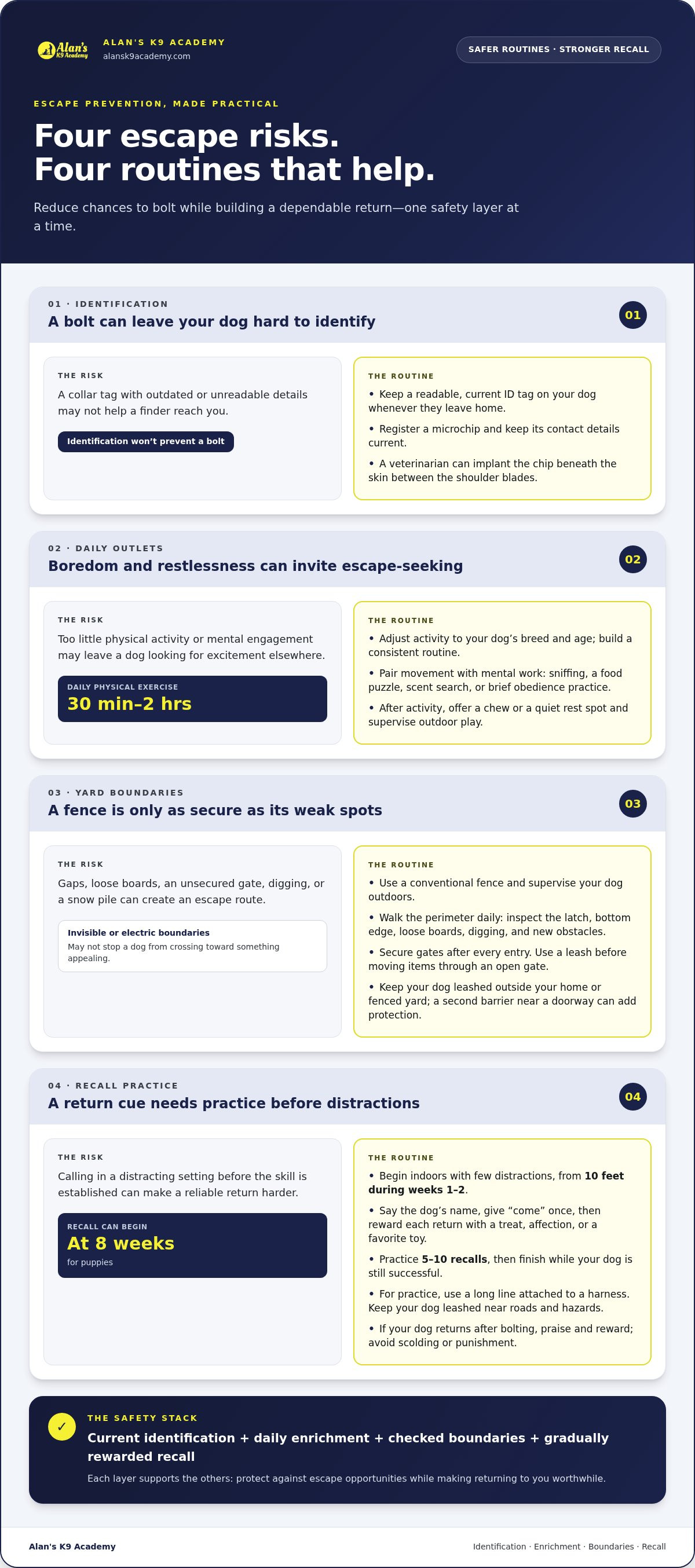
A collar with a current identification tag gives anyone who finds your dog a direct way to reach you. Check the tag regularly, especially after changing phone numbers. Keep the details readable, and have your dog wear the collar whenever they leave home. Identification won’t prevent a bolt, but it can help bring a lost dog back.
A microchip adds another layer of identification. A veterinarian can implant it beneath the skin between your dog’s shoulder blades during an office visit. Register the chip and keep your contact information current. It can help reunite you only if the registration details lead back to you.
For recall practice, attach a long training line to a harness rather than a collar. This can reduce the risk of neck injury if your dog surges. Choose a line that allows room to practice while keeping your dog under control. Keep your dog leashed near roads and other hazards, even as recall improves.
Dogs may run because of sexual motivation, fear, boredom, or tempting rewards, such as food from a neighbor. Notice what happens just before your dog tries to leave, then manage the trigger. Secure the gate when visitors arrive, create distance from a frightening noise, or prevent access to food outside.
If your dog bolts during practice, use the line to interrupt the dash, call their name, and give the “come” cue. Praise and reward them when they return. Avoid punishing or scolding them afterward, which can make coming back less rewarding. Regain control calmly and make the next practice session easier.
In the United States, professional trainer and recall-class costs depend on the case and are provided after a quote request. The training format and your dog’s needs shape the quote. Group classes can offer structured practice, while in-home training can focus on recall challenges in familiar surroundings.
2. Daily physical and mental exercise
Daily activity can reduce the boredom and restlessness that may encourage a dog to look for excitement elsewhere. Plan 30 minutes to 2 hours of physical exercise each day, adjusting the amount to your dog’s breed and age. A lively young dog may enjoy an energetic game, while an older dog may do better with a gentler walk. Watch how your dog responds and build a routine you can maintain consistently.
Make movement engaging, not simply tiring. On walks, let your dog pause to sniff safe spots and explore at a comfortable pace. In a secure area, play fetch or practice short chase-and-return games. Supervise activities and use a leash outside your home or fenced yard. If your dog tends to try escaping in the evening, for example, a predictable walk beforehand can redirect that energy into a safer routine.
Mental work matters, too. Use part of your dog’s meal for a food puzzle, a simple scent game, or brief obedience practice. For example, hide kibble in a few easy-to-find spots indoors and let your dog search. Rotate activities so the same puzzle doesn’t become routine. Short, successful tasks give your dog an appropriate outlet for curiosity and encourage attention toward you.
Try pairing exercise with calm settling. After a walk, offer a chew or a quiet rest spot rather than ending activity at the door and leaving your dog immediately unattended. Notice which situations prompt pacing, digging, or fence-watching, then schedule a walk or enrichment activity beforehand. If matching your dog’s energy and behavior needs feels difficult, a tailored exercise and enrichment routine can help you turn daily activity into a practical part of training.
Make daily exercise and mental stimulation complementary parts of your dog’s routine rather than relying on one alone. A walk followed by a search game or food puzzle makes room for both. Keep tasks manageable and varied, and notice which activities hold your dog’s attention. A dependable routine helps make these outlets part of everyday care.
3. Fenced yards and escape-route checks
A fenced yard creates a clear boundary, but it still needs regular attention. Choose a conventional fence rather than relying on an invisible, electric, or shock fence. An electric boundary may not stop a dog from crossing when something appealing, such as a squirrel or visitor, is beyond it. Supervise your dog outdoors, even inside a fenced area.
Walk the fence perimeter daily and inspect it from your dog’s perspective. Look for gaps beneath panels, loose boards, open gates, and places where your dog has started digging. After snow, check whether a snow pile creates a step over the fence. Remove fallen branches that could help your dog climb or jump across. Repair weak spots before letting your dog back into that part of the yard.
Pay close attention to gates. Make sure each latch closes securely after you, a family member, or a delivery worker enters. If your dog rushes toward an open gate, put them on leash before moving items through it. A second barrier, such as a baby gate near a frequently used doorway, can add another layer between your dog and an exit.
Outside your home or fenced yard, keep your dog on leash rather than allowing them to roam freely. For bathroom breaks, use the secure yard and stay nearby. These routines limit opportunities to chase wildlife, approach traffic, or follow an enticing scent beyond your property. They also provide a predictable setting for practicing calm behavior at doors and gates.
Make each yard check specific: inspect the latch, scan the bottom edge, and look for fresh digging or new obstacles. If your dog repeatedly targets one section, block access while you address the gap and supervise outdoor time. A secure boundary works best with active supervision, not as a substitute for it.
4. Bond-building and basic obedience
A reliable recall grows through repeated, rewarding interactions. Start indoors, where distractions are low, and practice from 10 feet during weeks 1-2. Say your dog’s name, give the “come” cue once, then reward each return with a treat, affection, or a favorite toy. Puppies can begin recall practice at 8 weeks or older.
Keep each session short and clear: practice the basic recall protocol 5-10 times, then finish while your dog is still engaged. If they hesitate, move closer or reduce distractions instead of repeating the cue. Add “stay” practice, too. Asking your dog to stay briefly can help interrupt a dash toward something exciting.
Build difficulty gradually. Practice backyard recalls at 20 feet during weeks 3-4, then try a quiet park at 30 feet during weeks 5-6. During weeks 7-8, practice in a busier park at 40+ feet. Use a long line for these steps, and reward your dog generously whenever they turn back and reach you.
Positive reinforcement works best when the reward matters to your dog. Try small treats for a routine return, enthusiastic praise, or a quick game with a favorite toy. Don’t punish your dog for coming back, even after a slow response. Returning should remain a welcome choice, not the start of a scolding.
Practice recall regularly, including weekly emergency-recall refreshers. Keep your dog leashed near roads and other hazards; according to the AKC, leash laws may apply there. Unclip the regular leash only after your dog responds reliably in that setting, and ask for a sit before unclipping. For hands-on help building recall and obedience skills, get personalized dog-training guidance.
These cues can also be framed as practical skills for moments when a dog is in pursuit: owners should teach “come” and “stay” to help when a dog chases something. The trainer recommends developing a recall that brings the dog back when called, with each return rewarded with a treat, affection, or play with a favorite toy, as the page advises. During practice, the AKC advice also recommends asking the dog to sit before unclipping the regular leash, keeping that step part of the routine.
Alan's K9 Academy: In-Home Dog Training
Alan's K9 Academy offers In-Home Dog Training to help you work on recall and escape-related behaviors in the places they happen. Practicing around your own doors, yard, and daily distractions can make training relevant to your routines. If fear, chasing, or another trigger is driving escape attempts, Behavior Modification can focus on the behavior behind them. Group Classes provide another setting to practice obedience around distractions.
Consider professional guidance if your dog repeatedly bolts, struggles to respond when called, or you’re unsure how to progress safely. A trainer can help you build a practical plan around your dog’s behavior and your home environment. Contact Alan's K9 Academy to discuss training support for your dog.
Build a Safer Routine, One Choice at a Time
Progress comes from noticing what helps your dog stay connected, then making that choice part of everyday life. Track the situations where your dog responds well and the moments that remain difficult. This simple record can help you adjust your approach rather than expecting every cue to work perfectly in every setting.
The answer to how to train a dog not to run away isn’t a single command. It’s a steady partnership built through practice, clear expectations, and rewards your dog values. If you’d like support shaping a plan around your dog’s behavior, connect with Alan's K9 Academy to discuss training options.
Small, consistent steps can make the next walk, doorway, or yard session feel more manageable. Keep building that connection together.
Frequently Asked Questions
How can I discourage my dog from running away?
A practical way to learn how to train a dog not to run away is to identify what comes before each attempt and adjust the situation. Record triggers, such as a visitor arriving or wildlife near the yard, then practice a manageable version before it happens again. Dog owners in Cartersville, Canton, Woodstock, Marietta, Rome, Acworth, Kennesaw, Sandy Springs, Roswell, Alpharetta, Powder Springs, Dallas, Hiram, Jasper, Cumming, Holly Springs, Ball Ground, and Milton can adapt this routine to home life.
What long line and harness are best for recall training
Use a long training line that gives your dog room to practice while keeping them under control. Attach it to a harness rather than a collar to reduce the risk of neck injury.