%20(620%20x%20150%20px)%20(14).webp)
%20(620%20x%20150%20px)%20(15).webp)
.webp)
_page-0001.webp)
.webp)
.png)
Dog Behavioral Training: The Complete 2026 Guide
Why does your dog follow every command in your kitchen but ignore you completely the moment a neighbor walks by? It’s a frustrating reality for many owners who find that standard sit and stay drills don't stop the lunging, barking, or heartbreaking cries of separation anxiety. You want a companion y...
%20(5).gif)
Why does your dog follow every command in your kitchen but ignore you completely the moment a neighbor walks by? It’s a frustrating reality for many owners who find that standard sit and stay drills don't stop the lunging, barking, or heartbreaking cries of separation anxiety. You want a companion you can be proud of, yet right now, your daily walks feel like a gauntlet of embarrassment and stress. It’s exhausting to live on edge. You worry about how your dog will react to guests or other animals in your North Atlanta neighborhood.
We understand that you’ve likely tried everything, and we're here to tell you that there is hope for even the most impossible cases. This guide explores the essential world of behavioral training for dogs, focusing on the deep emotional shifts needed to change challenging habits for good. You'll learn the vital distinction between teaching commands and true behavior modification. We will look at how to rehabilitate aggression, solve leash reactivity, and finally build a bond based on clear communication and mutual trust. It’s time to move from feeling overwhelmed to having total control.
Key Takeaways
• Understand why basic obedience commands often fail to stop reactive habits by focusing on the underlying emotional "why" behind your dog's actions.
• Discover why in-home behavioral training for dogs is the most effective way to address triggers in the exact environments where they occur.
• Learn how customized methodologies can successfully rehabilitate the "big three" challenges of aggression, severe anxiety, and leash reactivity.
• Find out how to achieve real-world reliability in North Atlanta neighborhoods, ensuring your dog remains calm during walks and guest visits.
• Identify the steps to transform your household from a place of stress into a peaceful environment built on clear communication and a deeper bond.
Understanding Behavioral Training vs. Dog Obedience
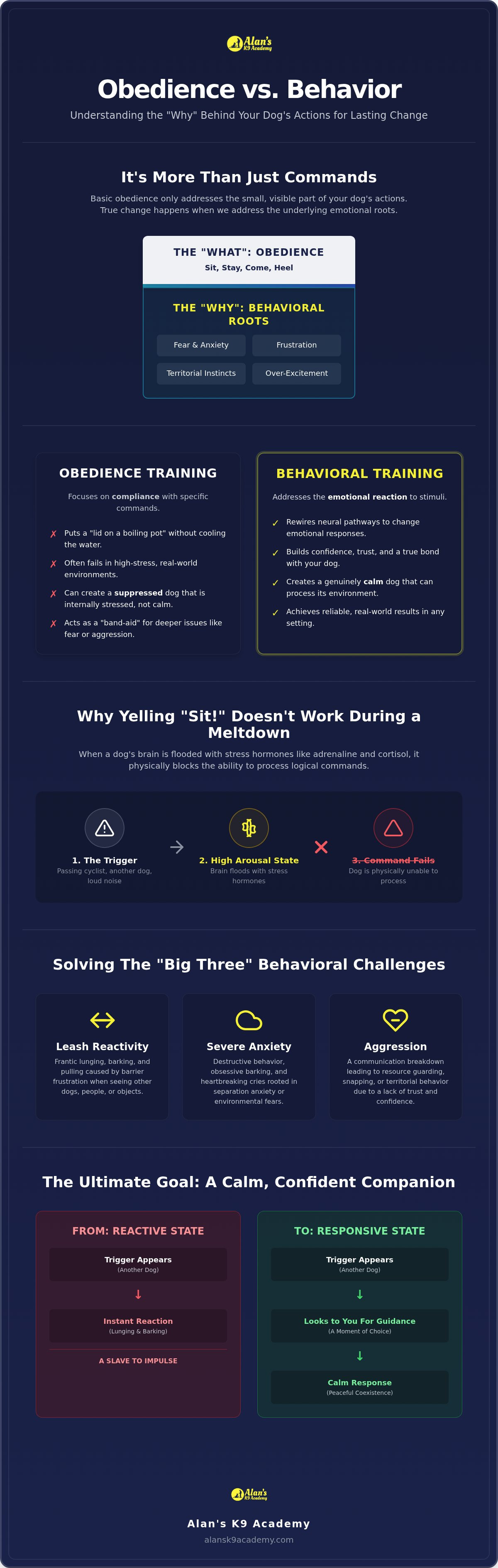
Have you ever wondered why your dog can perform a perfect "sit" in your living room, yet becomes a lunging, barking mess at a busy Marietta park? It’s because obedience and behavior are two entirely different languages. While obedience training focuses on specific tasks and compliance, such as sit, stay, or come, behavioral training for dogs addresses the underlying "why" behind actions like cowering, snapping, or obsessive barking. You can teach a dog to stay for hours, but if they are vibrating with anxiety the entire time, you haven't solved the problem; you've just put a lid on a boiling pot.
Behavioral training is the process of modifying a dog's emotional reaction to stimuli.
Without addressing that emotional core, a dog who knows every command can still be a behavioral nightmare in high-pressure environments. True success means your dog isn't just "doing what they're told" because they have to. It means they're making better choices because they feel safe and confident in your leadership.
Why Commands Alone Don't Fix Behavioral Issues
When a dog is in a state of high arousal, their brain is flooded with adrenaline and cortisol. These stress hormones physically block the dog's ability to process logical commands. If your dog is terrified of a passing cyclist, yelling "sit" is like asking a person in the middle of a panic attack to solve a math problem. It simply isn't going to happen. In these moments, a command is just a band-aid for deeper issues like fear or territorial aggression.
We often see dogs that appear well-behaved because they are suppressed. A suppressed dog might stop a behavior out of fear of a correction, but they remain internally stressed. There is a massive difference between a dog that is suppressed and one that is truly calm. A suppressed dog is a ticking time bomb; a calm dog has been taught how to process their environment without reaching for a reactive response.
The Science of Emotional Response in Dogs
Transformation requires a deep understanding of behavior analysis and how dogs learn through both classical and operant conditioning. When a dog has repetitive negative experiences, their reactive behaviors become hard-wired into their nervous system. They aren't choosing to be "bad" or stubborn. They are stuck in a survival loop where their brain perceives a threat and reacts instantly to stay safe.
By using specialized behavioral training for dogs, we can begin to rewire these neural pathways. We use a customized approach to help the dog form new, neutral, or positive associations with their triggers. The ultimate goal is a shift from a reactive state, where the dog is a slave to their impulses, to a responsive state. In a responsive state, your dog can acknowledge a distraction and then look to you for guidance, allowing for a peaceful life in any real-world setting.
Common Challenges Solved by Behavioral Training for Dogs
Living in the North Atlanta Metro offers beautiful parks and vibrant downtown areas, but for many owners, these spaces are a source of dread. Whether it's the tight sidewalks of Woodstock or the busy shopping districts in Canton, environmental triggers can quickly turn a peaceful walk into a struggle. Professional behavioral training for dogs is designed to address the "big three" challenges: aggression, anxiety, and reactivity. These aren't just annoying habits; they are often signs that your dog is suffering from an inability to cope with their surroundings. When left untreated, minor issues like mouthing or jumping can escalate into major liabilities that threaten your dog's safety and your peace of mind.
Rehabilitating Leash Reactivity and Public Over-Excitement
Leash reactivity is one of the most common complaints we hear from local families. It often stems from "barrier frustration," where the leash prevents the dog from greeting or investigating something, leading to frantic lunging and barking. Our approach to reactive dog training focuses on teaching your companion how to remain neutral when seeing other dogs or people. We move past the chaos toward a structured, peaceful outing where you are finally the one in control of the walk.
Managing Severe Aggression and Resource Guarding
Aggression is a complex spectrum that requires a specialized eye. It’s vital to distinguish between fear-based responses and territorial dominance. Resource guarding, for instance, is a communication breakdown where the dog feels they must protect what is theirs at all costs. It isn't about the dog "being mean." It's about a lack of trust and proper structure. For high-stakes cases, expert aggressive dog training is essential to ensure everyone's safety. Many experts point to the AVMA's position statement on humane dog training as a guide for why compassionate, expert-led intervention is the most ethical and effective path forward.
Healing Separation Anxiety in High-Energy Breeds
Separation anxiety can be heart-wrenching for both the owner and the dog. In a Cartersville home, a dog caught in a "panic-loop" might destroy furniture or harm themselves when left alone for even a few minutes. This isn't spite; it's a profound lack of independence and confidence. Through dog separation anxiety training, we help high-energy breeds build the emotional resilience they need. We use techniques like structured "place" work and crate confidence to help them feel safe even when you aren't in the room. If you're ready to stop the stress, we can help you start a customized behavior modification plan that actually works for your lifestyle.
Training Methodologies: Balanced vs. Force-Free vs. Punishment
Every dog is a unique individual with a distinct history, temperament, and set of challenges. This is why a "one size fits all" approach to behavioral training for dogs often leads to frustration and plateaued progress. As a compassionate expert with over 35 years of experience, Alan Carr understands that the most effective training plan is one that is customized to the specific needs of the dog and the family. We don't just follow a single ideology; we follow the results. The goal is always to move the dog from a state of confusion or fear into a state of clarity and confidence.
There is a significant debate in the industry regarding "purely positive" or force-free methods versus other approaches. While positive reinforcement is a cornerstone of any ethical program, it can sometimes fall short in high-distraction, real-world environments. If your dog’s drive to chase a squirrel or their fear of a passing truck is higher than their desire for a biscuit, the "positive only" approach may fail when you need it most. Conversely, old-school punishment-based training is often counterproductive, especially with fearful dogs, as it can damage the bond and increase anxiety.
We advocate for Balanced Training. This methodology is centered on clear communication. It provides the dog with a "yes" when they do something right and a clear, fair "no" when they engage in dangerous or unacceptable behaviors. This creates a complete conversation. We also work to debunk the "dominance" myths that suggest you must be an "alpha" through intimidation. True leadership is about being a calm, assertive mentor who provides structure and safety.
The Role of Positive Reinforcement in Behavior Modification
Positive reinforcement is essential for building new neural pathways. By using high-value rewards, we help your dog create positive associations with old triggers. If a dog is reactive toward strangers, we use rewards to change their internal monologue from "that person is a threat" to "that person is a signal for something great."
Precision Timing
Success depends on catching the exact moment of a good decision.
Genuine Cooperation
We move beyond "bribing" the dog with treats to fostering a relationship where the dog wants to work with you.
High-Value Motivation
Customizing rewards based on what actually drives your specific dog.
The Humane Application of Balanced Techniques
Clear boundaries are not a burden; they are a relief. Dogs that suffer from chronic anxiety often feel they have to make every decision themselves. By providing a balanced structure, we take that pressure off their shoulders. When a dog understands the "rules of the game," their stress levels drop significantly because the world becomes predictable.
In our behavioral training for dogs, tools are used as a safety net or a communication device, never as a crutch or a means of causing pain. This level of clarity is what eventually leads to total off-leash reliability. It ensures that even in the middle of a busy park, your dog knows exactly what is expected of them and trusts your guidance implicitly.
Why In-Home Behavioral Training is the Gold Standard
Have you ever noticed how some dogs behave perfectly at a training facility but revert to their old habits the moment they step back into your hallway? This is often called the "Lawnmower Effect." When a dog is trained in a sterile, controlled environment, they learn to respond to that specific location and that specific trainer. However, dogs are context-specific learners. To truly change a dog's mindset, behavioral training for dogs must happen exactly where the challenges occur. Whether it’s the front door where they lunge at guests, the backyard fence where they bark at neighbors, or the living room sofa they refuse to share, addressing triggers in their natural environment is essential for lasting success.
The most critical element of this process is you. While a trainer can guide the dog, you are the one who lives with them 24/7. You must be the person your dog respects and looks to for guidance. For more on the logistics of how these sessions work, you can explore our in home dog training pillar, which outlines the step-by-step process of professional rehabilitation.
Building Real-World Reliability in North Atlanta
Training in your own neighborhood allows us to customize sessions to the specific distractions you face every day. We don't just stay in your living room. We take the training to the streets of Marietta, the busy parks in Alpharetta, and the walking trails in Kennesaw. We use a process of gradual exposure. We might start in a quiet hallway to build a foundation of focus, but we quickly move to the "heat of the moment" situations, like a busy local coffee shop patio. This ensures your dog’s new behaviors aren't just for show; they are reliable in the real world.
Empowering Owners Through Private Coaching
In-home sessions remove the "middle-man" of a facility trainer. You learn the skills alongside your dog, ensuring the communication remains clear long after the trainer leaves. This approach fits seamlessly into a busy professional's schedule because we work within your actual life. We help you create a lifestyle of training rather than just a "training hour." When every interaction becomes a meaningful moment of communication, the bond between you and your companion deepens. If you are ready to transform your home into a peaceful sanctuary, contact Alan’s K9 Academy to begin your customized journey today.
Starting Your Journey with Alan’s K9 Academy
When you feel like you’ve reached the end of your rope, it’s time to call in a Master K9 Trainer who has truly seen it all. Alan Carr brings over 35 years of professional instruction to every case, having trained everything from high-stakes K9 units to gentle therapy dogs. While other North Atlanta trainers might turn away "impossible" cases involving severe aggression or paralyzing anxiety, we lean in with confidence. Our foundation is built on a commitment to Christian values. This means integrity, excellence, and compassionate service are at the heart of our mission to help your family. We don't just see a "problem dog." We see a companion that needs a clear path back to balance.
Personalized Behavior Modification Programs
We believe there is no such thing as a "cookie-cutter" solution for behavioral training for dogs. Your dog’s history, breed traits, and your specific household dynamic are all unique variables that require a tailored approach. This is why our process begins with a thorough assessment to understand the root cause of the behavior. We then create a customized plan that focuses on the long-term bond rather than just a quick fix. While we specialize in complex modification, establishing a solid baseline is often necessary. You can see our dog obedience training guide to understand how we build that essential foundation of real-world reliability.
Serving Cartersville and the North Atlanta Metro
Our local commitment to families throughout Bartow, Cherokee, and Cobb Counties is a point of pride. Whether you are in Cartersville, Canton, or Woodstock, we bring our expertise directly to your door to solve problems where they live. The transformation follows a methodical, results-oriented path:
Comprehensive Assessment
We identify the specific triggers and emotional root causes affecting your dog.
Customized Plan
We build a strategy specifically designed for your dog's temperament and your lifestyle.
Hands-on Execution
We work directly with you in your home to implement lasting changes.
Are you ready to stop living in a state of constant stress? Booking your initial in-home behavioral assessment is the first step toward a more peaceful household. Expert behavioral training for dogs can change the entire trajectory of your relationship with your pet. We invite you to experience the difference that 35 years of dedicated expertise can make. Don't wait for a minor issue to become a major liability that threatens your dog's future. Reach out today and let’s move from frustration to a "can-do" attitude together. Your dog is waiting for the leader they know you can be.
Reclaiming Peace in Your North Atlanta Home
Living with a reactive or anxious dog doesn't have to be your permanent reality. Throughout this guide, we've explored how behavioral training for dogs goes beyond simple tasks to address the emotional root of challenging habits. By focusing on real-world triggers in your own environment, you can move past the embarrassment of chaotic walks and the heartbreak of severe separation anxiety. You deserve a household where your dog is a source of joy, not a source of constant stress.
With over 35 years of professional instruction, Master K9 Trainer Alan Carr has successfully rehabilitated cases that others deemed impossible. Whether you are dealing with severe aggression or complex anxiety in Cartersville or anywhere in the North Atlanta Metro, expert help is available. Our mission is to restore the bond between you and your companion through integrity, excellence, and customized care. It’s time to move from feeling overwhelmed to feeling in control of your dog’s future.
Ready to transform your dog's behavior? Schedule your in-home assessment with Alan’s K9 Academy today! We are here to guide you every step of the way toward a more peaceful life together.
Common Questions About Behavioral Rehabilitation
What is the difference between a dog trainer and a behaviorist?
A traditional dog trainer focuses on teaching specific skills like sit, stay, or heel. A behaviorist or behavior specialist focuses on the emotional state and psychological "why" behind a dog's actions. At Alan’s K9 Academy, we specialize in behavioral training for dogs to address deep-seated issues like aggression and anxiety. We look beyond the surface level of obedience to ensure we provide a solution that addresses the root cause rather than just masking the symptoms.
Can an older dog still benefit from behavioral training?
Absolutely, an older dog can benefit significantly from professional behavior modification. While they may have practiced certain habits for years, their brains remain capable of learning new associations and responses. In many cases, mature dogs are actually easier to work with because they have a longer attention span than puppies. We customize our approach to fit your senior dog's physical abilities while focusing on the mental shifts needed to improve their quality of life.
How long does behavior modification typically take to see results?
You will often see a noticeable shift in your dog's management after the very first session, but true rehabilitation is a journey. While basic obedience might be learned in a few weeks, changing a hard-wired emotional response can take several months of consistent work. The timeline depends on the severity of the issue and your commitment to the daily practice. We focus on sustainable, long-term results rather than temporary quick fixes that often fail under pressure.
Is behavioral training more expensive than standard obedience classes?
Behavioral training for dogs generally requires a higher investment than a standard group obedience class. This is because it involves specialized expertise from a Master K9 Trainer and personalized, one-on-one attention in your own home. You aren't just paying for a "sit" command; you're investing in the safety of your household and the long-term rehabilitation of complex issues. Most families find the resulting peace of mind and household harmony to be an invaluable investment.
Does behavioral training require the use of specific tools like e-collars?
We don't believe in a "one size fits all" toolkit. Our balanced approach means we use the most effective and humane tools for your specific dog and their unique challenges. While we may use certain tools to provide clear communication and ensure safety, they are never a substitute for a strong bond and proper leadership. Every tool we use is a means to an end: achieving a calm, responsive companion who trusts your guidance implicitly.
What should I do if my dog is too aggressive for a group class?
If your dog is too reactive or aggressive for a group setting, our private in-home sessions are the safest and most effective option. Group classes can often be counterproductive for aggressive dogs because the high-stress environment pushes them past their threshold. By working in your North Atlanta home, we can address the behavior in a controlled space where your dog feels safe. This allows us to build a foundation of trust before ever considering public distractions.
Will my dog's personality change after behavioral rehabilitation?
Your dog’s core personality will not change, but their reactive behaviors will. Think of rehabilitation as peeling away a layer of stress, fear, or frustration that has been hiding your dog's true self. Once they feel safe and understand the rules, you’ll likely see more of the happy, relaxed companion you’ve always wanted. Our goal is to empower your dog to be the best version of themselves, free from the burden of constant anxiety and reactivity.
How much involvement is required from me as the owner?
Your involvement is the most critical factor in your dog's success. While we provide the professional expertise and the roadmap, you are the one who lives with your dog every day. You'll need to learn how to communicate effectively and maintain the boundaries we establish during our sessions. Behavioral training is a partnership. We teach you the skills necessary to lead your dog with confidence so that the progress we make together lasts for a lifetime.